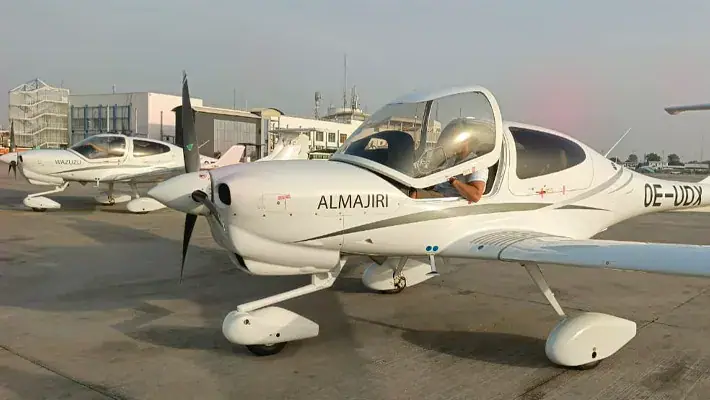
Nigeria's aviation industry is growing, with an increasing need for homegrown pilots. However, a crucial question remains: how many aviation schools have the necessary aircraft to train aspiring pilots? At least four Nigerian institutions have acquired dedicated aircraft or helicopter fleets for practical flight training. Baze University in Abuja recently acquired two training aircraft, joining the ranks of established aviation schools.
The Nigerian College of Aviation Technology (NCAT) in Zaria is one such institution, offering programs in pilot training, aircraft maintenance, and air traffic control. Established in 1964, NCAT operates various aircraft, including Socata Tampico TB9 and Diamond DA40 and DA42 models. Despite its long history, NCAT faces challenges in maintaining and expanding its training fleet. In July 2026, NCAT Rector Dr. Danjuma Ismaila disclosed that one of its TBM training aircraft was grounded due to inadequate funds for maintenance.
NCAT's limited admission capacity is another concern, with only 25 pilot trainees admitted every six months. This is insufficient for a country with a population of over 200 million people, and the demand for pilot training is overwhelming. The institution has also received only nine of the 20 Diamond training aircraft it ordered. NCAT's struggles highlight the challenges faced by aviation schools in Nigeria.
The International Aviation College (IAC) in Ilorin is another institution with its own training aircraft. Established in 2011 by the Kwara State Government, IAC operates Diamond DA40 and DA42 aircraft for pilot training. However, the college has faced concerns about aircraft availability due to incidents involving its training fleet. In July 2025, reports emerged that the college's flying school had been grounded due to a shortage of operational training aircraft.
The International Helicopter Flying School (IHFS) in Enugu is a specialized institution focused on helicopter pilot training. Located at Akanu Ibiam International Airport, the school is associated with a joint venture involving the Nigerian Air Force and Triax Airlines. IHFS operates Robinson R66 helicopters for training purposes. The school's partnership with the Nigerian Air Force and Triax Airlines supports its training operations.
Baze University's recent acquisition of two training aircraft marks a significant development in Nigeria's aviation industry. The university's investment in pilot training infrastructure is expected to increase the number of trained pilots in the country. With more institutions acquiring training aircraft, Nigeria's aviation industry is likely to see an increase in homegrown pilots.
The availability of training aircraft is crucial for the development of Nigeria's aviation industry. With four institutions owning dedicated aircraft or helicopter fleets, the country is taking steps to address the shortage of pilots. However, challenges such as maintenance and admission capacity constraints must be addressed to ensure the long-term sustainability of these institutions.
Key points
- Four Nigerian aviation schools own training aircraft for pilot development.
- Nigerian College of Aviation Technology faces challenges in maintaining and expanding its training fleet.
- International Aviation College and International Helicopter Flying School also operate training aircraft for pilot training.