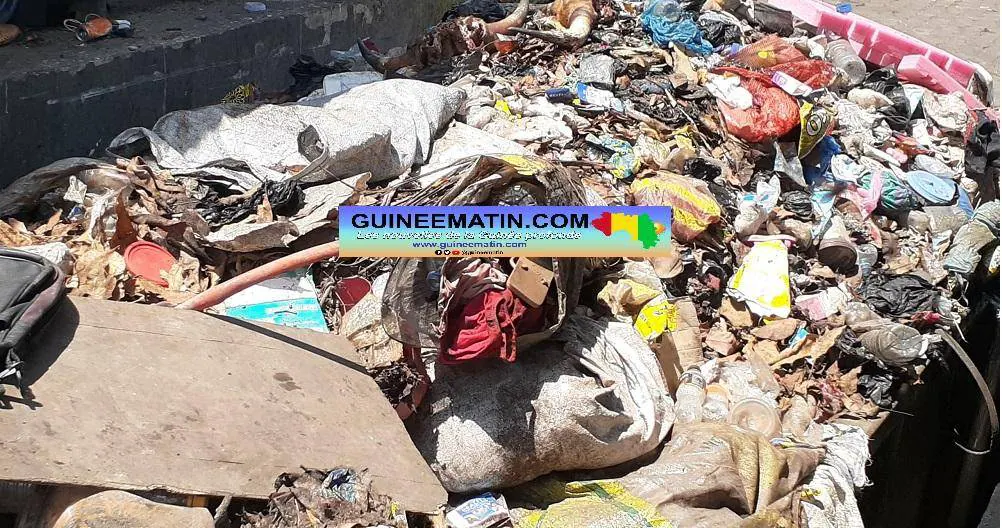
Four individuals, Fatoumata Doumbouya, M'mah Cissé, Fodé Camara, and Santigui Conteh, appeared before the Dixinn court on September 29, 2026, for degrading public property and dumping waste. The four were arrested on September 28, 2026, under a bridge in Dixinn, where they allegedly participated in degrading public property and dumping waste and sewage into drains.
The accused pleaded not guilty to the charges. Fatoumata Doumbouya admitted to dumping sewage on the public road but denied throwing trash into the drains. M'mah Cissé claimed she was at the location to eat, while Santigui Conteh, a student, stated he was also there to eat and had no involvement in the alleged activities. Fodé Camara, a mason, said he was a regular customer at a nearby food stall and had no knowledge of the area being dirty.
The prosecution, led by Mamadou Yaya Fatoumata Boiro, disputed the accused's claims, citing video evidence that showed them engaging in activities under the bridge, including producing waste and dumping sewage into drains. The prosecution requested that the court sentence each defendant to six months, with five months suspended, and a fine of 500,000 Guinean francs, as well as order them to vacate the area.
The court delivered its verdict on September 29, 2026, declaring Fodé Camara and Santigui Conteh not guilty and dismissing the charges against them. However, Fatoumata Doumbouya and M'mah Cissé were sentenced to clean up under the bridge for seven days. The court took into account the defendants' claims and the evidence presented during the trial.
According to the law, the acts pursued are provided for and punished by articles 07 and 112 of the law 009/AN of May 7, 2021, relating to the repression of fraud and acts of attack, as well as by articles 26 and 27 of the Road Code. The case highlights the issue of degradation of public property and the need for citizens to respect the environment.
The trial was held at the Dixinn court, and the defendants were assisted by their lawyers. The prosecution presented video evidence and witness testimony to support its case. The court's decision was delivered after careful consideration of the evidence and the arguments presented by both sides.
The case has sparked debate about the need for greater awareness and education on the importance of protecting public property and the environment. The defendants' sentences and the court's decision have been seen as a step towards addressing the issue of degradation of public property in Guinea.
Key points
- Four individuals were tried for degrading public property and dumping waste in Guinea.
- The court sentenced two defendants to clean up under the bridge for seven days.
- The case highlights the need for citizens to respect the environment and protect public property.