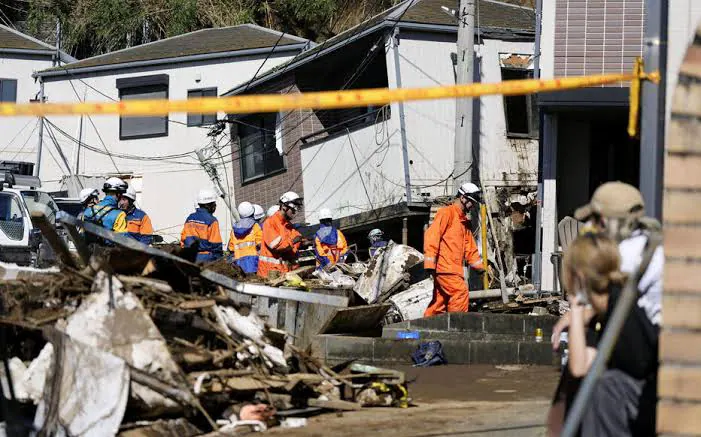
A powerful typhoon made landfall in Japan on Tuesday, bringing with it strong winds and heavy rainfall that has resulted in the deaths of at least four people. According to local authorities, the typhoon, known as Dujuan, has caused widespread damage and disruption, with over 1.6 million households affected. The Japan Meteorological Agency had issued warnings and evacuation orders for several regions, including the capital city of Tokyo and surrounding areas.
The typhoon's impact was felt across several prefectures, with the hardest-hit areas being Chiba and Kanagawa. In Chiba, three people were confirmed dead, while one person was killed in Kanagawa. The search and rescue efforts are ongoing, with six people still unaccounted for. The authorities have reported that over 45,000 households are without electricity, and more than 460 buildings have been damaged.
The Japan Meteorological Agency had taken measures to mitigate the impact of the typhoon, including reducing the risk of flooding and landslides. However, the agency reported that the typhoon's strong winds and heavy rainfall caused significant disruptions. The typhoon's landfall was accompanied by heavy rainfall, with the island of Oshima recording 832 mm of rainfall in 48 hours, which is more than twice the average rainfall for the month of September.
The typhoon's impact on transportation has also been significant, with over 275 flights cancelled. The authorities have urged residents to remain vigilant and take necessary precautions to ensure their safety. The Japanese government has deployed emergency response teams to affected areas to provide assistance and support to those affected.
Japan is prone to typhoons, particularly during the summer and early autumn months. Scientists have attributed the increasing frequency and intensity of typhoons to climate change. The Japanese government has been working to improve its disaster response and mitigation efforts, including upgrading its early warning systems and emergency response infrastructure.
The economic impact of the typhoon is also expected to be significant, with widespread damage to buildings, infrastructure, and agriculture. The authorities have estimated that the damage could run into billions of yen. The Japanese government has pledged to provide financial support to affected households and businesses.
The typhoon's impact comes as Japan is still recovering from previous natural disasters, including a series of earthquakes and typhoons that hit the country last year. The government has vowed to improve its disaster preparedness and response efforts, including investing in new technologies and infrastructure to mitigate the impact of future disasters.
Key points
- Four people have been confirmed dead as a result of Typhoon Dujuan's impact on Japan.
- Over 1.6 million households have been affected by the typhoon, with many without electricity or access to basic services.
- The Japanese government has deployed emergency response teams to affected areas to provide assistance and support to those affected.