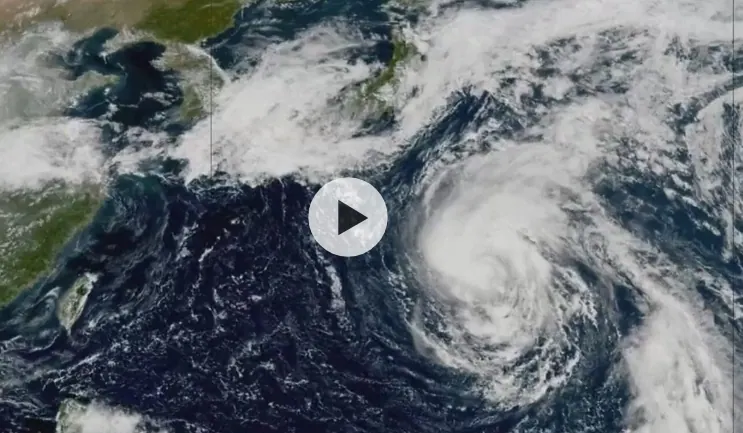
Typhoon Dujuan made landfall in Japan on Monday, bringing with it torrential rains and destructive winds that have resulted in the deaths of four people. The storm, which is Japan's 25th typhoon of the year, cut power for 50,000 people and caused the suspension of hundreds of flights. Authorities had warned of an "imminent threat to life" and urged 1.9 million people to move to shelters.
The fatalities were reported in Kanagawa and Chiba prefectures, with two people confirmed dead in landslides. The Yokosuka City Fire Department reported that a woman in her 60s was believed to have been buried alive after a landslide swept her house in Kanagawa prefecture. Rescue crews found her inside the home, and she was pronounced dead.
In Chiba prefecture, a man in his 50s was rescued after getting trapped while working to clear debris at a landslide site. However, he was later pronounced dead at the hospital. Six others were reported missing, according to public broadcaster NHK. The storm had sustained winds of 130km/h and gusts of 194km/h.
The typhoon forced the cancellation of several events, including concerts scheduled for Monday at the Rock in Japan music festival and Monday's program at the Tokyo Game Show. Japan's Prime Minister, Sanae Takaichi, offered her condolences to those who lost their lives in the typhoon and instructed Chief Cabinet Secretary Takehara and Minister Hosono to respond with utmost preparedness.
Despite the devastation caused by the typhoon, Prime Minister Takaichi will continue with her scheduled trip to the United States. She will be speaking at the UN General Assembly in New York on Tuesday and meeting with US President Donald Trump. The typhoon is continuing to travel along Japan's Pacific coast, heading north.
Research suggests that Japan has become more exposed to destructive storms, and as temperatures rise, typhoons that do form are likely to become more intense on average. The "super El Niño" phenomenon, which has warmed the ocean, is also believed to have contributed to the formation of the storm. El Niño events may expose Japan to stronger typhoons.
The full extent of the damage caused by Typhoon Dujuan may not be known until later. Authorities had advised the public to pay attention to weather information, and the government is working to respond to the disaster. The storm has highlighted the need for Japan to prepare for and respond to increasingly intense typhoons.
Key points
- Four people have died in Japan after Typhoon Dujuan brought torrential rains and destructive winds to the country.
- The storm caused 50,000 power outages and the suspension of hundreds of flights.
- The typhoon is the latest in a series of storms in the Pacific, made more intense by the "super El Niño" phenomenon.