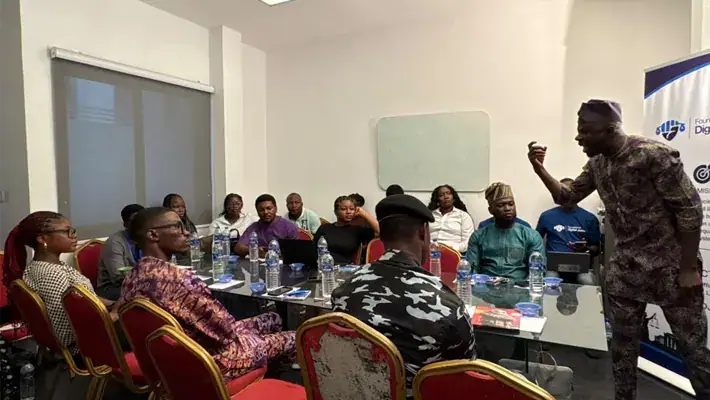
The Foundation for Digital Justice (FDJ) recently held its Digital Rights Dialogue 2026 in Lagos, where stakeholders discussed challenges facing digital rights protection in Nigeria. The event, themed "Advancing Digital Freedom, Accountability and Good Governance in Nigeria," brought together lawyers, journalists, technology experts, security officials, and civil society organisations. Participants expressed concern about the growing influence of technology companies over users' data and online activities.
Stakeholders at the dialogue highlighted issues with content moderation policies, which sometimes result in account suspensions without clear explanations or effective channels for appeal. Daniel Ojukwu, an investigative journalist, noted that users frequently experience restrictions on platforms like Instagram and WhatsApp over alleged violations of community guidelines. He emphasised that content moderation is necessary, but policies and systems guiding such decisions often fail to reflect Nigeria's social and cultural realities.
Digital rights lawyer Samuel Okedara described digital rights as fundamental human rights exercised through digital platforms. He identified freedom of expression, privacy, and freedom of association and assembly as key digital rights protected under the Nigerian Constitution. Okedara noted that restrictions on these rights must be provided for by law, pursue legitimate constitutional objectives, and must not be disproportionate or excessive.
The stakeholders' dialogue session explored the realities of digital rights in Nigeria, with participants observing that big tech companies hold significant control over users' data and online presence. They also noted that a chain of rights violations occurs, particularly with content moderation. Festus Ogun, the executive director, moderated the session and highlighted the power of big tech companies.
A representative of the Nigeria Police Force National Cybercrime Centre, SP Abubakar A. Smart, acknowledged that public order and national security considerations sometimes inform government requests to platforms. However, he agreed on the importance of judicial oversight and urged young Nigerians to take greater responsibility for the digital spaces they occupy. Participants called for stronger continental cooperation, urging the African Union to take a more active position on digital rights and platform accountability.
Lydia Ogba, a representative of the Nigerian Data Protection Commission (NDPC), raised concerns about data privacy in the age of artificial intelligence. Participants attributed the trend partly to the burden on the judiciary, arguing that delays and an overworked court system could discourage citizens from pursuing legal remedies for digital rights violations. The dialogue brought together stakeholders from various sectors, including technology, law, and journalism.
The Foundation for Digital Justice and stakeholders are advocating for stronger accountability from social media platforms and judicial oversight of government requests. Key points from the dialogue include the need for technology companies to reflect Nigeria's social and cultural realities in their content moderation policies and for stronger continental cooperation on digital rights. The stakeholders' discussions highlighted the importance of protecting digital rights in Nigeria.
Key points
- The Foundation for Digital Justice calls for stronger accountability from social media platforms.
- Stakeholders highlight issues with content moderation policies and their impact on users.
- Participants advocate for stronger continental cooperation on digital rights.