Former Somali Prime Minister Hassan Ali Khaire has cautioned against military movements around the homes of former national leaders in Mogadishu, warning that such actions risk triggering violence and deepening the existing political crisis. Khaire, an opposition figure and former prime minister from 2017 to 2020, made the statement on Sunday, October 12, 2026. He accused forces acting under the direction of President Hassan Sheikh Mohamud of carrying out provocations around the residences of former leaders.
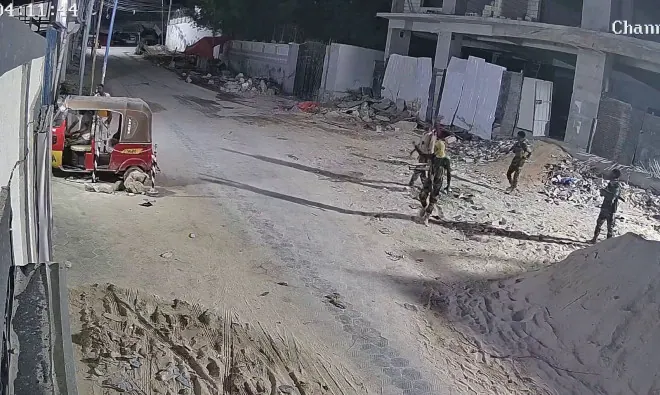
Khaire's warning came amid an escalating dispute between former President Sharif Sheikh Ahmed and Somalia's National Intelligence and Security Agency (NISA). NISA accused armed men operating under Sharif's command of attacking and obstructing its Public Protection Forces in Mogadishu's Wadajir district. The agency alleged that the armed men, carrying AK-47 rifles, BKM machine guns, and rocket-propelled grenades, forcibly entered homes in the Tiintiinley neighborhood and attempted to provoke government forces into an armed confrontation.
Khaire urged the government and opposition to return to negotiations over Somalia's disputed electoral process. He emphasized that military force, threats, and intimidation cannot resolve Somalia's political crisis or its wider national challenges. Instead, he called for inclusive dialogue and a political agreement on the elections. Khaire's comments reflect the growing tensions between the federal government and opposition figures over constitutional changes, the electoral system, and the duration of federal institutions' mandates.
The dispute between Sharif and NISA began with an incident on June 24, when Sharif-aligned forces allegedly attacked NISA personnel and abducted an officer. NISA also accused Sharif's forces of obstructing another security operation three days later. Sharif rejected the accusations, claiming that government forces had targeted members of his office and restricted movement around his residence. Sharif's office alleged that government forces had deployed around his residence, abducted some members of his staff, and restricted deliveries of food and water.
The confrontation highlights the prolonged political dispute between President Mohamud's government and opposition groups. Opposition leaders have pushed for a negotiated electoral agreement, while the federal government has sought to move Somalia toward direct voting through political parties. Talks between the government and opposition groups collapsed in July, and international partners have repeatedly urged Somali leaders to resume dialogue and reach a consensus electoral roadmap.
The situation in Mogadishu remains volatile, with concerns that disputes involving heavily armed security details and government forces could threaten security in the capital. Political tensions have previously spilled into armed confrontations in Mogadishu, adding to concerns that the current dispute could escalate into violence. The international community has warned that unresolved political disagreements could contribute to further instability in Somalia.
The crisis has also drawn attention to the role of national security agencies in Somalia. NISA has stated that it operates independently of political rivalries and will not allow its forces to be drawn into political disputes. However, the agency's actions have been questioned by opposition leaders, who accuse it of being used as a tool for political intimidation. The situation remains a challenge for Somalia's leaders, who must navigate the complex web of alliances and rivalries to find a peaceful resolution to the crisis.
Key points
- Former Somali PM Hassan Ali Khaire warns against military movements around opposition leaders' homes in Mogadishu.
- The dispute between former President Sharif Sheikh Ahmed and NISA has escalated tensions between the federal government and opposition figures.
- International partners have urged Somali leaders to resume dialogue and reach a consensus electoral roadmap to address the country's political crisis.