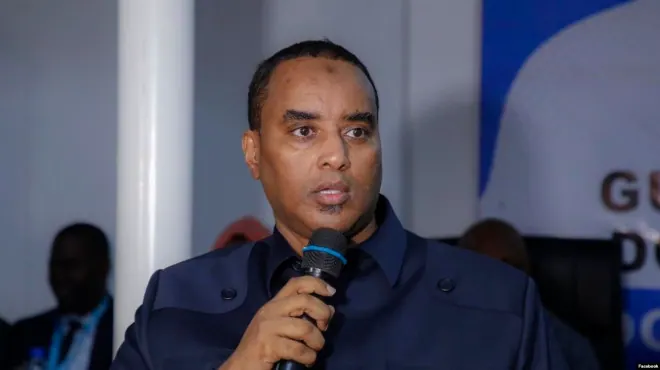
Former Somali intelligence chief Fahad Haji Yasin Dahir has spoken out against reported reductions in financial support for retired soldiers, disabled troops, and families of soldiers killed in the fight against the al-Shabab militant group. In a Facebook post, Fahad expressed concern over the impact of these cuts on the most vulnerable segments of the Somali National Army. He emphasized that the issue has been ongoing, with long-standing complaints regarding the treatment of certain groups within the army.
According to a report published on September 25, families caring for children of soldiers killed in the conflict with al-Shabab have seen a 50% reduction in payments. The monthly allowance per child has been reduced from $200 to $100, with no explanation provided for the cut. Fahad highlighted that any decision to reduce financial entitlements for these groups must be based on clear law, a transparent process, and accountability. He called on President Hassan Sheikh Mohamud and his administration to disclose the legal basis for this decision.
Fahad said that Decree No. 198, issued by the federal government this year, relates to the Agency for the Care of Martyrs' Orphans, the Disabled and Retirees of the Somali National Army. He stressed that the absence of a clear legal basis for the cuts could raise questions about whether the measure complies with laws and regulations meant to protect the rights of fallen soldiers' families, disabled troops, and retirees. Fahad emphasized that financial support for families of fallen soldiers should not be treated as charity, but as a right earned through their sacrifice.
Fahad underscored that soldiers who have made the ultimate sacrifice for their country should be honored and cared for. He noted that the children and spouses of fallen soldiers rely on the nation for support, while soldiers disabled in combat have lost their health and physical ability while defending the country. Fahad's criticism comes as President Hassan Sheikh Mohamud addressed the 81st session of the U.N. General Assembly, highlighting Somalia's commitment to fighting militant groups and strengthening national security institutions.
During his address to the U.N. General Assembly, President Hassan Sheikh Mohamud called for predictable and sustained financing for Somalia's security transition, including adequate funding for the African Union mission. He emphasized that the transfer of full security responsibility to Somali forces must be properly financed. The president's comments highlight the importance of international support for Somalia's security efforts, while Fahad's criticism focuses on the need for the government to prioritize the welfare of its soldiers and their families.
The reported cuts to financial support for disabled soldiers and families of fallen troops have sparked concern among those affected. Fahad's comments have drawn attention to the need for transparency and accountability in the government's decision-making processes. As the situation continues to unfold, it remains to be seen how the government will respond to Fahad's criticism and the concerns of those affected by the reported cuts.
The issue has significant implications for the Somali National Army and the broader security landscape in the country. As Somalia continues to face security challenges, including the threat posed by al-Shabab, the government must balance its security priorities with the need to support its soldiers and their families. The government's response to Fahad's criticism and the concerns of those affected will be closely watched in the coming days and weeks.
Key points
- Former Somali intelligence chief Fahad Haji Yasin Dahir criticizes reported cuts to financial support for disabled soldiers and families of fallen troops.
- The cuts have sparked concern among those affected, with families seeing a 50% reduction in payments for children of soldiers killed in the conflict with al-Shabab.
- Fahad calls on President Hassan Sheikh Mohamud and his administration to disclose the legal basis for the decision and ensure transparency and accountability.