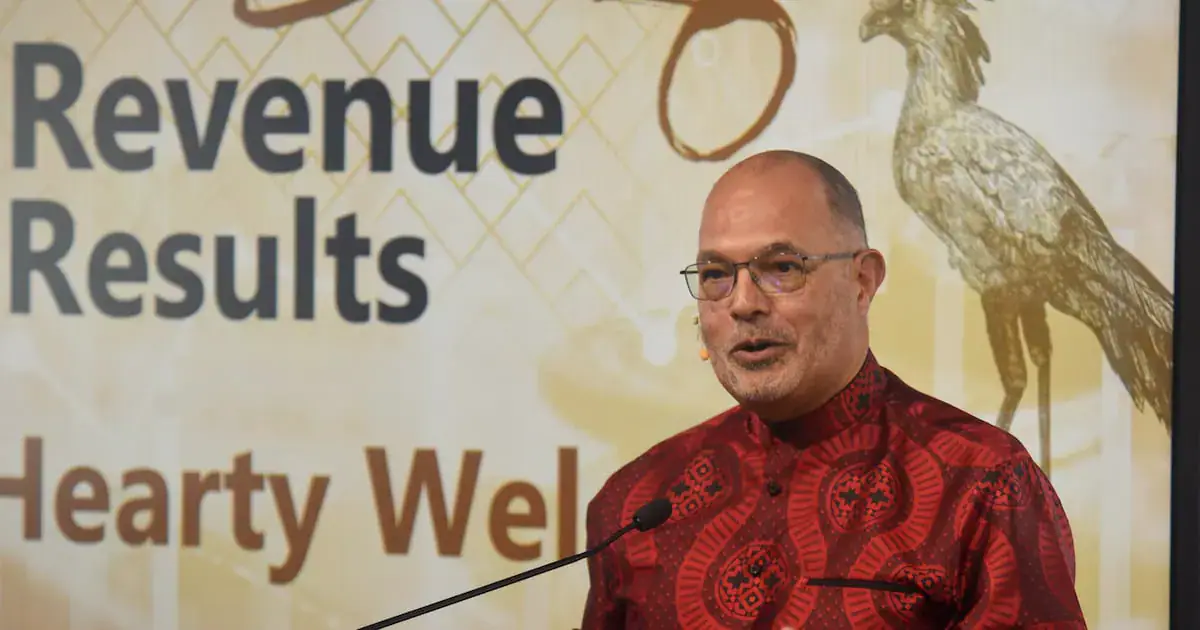
Former South African Revenue Service commissioner Edward Kieswetter has highlighted the weaknesses of disconnected state institutions in the fight against organised crime and the illicit economy, estimated to be worth R1.2-trillion. Kieswetter, who led Sars for seven years, testified at the Madlanga commission, which is investigating allegations of criminal infiltration in law enforcement. He stated that efforts to combat organised crime will remain futile as long as law enforcement agencies work in silos.
Kieswetter described South Africa's institutional ecosystem as fragmented, with institutions operating independently rather than as a cohesive unit. He suggested that even if every institution were to be fixed to be more effective, the weaknesses in the fight against crime would remain. Kieswetter recommended an organisational arrangement that would leverage the respective mandates of institutions towards a common objective, without altering their independence or mandates.
The former Sars commissioner emphasised that the state's response to organised crime is inadequate, with research showing that criminality in South Africa has grown faster than the state's ability to resist it. He connected the dots between organised crime and corruption, which distorts markets, destroys livelihoods, erodes revenue, and weakens public trust. Kieswetter's testimony sought to highlight the need for a unified approach to tackling organised crime.
Kieswetter's main recommendation to the commission was for state institutions such as Sars, the Border Management Authority, the SANDF, and the police to work together to dismantle organised crime. He also suggested involving the National Prosecuting Authority and proposing the sharing of information. This, he believes, would help to diminish the space in which organised crime flourishes.
Kieswetter pointed out weaknesses in the law, stating that even when Sars refers a case to the NPA for prosecution, there is no legal obligation on the NPA to carry out such prosecution. He cited an example of Sars handing over more than 80 illicit tobacco cases to the NPA over three years ago, but receiving hardly any updates. This, he believes, hampers the effective prosecution of organised crime cases.
The former Sars commissioner highlighted the vulnerability of the country's ports to smuggling, customs fraud, and trafficking. He gave examples of how crime takes place, including the preparation of false invoices and the misdescription of cargo. This comes after the commission heard evidence about large drug consignments entering the country through the Port of Durban, with possible involvement from harbour officials.
Kieswetter's testimony has provided insight into the complexities of organised crime in South Africa and the need for a unified approach to tackling it. His recommendations to the commission aim to address the weaknesses in the current system and provide a more effective response to organised crime. The Madlanga commission's findings and recommendations will be crucial in determining the way forward for South Africa's fight against organised crime.
Key points
- State institutions must work together to tackle organised crime and the illicit economy.
- The current system is hampered by weaknesses in the law, including the lack of obligation on the NPA to prosecute cases referred by Sars.
- The country's ports are vulnerable to smuggling, customs fraud, and trafficking, and require a unified approach to prevent these crimes.