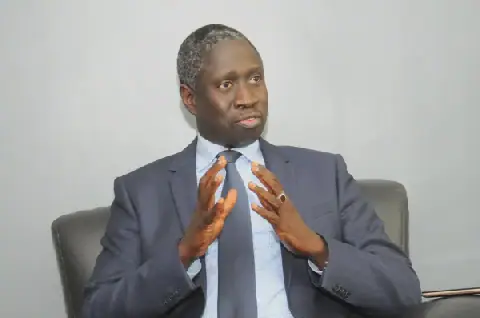
Former President Ernest Bai Koroma has urged Sierra Leoneans, political parties, and state institutions to prioritize dialogue, compromise, and tolerance in order to sustain the country's hard-won peace. Speaking at a press conference at his Femi Turner residence in the Western Area Rural District, Koroma emphasized that collective commitment is essential to maintaining peace and stability. He reflected on his participation in the recent National Peace Conference and Sierra Leone's democratic progress since the end of the civil war in 2002.
Koroma stressed that Sierra Leone cannot afford to repeatedly return to political uncertainty after every election. He described peace as requiring effort, dialogue, compromise, and a willingness to accommodate one another. The former President urged citizens to take advantage of every opportunity to move the country forward. He also identified the need to strengthen independent state institutions as a major priority, emphasizing that public services and justice must be delivered fairly, without political connections or personal influence.
Koroma called for merit-based appointments and greater respect for professionalism, urging authorities to ensure that qualified individuals are given the responsibility to manage public institutions. He argued that while political appointments may change with successive governments, technical professionals should be retained to guarantee continuity and effective delivery of public services. This, he believes, will help to build trust across ethnic, regional, and political divides.
Reflecting on his personal political future, Koroma stated that he had moved beyond seeking political positions and was now more interested in contributing to the country's development. He emphasized that he is no longer aspiring to be chairman or president and looks at things differently. Koroma described constructive criticism as essential to improving leadership performance and strengthening democratic institutions, but cautioned that criticism should be based on objective concerns rather than personal or political interests.
Looking ahead to the 2028 general elections, Koroma raised concerns about unresolved issues surrounding the census and electoral processes, stressing that no group should be disadvantaged. He expressed hope that future elections would be conducted in an atmosphere where winners could celebrate and those who lose would peacefully accept the results, thereby strengthening the country's democratic credentials and creating a more favorable environment for investment.
Koroma reaffirmed his willingness to support President Julius Maada Bio in advancing national peace, while noting that the actions of political leaders could either strengthen or undermine the country's progress. He emphasized that this requires all Sierra Leoneans, irrespective of political parties, to work together. Koroma also acknowledged the challenges facing the Economic Community of West African States (ECOWAS), particularly the withdrawal of three member states, while stressing that Sierra Leone's stability remains important to the wider development of the West African region.
Koroma concluded by urging political leaders, state institutions, and citizens to collectively use the current peacebuilding opportunity to ensure that the 2028 electoral cycle consolidates the country's democratic gains rather than threatens its hard-won peace. He emphasized that there is limited time to address outstanding concerns before political tensions surrounding the next electoral cycle intensify. The former President's engagement with the media is seen as a significant step towards promoting national dialogue and peace in Sierra Leone.
Key points
- Former President Ernest Bai Koroma calls for collective commitment to sustaining Sierra Leone's peace and stability ahead of the 2028 general elections.
- Koroma emphasizes the need to strengthen independent state institutions and promote merit-based appointments.
- The former President expresses hope for peaceful and fair elections in 2028, stressing the importance of national dialogue and cooperation.