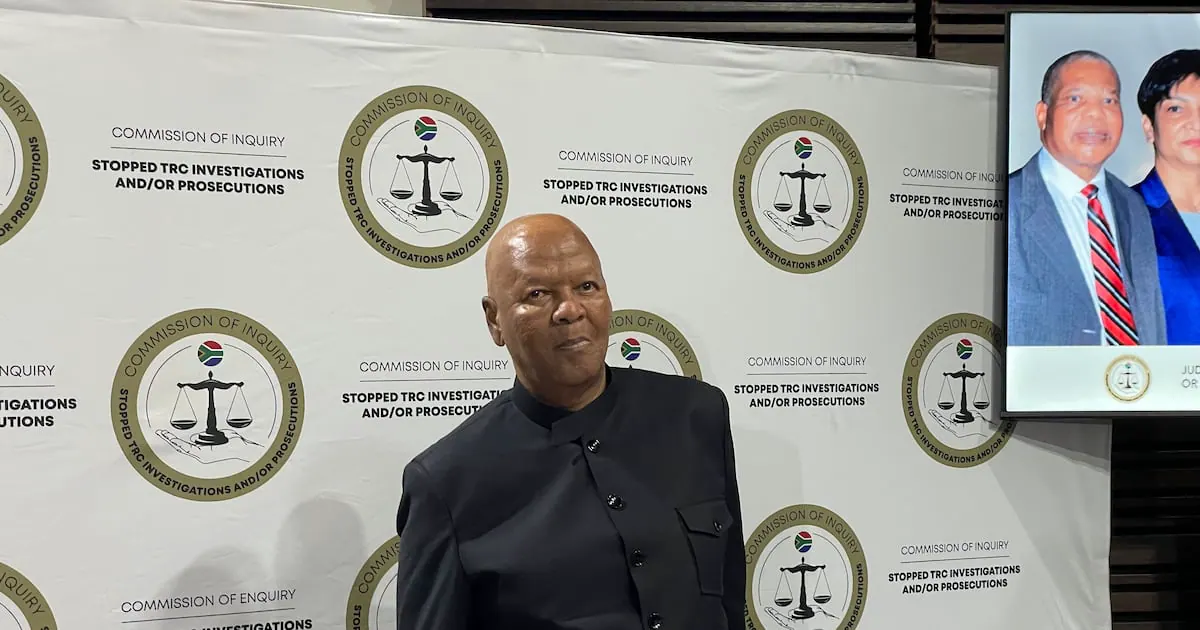
Former South African justice minister Jeff Radebe appeared at the Khampepe commission of inquiry, where he was cross-examined by advocate Howard Varney, who represents the Calata group, a family that lost loved ones during apartheid. Radebe, who served as a minister but not as the minister of justice, was questioned about the government's attitude towards apartheid-era perpetrators who did not submit themselves to the Truth and Reconciliation Commission.
According to Radebe, the government's stance was that those who did not submit to the TRC process should be prosecuted. In 2003, the president outlined this policy in parliament, making it clear that perpetrators who did not come forward would face justice. However, some perpetrators remain free, sparking concerns about the effectiveness of the process. Radebe's testimony is part of an ongoing inquiry into the handling of TRC cases.
During the cross-examination, Varney suggested that cabinet decisions and proposed policy changes reflected an attempt by the government to control the remaining TRC cases and potentially allow perpetrators to avoid prosecution. Radebe rejected this suggestion, stating that he was not the right person to answer for these decisions. He pointed out that he was not the minister of justice at the time and therefore could not provide specific details.
Radebe acknowledged being aware of an amnesty task team established in 2004, which evaluated whether to prosecute past conflict cases, introduce further amnesty, or make legislative changes. However, he could not provide details on the dynamics that influenced the team's decisions. The team was tasked with assessing how to proceed with cases that were not resolved through the TRC process.
Varney distinguished between the original TRC amnesty process and the later measures being examined by the inquiry. He argued that the government's attempts to introduce further measures were efforts to assist perpetrators in escaping justice post-TRC. Radebe maintained that he could not take the argument further, repeating that he had already stated his position.
Radebe also acknowledged that families of victims killed during apartheid have the right to justice and may be entitled to some form of compensation. He reflected on his own experience with the TRC amnesty process, having received amnesty for crimes committed during apartheid. This personal experience informed his perspective on the complexities of the TRC process.
The inquiry continues to examine the government's handling of TRC cases and the fate of apartheid-era perpetrators who did not submit to the TRC process. Key issues include the extent to which the government pursued prosecution and the impact on victims' families. The commission's findings are expected to shed light on these contentious issues.
Key points
- Former minister Jeff Radebe was cross-examined at the Khampepe commission of inquiry over the government's handling of apartheid-era perpetrators.
- Radebe stated that the government's policy was to prosecute those who did not submit to the TRC process.
- The inquiry continues to examine the government's actions and their impact on victims' families.