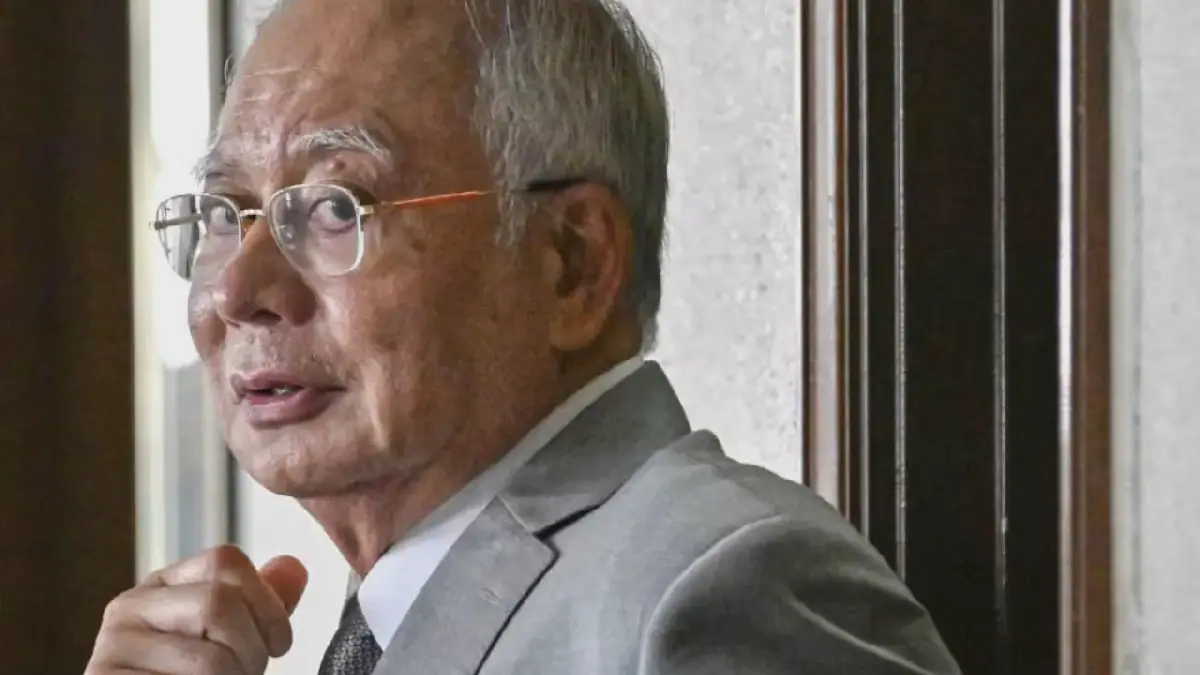
Former Malaysian Prime Minister Najib Razak has been released from prison to serve the remainder of his sentence under house arrest. The 73-year-old was convicted for his role in the 1Malaysia Development Berhad (1MDB) financial scandal. He was granted a royal pardon, allowing him to serve his sentence at his residence in a upscale Kuala Lumpur neighborhood. Najib Razak had been imprisoned for four years prior to his release.
The property where Najib Razak will be serving his sentence has been officially designated as a federal penitentiary. The 4,550 square meter property had been prepared for his return. According to reports, Najib Razak will remain under house arrest until August 2028. The former Prime Minister was initially sentenced to 12 years in prison, but a royal pardon in 2024 reduced his sentence to six years.
Najib Razak's troubles with the law are not yet over. He was also convicted in December 2025 for another case related to the 1MDB scandal. He was sentenced to 15 years in prison and ordered to pay a fine of $2.8 billion. Najib Razak has appealed the conviction. If his appeal is unsuccessful, he may be required to return to prison after his house arrest term.
The decision to grant Najib Razak a royal pardon has sparked criticism from anti-corruption activists. They argue that the former Prime Minister is receiving preferential treatment and that Malaysia lacks laws governing house arrest. The 1MDB scandal involved the embezzlement of approximately $4.5 billion from a sovereign wealth fund that Najib Razak created and supervised.
Najib Razak's party reportedly paid the outstanding fine, allowing him to be transferred to house arrest. The former Prime Minister lost power in 2018 amid the 1MDB scandal. His conviction and subsequent pardon have raised concerns about equality before the law in Malaysia.
Anti-corruption activists have expressed concerns that the house arrest arrangement could set a bad precedent. They argue that it undermines efforts to combat corruption and ensure accountability among public officials. The New York Times reported on Najib Razak's release and the terms of his house arrest.
The case has highlighted the need for Malaysia to strengthen its laws and regulations regarding corruption and the treatment of high-profile offenders. Najib Razak's situation will continue to be monitored as he serves his sentence under house arrest. His party's involvement in paying his fine has also raised questions about the relationship between politics and corruption in Malaysia.
Key points
- Najib Razak's release from prison and transfer to house arrest has sparked criticism from anti-corruption activists.
- The former Prime Minister still faces a 15-year prison sentence in another case related to the 1MDB scandal.
- The royal pardon granted to Najib Razak has raised concerns about equality before the law in Malaysia.