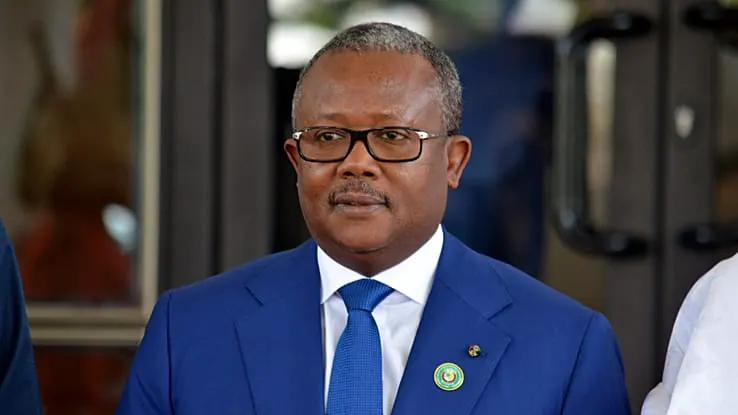
Former Guinea-Bissau President Umaro Sissoco Embalo, who was ousted in a coup on November 26, has announced plans to return to the country and run in the presidential election scheduled for December 6. Embalo, who has been in exile, stated that he would return to Guinea-Bissau, although he did not specify when. The military junta that took power after the coup has set the date for presidential and legislative elections to restore civilian rule.
The coup that ousted Embalo occurred just days after a presidential election, and many observers suspect that he orchestrated the coup to prevent what seemed to be an impending loss. The junta, led by General Horta N'Tam, a close collaborator of Embalo, has fixed the date for the elections. N'Tam has stated that Embalo is free to return to the country if he has nothing to hide. Some militants have indicated on social media that they are preparing Embalo's return for Sunday.
According to analyst Malam Cissé, there is no legal obstacle to Embalo's return to Guinea-Bissau, as he was ousted by a coup and did not sign any document renouncing power. Professor of history Bassirou Sadio agrees, stating that as long as the legal conditions are met, Embalo should be able to participate in the political life of the country while respecting established rules. However, N'Tam, who is also the transitional president, is not eligible to run in the presidential election.
The military justified the coup by claiming that it was necessary to maintain national order after discovering a plot to destabilize the country involving drug barons. The junta has also cited a constitutional amendment approved in August, which grants more powers to the president, as a means to stabilize institutions before the December elections. However, the opposition has urged voters to boycott the election, citing concerns about the legitimacy of the process.
Guinea-Bissau has a history of instability, with five coups and several attempted coups since gaining independence from Portugal in 1974. The country has struggled with poverty, corruption, and drug trafficking, making it a challenging environment for governance. The constitutional amendment has also raised concerns about the concentration of power and the potential for authoritarianism.
The country's political climate remains tense, with many questioning the legitimacy of the upcoming election. The opposition has expressed concerns about the process, and some have called for a boycott. Despite these challenges, Embalo's decision to return and run in the election has sparked interest and debate among Guineans.
As the election approaches, the international community is watching closely, concerned about the stability of the region. Guinea-Bissau's experience is not unique, as several African countries have sought to modify or revise their constitutions to extend presidential terms or powers. The outcome of the election will likely have significant implications for the country's future and its relations with the international community.
Key points
- Umaro Sissoco Embalo plans to return to Guinea-Bissau and run in the December 6 presidential election.
- The military junta that ousted Embalo has set the date for presidential and legislative elections to restore civilian rule.
- The country's political climate remains tense, with concerns about the legitimacy of the election and the potential for instability.