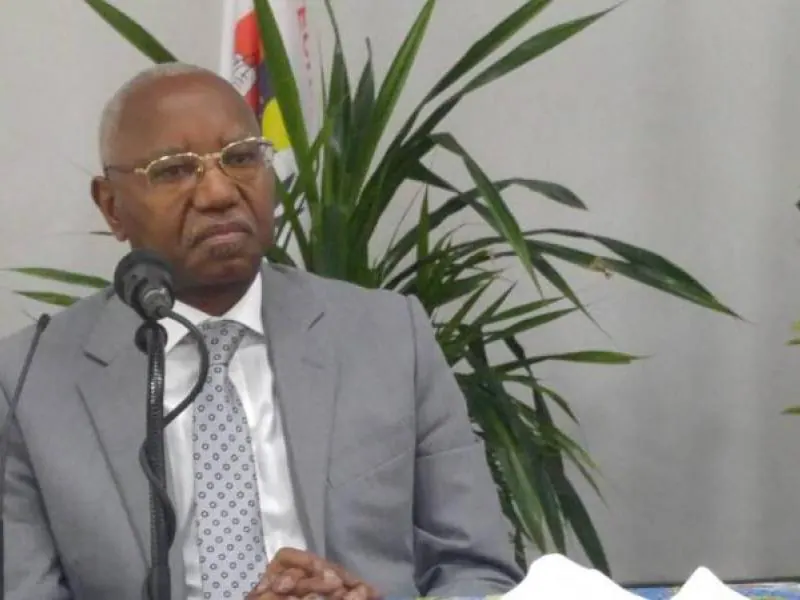
Jean-Claude Masangu Mulongo, former governor of the Central Bank of Congo (BCC), has acknowledged that the institution used "extensive printing of money" during the 1998 war in the Democratic Republic of Congo. In a live Space discussion organized by Stanis Bujakera Tshiamala on October 6, Masangu explained that the BCC's primary goal was to support the government's war effort. With the state's budget being "meager," the central bank resorted to creating money to enable the government to defend itself.
The war, which began in August 1998, was "long and painful," according to Masangu. To finance the government's activities, the BCC injected Congolese francs into the economy "without counterpart." This approach led to a surge in inflation, which the central bank later addressed by introducing certificates of deposit with interest rates indexed to inflation. These rates reached 20-25% per month at times, attracting public savings and reducing the need for money printing.
The BCC also implemented a restrictive monetary policy based on a "cash basis" principle, where the government's spending was limited to its available means. This approach, described by Masangu as "entering and exiting" with strict control over inflows and outflows, helped to curb hyperinflation over time. The central bank's actions, combined with assistance from the International Monetary Fund, ultimately led to a return to economic growth.
Masangu's comments provide insight into the challenges faced by the DRC during the late 1990s and early 2000s. The country's economy was severely impacted by the war, which disrupted trade, investment, and economic activity. The BCC's monetary policy decisions played a crucial role in stabilizing the economy and restoring growth.
The use of certificates of deposit with high interest rates was a key strategy employed by the BCC to mop up excess liquidity and reduce inflationary pressures. By offering attractive interest rates, the central bank encouraged the public to save and invest in these instruments, thereby reducing the amount of money in circulation and helping to combat inflation.
Masangu's discussion of the BCC's actions during this period highlights the complexities of monetary policy in a conflict-affected economy. The central bank's decisions had to balance the need to support the government's war effort with the need to maintain economic stability and control inflation.
The DRC's experience with hyperinflation and the BCC's response to it offer valuable lessons for policymakers and economists. The country's ability to overcome these challenges and return to economic growth is a testament to the effectiveness of sound monetary policy and international cooperation.
Key points
- The Central Bank of Congo used extensive printing of money to finance the government's war effort in the late 1990s.
- The bank later introduced certificates of deposit with high interest rates to combat inflation and restore economic stability.
- The BCC's actions, combined with IMF assistance, helped the DRC to overcome hyperinflation and return to economic growth.