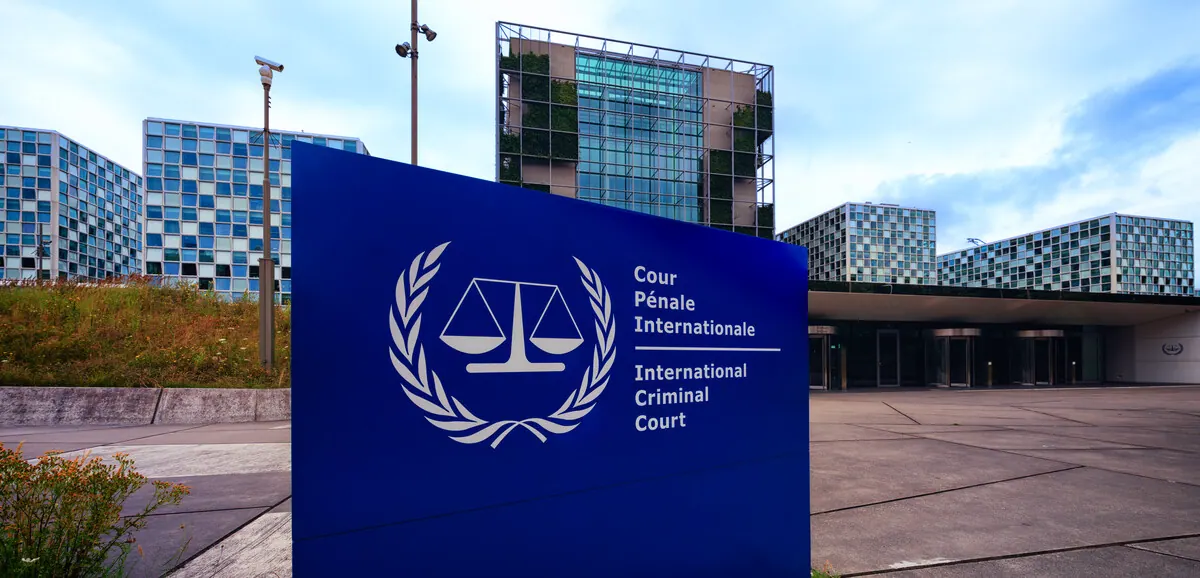
The International Criminal Court (ICC) on Wednesday, September 23, found Mahamat Saïd Abdel Kani, a former Central African rebel leader, guilty of four counts of crimes against humanity committed in 2013 in Bangui, the capital of the Central African Republic. Abdel Kani, 56, was convicted of torture and illegal imprisonment, among other charges. The ICC found that he oversaw beatings and mistreatment of detainees when he headed the Office Central de Répression du Banditisme (OCRB) in Bangui.
According to the ICC, Abdel Kani supervised the torture and ill-treatment of prisoners while he was in charge of the OCRB. The prisoners were subjected to various forms of torture, including being tied up and beaten with ropes or whips, and then doused with water. Some were held in a small, unsanitary cell under Abdel Kani's office, without access to basic amenities. The prisoners were forced to urinate and defecate in the cell, which was dark, cramped, and poorly ventilated.
The ICC judge, Miatta Maria Samba, detailed the methods of torture used against the detainees. The prisoners were also subjected to physical abuse, including being beaten with cords or whips. The court heard that one of the victims had their life "entirely destroyed" by the mistreatment they suffered. The ICC emphasized the lasting impact of the abuse on the victims, their families, and their lives.
Abdel Kani was a key commander of the Séléka, a predominantly Muslim rebel coalition that overthrew President François Bozizé in 2013. The coup led to a civil war marked by inter-communal violence. Bozizé had established predominantly Christian and animist militias, known as the anti-Balaka, to regain power. The conflict between the two groups resulted in thousands of deaths and hundreds of thousands of displaced people.
The Central African Republic has made progress towards stability since an agreement was signed in Khartoum in 2019. However, the ICC continues to pursue cases related to the conflict. Last year, the ICC convicted two anti-Balaka leaders, Patrice-Édouard Ngaïssona and Alfred Yekatom, of war crimes and crimes against humanity. Ngaïssona was sentenced to 12 years in prison, while Yekatom received a 15-year sentence.
The ICC will sentence Abdel Kani at a later date. He was acquitted of three counts of war crimes. The court's verdict was welcomed by human rights groups and victims of the conflict. The ICC's decision sends a strong message that those responsible for atrocities will be held accountable.
The conflict in the Central African Republic has had a lasting impact on the country and its people. The ICC's work aims to bring justice to the victims and their families. The court's proceedings also serve as a reminder of the importance of accountability for those in power.
Key points
- The ICC convicted Mahamat Saïd Abdel Kani of four counts of crimes against humanity committed in 2013 in Bangui, Central African Republic.
- Abdel Kani was found guilty of torture and illegal imprisonment, among other charges.
- The ICC will sentence Abdel Kani at a later date.