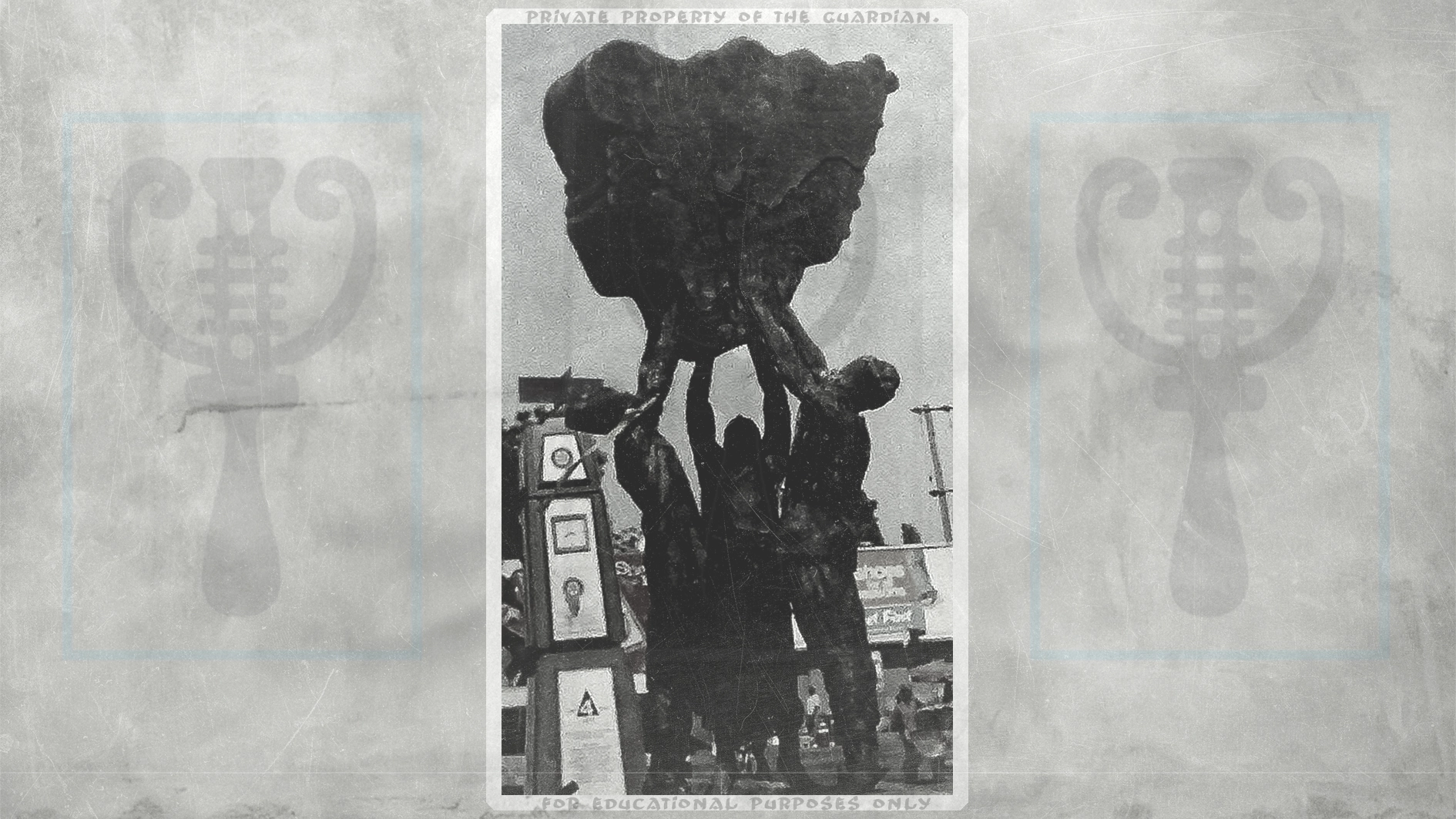
A long-forgotten public monument in Nigeria once stood as a powerful symbol of national unity and cooperation. The sculpture, titled "Salvaging Nigeria," was commissioned on November 22, 1991, by then-Lagos State Deputy Governor Alhaja Lateefa M. Okunu. It was created by a group of National Youth Service Corps members who aimed to capture the spirit of inter-ethnic cooperation and national integration. The monument featured three human figures straining to hoist a massive map of Nigeria into the air.
The sculpture was located at Maryland Junction in Ikeja, Lagos State, and served as a visual manifesto for a country striving for stability. The artwork was a deliberate plea to help build a virile nation, as evident from a handwritten editorial caption on the back of old media records. The image of the sculpture, photographed in early January 1992, captures a moment in Nigerian history when public art was used to foster patriotism and civic duty.
The core power of the sculpture lies in its literal interpretation, positioning the country as a heavy physical mass that requires active and collective support from its people to avoid collapse. The three figures represent the major regions and ethnic backgrounds of Nigeria working together in alignment. The sculpture is a stark visual statement that the survival of the republic is an ongoing act of collaboration, requiring the active participation of its citizens.
The monument's message is particularly relevant in today's Nigeria, which faces significant economic pressures, currency fluctuations, and institutional friction. While leadership holds accountability, the sculpture shifts the focus to the grassroots base, asking questions about the modern citizen's role in keeping the nation afloat. It calls for a collective lift, accepting a shared civic burden, and embracing collaboration across communities.
The sculpture's visual metaphor implies that governance and citizen responsibility are two sides of the same coin. A government can enact policies, but the actual execution of a unified society requires everyday people to bear the communal weight. The monument serves as a socio-political commentary on the importance of collective action and civic participation in moving the nation forward.
Despite its significance, the monument was eventually removed due to urban redevelopment and road expansions that swallowed the Maryland intersection. However, its imagery remains preserved in old media records, providing a glimpse into a forgotten era when Nigerian art carried the weight of a nation. The sculpture's message continues to resonate, encouraging citizens to reflect on their role in nation-building.
The "Salvaging Nigeria" monument serves as a powerful reminder of the importance of collective action and civic responsibility in nation-building. Its legacy continues to inspire, urging citizens to work together to move the nation forward and address the challenges facing the country. The sculpture's impact is a testament to the enduring power of art to shape public discourse and foster national unity.
Key points
- The sculpture "Salvaging Nigeria" symbolized inter-ethnic cooperation and national integration in Nigeria.
- The monument served as a visual manifesto for a country striving for stability and a plea for citizens to work together to build a virile nation.
- The sculpture's message continues to resonate, encouraging citizens to reflect on their role in nation-building and the importance of collective action and civic responsibility.