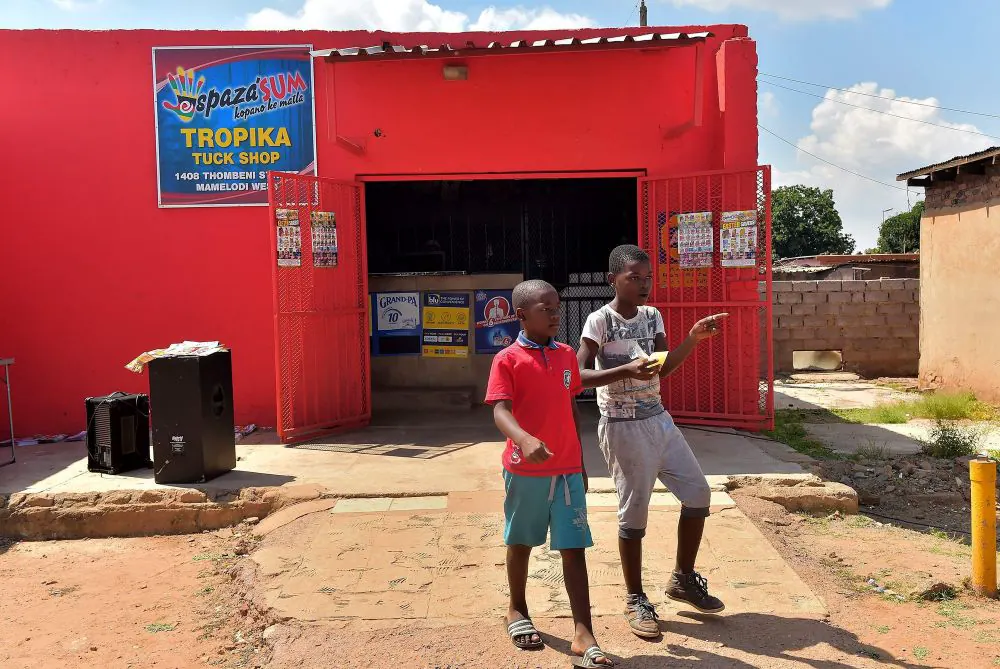
A recent report titled “The Nature of Stealthy Remittance in South Africa” has revealed that foreign-owned spaza shops are being used as channels for illicit financial activities in South Africa. The report estimates that R6.3 billion generated by these spaza shops was illegally moved out of the country through unregistered SIM cards and informal cash networks. This has contributed to South Africa's grey listing due to poor systems for tracking money laundering and terrorist financing.
According to government data, out of roughly 87,000 recently registered spaza shops nationwide, non-South African citizens own approximately 32,824, or about 38%. However, regional estimates and informal sector figures indicate that foreign nationals operate a much higher percentage of unregistered or total informal township stores, ranging from 50% to over 70%. The report stated that the use of such channels often occurs outside formal financial systems and may result in remittances that are neither recorded nor taxed.
The study warned that the increase of informal social networks, digital communication platforms, and community-based remittance systems has created alternative financial ecosystems that operate parallel to formal banking institutions. These networks facilitate the movement of funds while simultaneously reducing the visibility of transactions to regulatory authorities such as the South African Revenue Service (SARS) and the South African Reserve Bank (SARB).
Parliamentary committees have raised serious concerns about billions of rand leaving the country through unmonitored channels, including cash generated by informal traders like spaza shops. MPs have argued that these untaxed, illegal outflows drain the national fiscus and starve public services of vital revenue. SARS is actively targeting the estimated R200bn spaza shop sector as part of an aggressive strategy to expand the national tax base.
Financial investigation consultant Emerald van Zyl said that banks were also supporting terrorist groups, which had a profound impact when many individuals advanced to positions as Cabinet ministers or bank directors, creating a conflict of interest that prevented them from holding banks accountable. This ultimately led to the failure of consumer protection in South Africa.
The 2025 SARB report revealed that South Africa's banking sector faces high inherent money laundering, terrorist financing, and proliferation financing risks, especially among larger domestic institutions. SARB, through its Prudential Authority (PA), recently announced a R28 million fine against Capitec Bank for administrative non-compliance with the Financial Intelligence Centre Act (FICA).
The penalties are part of an aggressive enforcement strategy by regulators to clean up South Africa's financial systems after the country was placed on the global financial watchdog's grey list. South Africa ultimately exited the grey list in October 2025. According to the SARB report, the banking sector served about 80.2 million clients at the close of 2024, with undocumented foreign nationals reportedly using informal financial mechanisms and accessing transactional services through proxy setups or unverified means.
Key points
- Foreign-owned spaza shops in South Africa are allegedly linked to terror groups and illicit financial activities.
- An estimated R6.3 billion generated by these spaza shops was illegally transferred out of the country.
- The South African banking sector faces high inherent money laundering, terrorist financing, and proliferation financing risks.