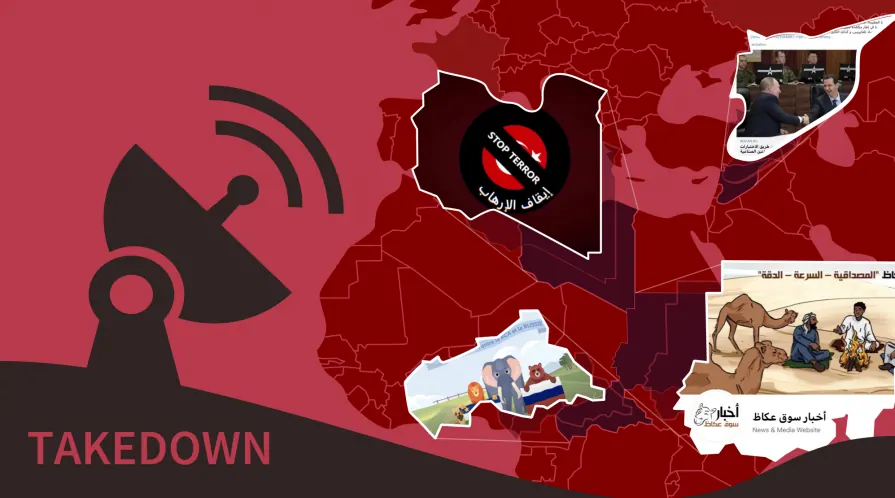
A report by the Centre for Digital Policy Studies at Stafford University and the digital research organisation Grafika has shed light on foreign intervention in social media in Libya, Sudan and Syria. The report, titled "Fueling Conflict at the Click of a Button: Libya, Sudan and Syria", is part of a series of reports focusing on foreign intervention in the digital sphere in various countries, including Mali and the Central African Republic.
The report reveals that foreign parties have been involved in fuelling conflict in Libya through social media. Libya has been a target for misinformation in previous years, with Facebook taking steps to halt the activities of groups providing false information to Libyans. These groups were found to be linked to foreign entities in countries such as Saudi Arabia, the UAE, Egypt and Russia.
Facebook provided information on 99 pages, six groups and 22 personal accounts on Facebook and 22 Instagram accounts that were involved in spreading misinformation in Libya, Syria and Sudan. These accounts claimed to be independent media outlets but were found to be promoting false information. The pages had posted content over 150,000 times, with 25 of them focusing on entertainment content such as art, music and literature.
Researchers have proposed two theories to explain the existence of these pages. The first theory suggests that they were operating at a covert level to spread misinformation, while the second theory proposes that they were initially building an audience using entertainment content before shifting to political content. This theory is based on previous reports that studied one of the pages and found that it initially posted entertainment content before switching to political content.
An investigation into these pages found that they were managed by individuals in Russia and Palestine, with one page having over 80,000 followers. The report also identified six Facebook groups, five of which had fewer than 300 members, but one group, "Benghazi Rises the Original", had 65,500 members. The purpose of this group was unclear, but researchers speculate that it may have been used for coordination.
The report categorizes the content of these pages into various topics, including opposition to Turkish intervention, the assassination of Hanan al-Baraqasi, the detention of Russian sociologist Maxim Shugaley, corruption among local politicians, content supporting Gaddafi, the UN conference on the Libyan peace agreement and incitement of war. The report provides detailed examples of the pages and their content.
The report highlights the issue of foreign intervention in Libyan affairs through social media, where external actors exploit sensitive topics to promote their agendas. While it is legitimate for Libyan citizens to express their opinions, the problem arises when foreign actors use these platforms to influence public opinion.
Key points
- Foreign intervention in Libyan social media has been used to spread misinformation and influence public opinion.
- Facebook has taken steps to halt the activities of groups providing false information to Libyans.
- Researchers have identified two theories to explain the existence of pages spreading misinformation in Libya.