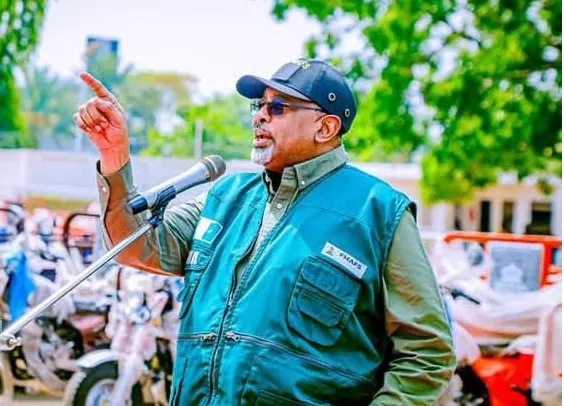
Nigeria's Minister of Agriculture and Food Security, Abubakar Kyari, announced that the prices of essential food commodities have reduced by up to 50 per cent across the country. He made this statement in Maiduguri while declaring open the Community of Practice Meeting of Commissioners for Agriculture, Health, Environment and Rural Development in Borno State. The meeting was organised by the Federal Ministry of Agriculture and Food Security, in collaboration with the Borno State Government and supported by Germany.
According to Kyari, President Bola Tinubu had placed food security at the centre of the national agenda. He emphasized that their responsibility is to translate that mandate into increased production, greater affordability, stronger rural economies, and a more resilient food system. The Minister noted that the reduction in food prices is a result of expanded input delivery, investment in rural infrastructure, and support to smallholder farmers.
Kyari compared the current prices of food items to those prior to 2023, stating that the prices have significantly dropped. He cited the example of a bag of rice and maize, saying that the percentage decrease is substantial. The Minister urged participants not to politicize the issue, emphasizing the importance of focusing on implementation.
The summit took into account the Kampala Comprehensive, African, Development Program Declaration and its Strategy and Action Plan for 2026–2035. The Kampala framework takes a broader agrifood systems approach, with priorities spanning sustainable production, investment and finance, food and nutrition security, trade, inclusion, resilience, and stronger governance. Kyari noted that Nigeria has developed and validated a 10-Year National Agrifood System Strategy and Action Plan.
The Minister emphasized that the summit provides an important sub-national mechanism for taking the declaration into implementation. He urged states to leave the meeting with a clear understanding of how their action plans will advance the Kampala commitments and align with national priorities. These priorities include rural infrastructure, extension, credit, quality inputs, labour-saving technologies, post-harvest loss reduction, and climate-resilient agriculture.
Dr Karin Jansen, Head of Development Cooperation at the German Embassy in Nigeria, assured that Germany will continue to support Nigeria through strengthening of agricultural policy processes, scaling successful approaches, and strengthening civil society participation. Germany's support is being provided through the Sustainable Agricultural Systems and Policies project – AgSys.
The success of the Kampala Agenda will be measured by the results it delivers, including better policies, stronger institutions, effective investments, and tangible improvements in people's lives. The meeting in Borno aims to strengthen existing structures and help turn national commitments into action where it matters most. The German Embassy's support is geared towards achieving these goals in Nigeria.
Key points
- Food prices have reduced by up to 50 per cent nationwide.
- The reduction in food prices is attributed to expanded input delivery, investment in rural infrastructure, and support to smallholder farmers.
- Nigeria has developed a 10-Year National Agrifood System Strategy and Action Plan to achieve food security.