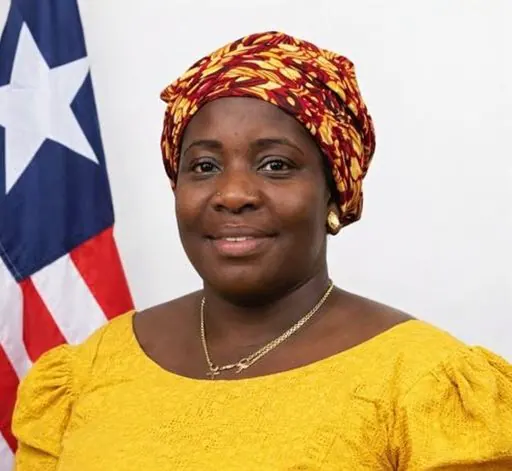
The Food Authority of Liberia (FAL) has transformed from a dormant institution to an active food-safety regulator in 18 months under Director General Precellia Cherue. Appointed by President Joseph Nyuma Boakai in March 2025, Cherue inherited an institution that existed largely on paper. FAL now presents itself as a science-driven regulator that seizes unsafe products, develops commodity-specific standards, and coordinates a once-fragmented system.
The Food Authority of Liberia was established by the Food and Feed Quality and Safety Act of 2019, designating it the competent authority responsible for food safety and quality across the entire food and feed supply chain. However, the Authority remained inactive for years, with food safety handled by several institutions, including the Ministry of Health and the Ministry of Commerce and Industry. This led to fragmented oversight, unaccounted inspection data, and weak surveillance.
One of Cherue's first practical changes was moving the Authority from a single-room office at the Ministry of Health to ten offices in the former maternity center at the old Ministry of Health compound. In June 2025, FAL held its first World Food Safety Day celebration, marking a strategic shift toward evidence-based food safety practices. Cherue convened a national stakeholder consultative meeting on food safety governance, bringing together government ministries, the private sector, and civil society.
In October 2025, Cherue led a delegation to the Ministry of Justice to formalize the Authority's enforcement role, securing recognition of FAL as the authoritative body for food safety. The two institutions agreed to form a partnership to improve coordination and legal enforcement. FAL subsequently announced it would prepare a five-year strategic plan and launch a national awareness campaign to educate citizens on its work.
In January 2026, FAL carried out its first major public enforcement action: the disposal and burning of 190,000 packs of Ghanaian-made Tasty Tom Tomato Mix found unsafe. This marked the Authority's arrival as a regulator willing to take goods off the shelves. Cherue stated that all decisions are based on science and the law, and Liberia will not compromise on food safety.
In April 2026, Liberia formally launched the Liberian Food Safety Coordination Committee, a national platform bringing government institutions, private-sector actors, development partners, and civil society under one structure. Cherue was elected Chairperson of the committee, which aims to improve regulatory coherence, enhance accountability and transparency, and strengthen collaboration.
Despite progress, a national assessment found that 73 percent of food businesses surveyed were unaware of relevant food-safety regulations, and 78 percent did not follow formal standards. A US$11.3 million financing gap also stands between plan and practice. The Authority has launched its 2026–2030 Strategic Plan, and partners from Brussels to Tokyo have lined up behind Cherue, but the harder question is whether the woman buying fish and pepper at Rally Time Market is safer today.
Key points
- The Food Authority of Liberia has grown from a dormant institution to a credible, science-driven regulator under Director General Precellia Cherue's leadership.
- The Authority has developed a five-year strategic plan and launched a national awareness campaign to educate citizens on its work.
- A US$11.3 million financing gap stands between plan and practice, despite international support for the Authority.