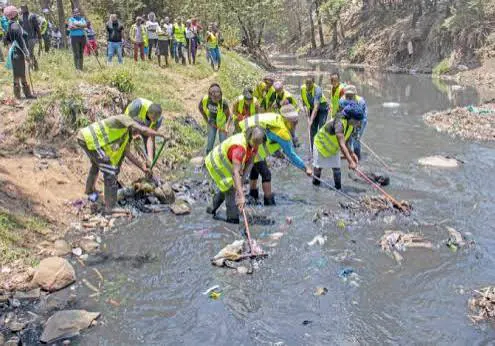
In Kibera, Kenya's largest informal settlement, drainage cleaners have made a disturbing discovery. They have repeatedly found foetuses in trenches and rivers, raising concerns about unsafe abortion and abandoned pregnancies. Bolvine Boseretse, a community health promoter, recalls finding a foetus while clearing a drainage channel near Moyale. The police failed to respond, and Boseretse and his colleagues buried the foetus. This incident is not an isolated case, with multiple foetuses discovered in the area.
Reproductive health advocates in Kibera say these discoveries highlight a public health crisis. They blame stigma, poverty, sexual exploitation, and inadequate reproductive health information for pushing vulnerable girls towards dangerous procedures. Agnes Odero, a safe abortion champion, says some girls resort to using household items or herbal mixtures to terminate pregnancies, often with fatal consequences. Condemnation from families and communities silences girls instead of helping them access healthcare.
Kenya's Constitution permits abortion under specified circumstances, but advocates say access to lawful, safe healthcare remains a challenge. Doris Kathia of Raise Your Voice, a community-based organisation, links unintended pregnancies among vulnerable girls to poverty, sexual exploitation, family rejection, and inadequate reproductive health information. She argues that having laws on paper does not guarantee accessible services.
The African Population and Health Research Center estimates that complications associated with unsafe abortion claim approximately 2,600 women's and girls' lives annually in Kenya. A national study published in May 2025 found that 792,694 induced abortions occurred in Kenya in 2023, with only 18 per cent of primary-level facilities and 24 per cent of referral-level facilities meeting standards for comprehensive post-abortion care.
Globally, the World Health Organization estimates that approximately 73 million induced abortions occur annually, with around 45 per cent classified as unsafe. A review covering 2009–2020 found that abortion accounted for eight per cent of maternal deaths worldwide. These figures reinforce the need for accessible contraception, accurate reproductive health information, lawful and safe abortion care, and timely post-abortion treatment.
Authorities must investigate reports of abandoned foetuses, while families and communities must replace condemnation with support. The challenge extends beyond hospitals and legislation. Girls need to know where to seek help, health workers need to provide appropriate care without discrimination, and policymakers must ensure that constitutional protections translate into services on the ground.
For girls in Kibera, the difference between being condemned and being supported could determine whether an unintended pregnancy becomes a medical emergency. Ensuring that every girl can access accurate information and healthcare is crucial to addressing Kenya's unsafe abortion crisis.
Key points
- Unsafe abortion complications claim approximately 2,600 lives annually in Kenya.
- 792,694 induced abortions occurred in Kenya in 2023.
- Only 18 per cent of primary-level facilities meet standards for comprehensive post-abortion care.