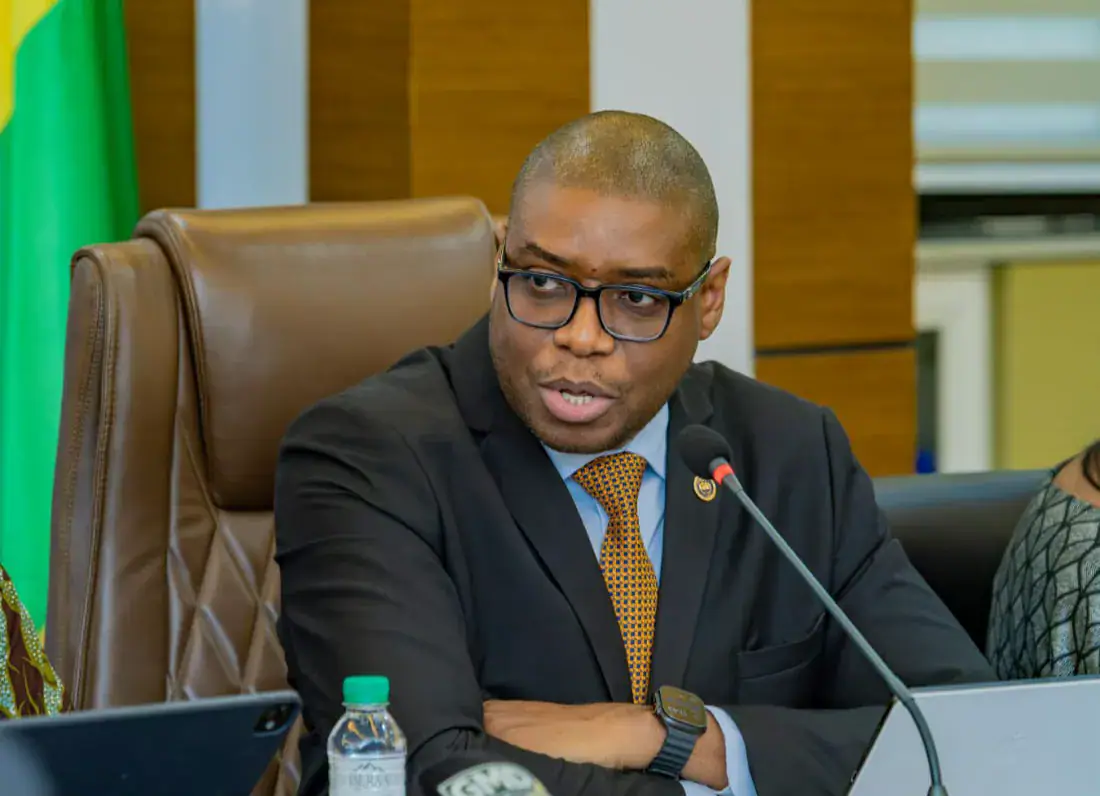
The International Monetary Fund (FMI) has clarified its position on a $425 million financing package allocated to Guinea. Dr. Nérée Noumon, FMI's resident representative, addressed concerns over alleged conditions imposed on the Guinean authorities in exchange for the funding. At a press conference held at the Ministry of Economy, Finance, and Budget, Dr. Noumon emphasized that no conditions have been imposed on Guinea.
Dr. Noumon specifically addressed the sensitive issue of subsidies, which has been a topic of debate. He categorically denied that the FMI has imposed any directives on Conakry, stating that "there is nothing that has been imposed on the Guinean authorities." He welcomed the opportunity to set the record straight amidst circulating accusations. The FMI's official stance is to encourage the development of a "reduction strategy" rather than demanding immediate subsidy cuts.
According to Dr. Noumon, the FMI's Board of Directors does not require an immediate reduction in subsidies. Instead, the institution advocates for a strategy to be developed at a time convenient to the Guinean authorities. The representative emphasized that several preliminary steps are necessary before implementing any reforms, including consultations, adapted communication, and solid accompanying measures, particularly in the transportation sector.
The FMI's gradual approach prioritizes protecting the most vulnerable social groups. As part of the ongoing program, Guinean authorities have committed to strengthening their targeting mechanisms to accurately identify vulnerable populations before making any changes to the current subsidy system. This process is expected to take time, according to Dr. Noumon.
The FMI's financing package aims to support Guinea's economic development. The funding is part of a broader effort to promote economic growth and stability in the country. Dr. Noumon's clarification comes as a response to concerns over the potential conditions attached to the financing.
The Guinean authorities have expressed their commitment to working with the FMI to implement necessary reforms. The country's Minister of Economy, Finance, and Budget, as well as the Governor of the Central Bank, were present at the press conference, highlighting the government's engagement with the FMI.
The FMI's engagement with Guinea reflects the institution's efforts to support economic development in the region. The $425 million financing package is a significant investment in the country's economic future. Key points include:
Key points
- The FMI has not imposed any conditions on Guinea in exchange for the financing.
- The institution advocates for a gradual approach to subsidy reduction.
- The Guinean authorities have committed to strengthening their targeting mechanisms to protect vulnerable populations.