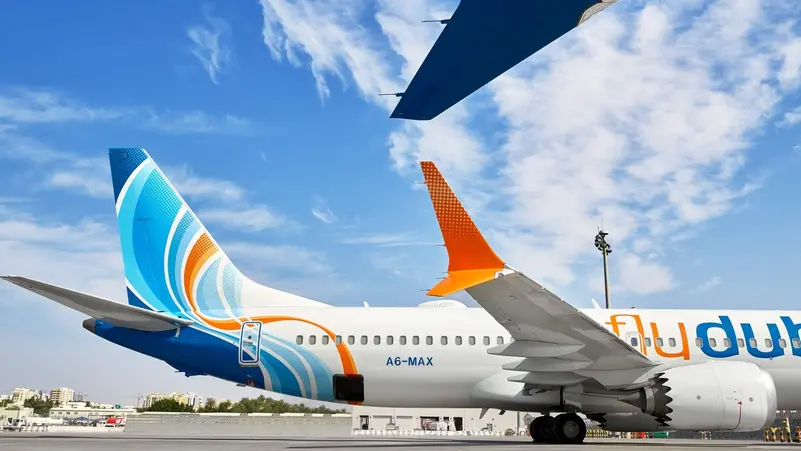
A FlyDubai flight heading from Dubai to Tel Aviv sparked a significant security alert on Wednesday after sending out distress signals, including a code associated with hijacking. The flight, numbered FZ1073, had 180 passengers on board, including over 100 Israelis. The plane, a Boeing 737 Max 8, sent out an international distress signal coded 7700, followed by a signal coded 7500, which is specifically associated with hijacking or unlawful interference.
According to flight tracking data from FlightRadar24, the distress signals were sent while the flight was over Jordanian airspace. Shortly after sending the signals, the flight changed course and diverted towards Saudi Arabia. The plane eventually landed at Tabuk Airport in northwest Saudi Arabia at around 9:50 am local time, instead of landing at Ben Gurion Airport in Israel.
Israeli security sources initially suggested that the incident might have been related to a hijacking or unlawful interference. However, FlyDubai later clarified that the incident was caused by a dispute between crew members, specifically a scuffle on board. The airline emphasized that the situation was not related to a security threat or an attempted hijacking.
Reports indicate that the incident began with an altercation in the cabin, reportedly sparked by passengers smoking. The situation escalated into a fight, and there were also reports of a confrontation between the pilots. This confrontation led to the activation of distress signals.
The Israeli Prime Minister, Benjamin Netanyahu, and Defense Minister, Yoav Gallant, held an emergency meeting to discuss the situation. However, after a thorough assessment, it was determined that the incident did not pose a security threat. The Israeli government later confirmed that the situation had been resolved and that the passengers and crew were safe.
The incident drew significant attention due to the distress signals sent by the flight, which are typically associated with serious security threats. The signals, particularly the 7500 code, are meant to alert authorities to potential hijacking or unlawful interference on board. In this case, the signals were sent in error, and the situation was resolved without major incident.
The passengers and crew of the flight were eventually able to continue their journey after being processed at Tabuk Airport. FlyDubai has since reassured the public that the safety of its passengers and crew is its top priority and that it is taking steps to prevent similar incidents in the future.
Key points
- A FlyDubai flight from Dubai to Tel Aviv was diverted to Saudi Arabia after sending distress signals, including a hijacking code.
- The incident was caused by a dispute between crew members, not a security threat or hijacking attempt.
- The flight had 180 passengers on board, including over 100 Israelis, and landed safely at Tabuk Airport.