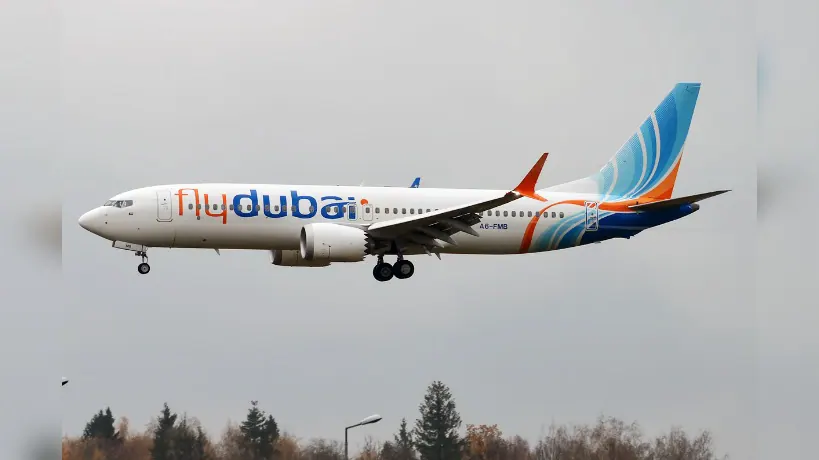
A FlyDubai flight, FZ1073, which departed from Dubai International Airport at 06:05 Saudi time, encountered a severe in-flight incident, prompting an emergency landing in Tabuk, Saudi Arabia. The flight, operated by a Boeing 737 MAX 8 aircraft, was headed to Tel Aviv's Ben Gurion Airport. The incident occurred on September 30, 2026, and sparked a significant response from aviation authorities and media worldwide.
According to flight data, the aircraft experienced a sudden and extreme descent, dropping 14,125 feet in just 29 seconds. This drastic maneuver was described as "crazy" by aviation experts, with the plane's rate of descent reaching nearly 29,000 feet per minute. For context, a typical aircraft's vertical speed rarely exceeds 4,000 feet per minute during normal operations.
The incident triggered a range of emergency responses, including the activation of the aircraft's distress code, 7700, indicating a general emergency. The plane later transmitted code 7500, suggesting an "unlawful interference" or hijacking, before reverting to code 7700. These codes are used by pilots to alert air traffic control to exceptional situations, such as technical issues or security threats.
The flight, carrying over 170 Israeli passengers, prompted a significant security response in Israel. Israeli Prime Minister Benjamin Netanyahu and Defense Minister Yoav Gallant held emergency consultations, while the Israeli Air Force scrambled fighter jets in anticipation of a potential threat. However, it was later reported that the incident was likely caused by a physical altercation between the Russian pilot and Ukrainian co-pilot in the cockpit.
The plane's emergency landing in Tabuk was safely executed, and all passengers were reported to be unharmed. FlyDubai has since arranged for the transfer of Israeli passengers and their return. The incident has garnered significant attention worldwide, with many following the flight's trajectory and responding to the emergency situation.
Aviation experts have highlighted the rarity of such incidents and the importance of emergency response protocols. The use of specific distress codes allows pilots to quickly communicate with air traffic control and facilitates a coordinated response to exceptional situations.
An investigation into the incident is expected to be conducted, and authorities will likely examine the causes of the in-flight altercation and the subsequent emergency landing. The incident serves as a reminder of the complexities and risks associated with air travel and the importance of robust safety measures.
Key points
- The incident involved a sudden and extreme descent of 14,125 feet in 29 seconds.
- The flight transmitted distress codes 7700 and 7500, indicating a general emergency and potential unlawful interference.
- The incident was likely caused by a physical altercation between the pilot and co-pilot in the cockpit.