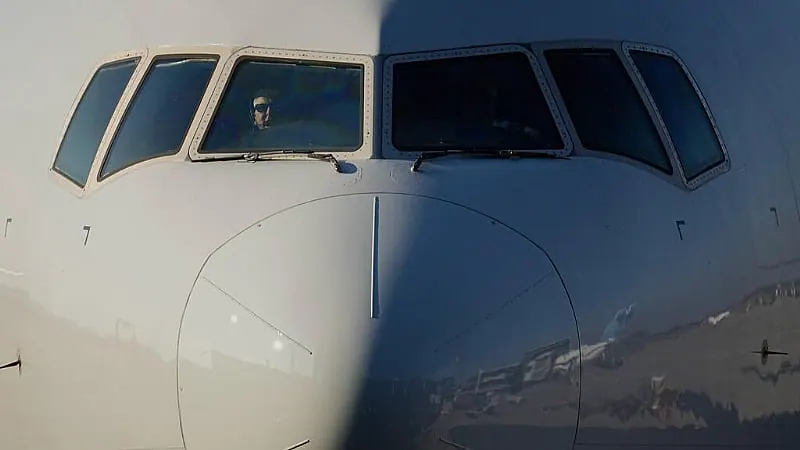
A recent incident on a FlyDubai flight from Dubai to Tel Aviv has raised concerns about crew-related hijackings. The pilot, who remains unnamed, stabbed the other pilot and attempted to crash the aircraft, prompting an emergency landing in Saudi Arabia. The pilot was detained, and passengers and crew were unharmed. This incident has brought attention to previous cases of hijackings and attempted hijackings involving pilots or crew members.
One such incident occurred on an Alaska Airlines flight from Everett, Washington, to San Francisco, where an off-duty pilot, Joseph Emerson, tried to cut the engines of a Horizon Air jet while riding in an extra seat in the cockpit. Emerson told police he was despondent over a friend's recent death, had taken psychedelic mushrooms, and hadn't slept in days. The plane was diverted and landed in Portland with over 80 people on board.
Another incident involved a China Eastern Airlines flight from Kunming to Guangzhou, which crashed into a mountain, killing all 132 people on board. American investigators suggested that the jet's engines were deliberately shut off, and there was a cockpit struggle before the plane nose-dived. Chinese authorities have yet to release their final investigative report.
The co-pilot on a Germanwings jet traveling from Barcelona to Duesseldorf deliberately crashed the plane into the French Alps, killing all 150 people on board. Andreas Lubitz had struggled with depression and suffered from sleeplessness and fear of losing his vision. An investigation found that Lubitz had contacted dozens of doctors before the crash.
In another incident, the co-pilot on an Ethiopian Airlines flight from Addis Ababa to Milan hijacked the jet and rerouted it to Geneva, Switzerland. Hailemedhin Abera Tegegn, the co-pilot, surrendered to local police and sought political asylum, and none of the 193 passengers were harmed.
There have been several other incidents of pilots or crew members intentionally crashing planes or attempting to hijack them. These include a Mozambique Airlines plane that crashed in a national park in Namibia, killing all 33 people on board, and an EgyptAir flight that plunged into the Atlantic Ocean off Nantucket, Massachusetts, killing all 217 passengers and crew.
The International aviation community has been working to improve cockpit security and prevent such incidents from occurring in the future. While the causes of these incidents vary, they highlight the importance of monitoring pilot mental health and ensuring that crew members are equipped to handle emergency situations.
Key points
- The FlyDubai incident has raised concerns about crew-related hijackings and highlighted the need for improved cockpit security.
- Past incidents of hijackings and attempted hijackings involving pilots or crew members have resulted in significant loss of life.
- The aviation community is working to improve cockpit security and prevent such incidents from occurring in the future.