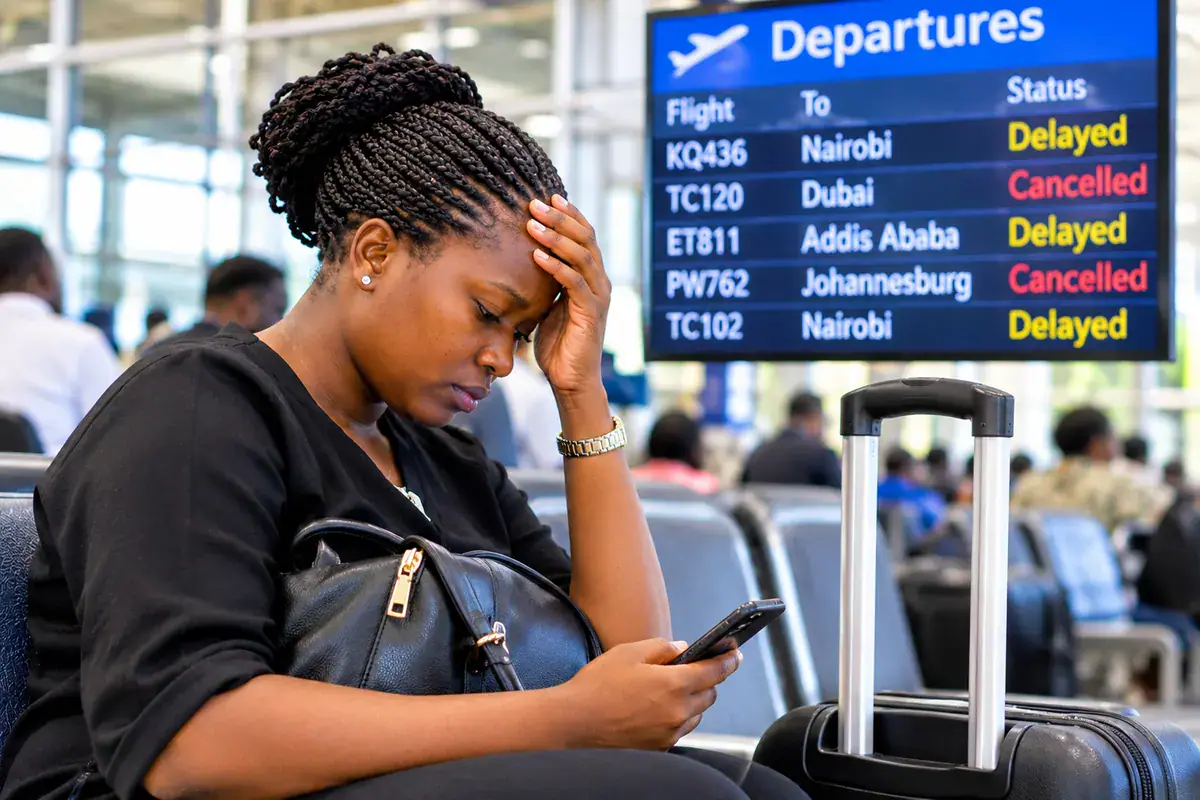
Recurring flight delays and cancellations in Tanzania are raising concerns about airlines' operational efficiency, fleet planning, and passenger protection. The disruptions are costing travelers money, affecting business commitments, and undermining confidence in air transport. For business travelers, missed connections and delayed arrivals can mean lost working hours, missed meetings, additional accommodation expenses, and unexpected purchases.
Maria Mwipa, a traveler, experienced these challenges firsthand while traveling from Dar es Salaam to a European country via Nairobi, Kenya, with Kenya Airways. A delay to her departure from Tanzania caused her to miss a connecting flight. The airline arranged accommodation and rebooked her on a flight the following day, but she arrived at her destination in the afternoon instead of the scheduled morning, missing two days of training. Her checked-in luggage was also missing, and she had to spend more money buying clothes and other essentials.
According to Mr. Alponce Mwingira, a member of the Tanzania Logistics and Transport Professionals Association (TALTA), inadequate fleet planning, particularly the failure to maintain standby aircraft, is among the factors contributing to flight disruptions. He argues that airlines need sufficient reserve aircraft to maintain scheduled services when other planes are withdrawn for mandatory maintenance.
Wilbert Chambulo, chairman of the Tanzania Association of Tour Operators (TATO), said flight disruptions should also be examined in the context of airlines' commercial scheduling decisions and competition in the aviation market. He noted that some airlines adjusted domestic schedules or cancelled flights when passenger numbers were low, forcing travelers to wait for subsequent services.
A passenger who requested anonymity recounted a similar experience while traveling from Arusha to Dar es Salaam with Air Tanzania. The flight, scheduled to depart from Kilimanjaro International Airport (KIA) at around 10 pm, was repeatedly postponed until about 6 am the following day. Passengers were eventually informed that the delay had been caused by an operational problem involving an aircraft.
Precision Air Marketing and Corporate Communications Manager Hilary Mremi attributed some disruptions to shortages of qualified pilots and delays in obtaining aircraft spare parts. He said the shortage of pilots was a global challenge, with airlines competing for a limited pool of qualified professionals.
The Tanzania Civil Aviation Authority (TCAA) is consulting relevant stakeholders before issuing an official response to the concerns. The regulator needs to establish the facts, particularly because the concerns involve airlines and other industry players.
Key points
- Inadequate fleet planning and insufficient reserve aircraft contribute to flight disruptions in Tanzania.
- Shortages of qualified pilots and delays in obtaining aircraft spare parts also affect airlines' operational plans.
- Strengthening local aviation training and improving access to spare parts could help address the challenges and improve operational reliability.