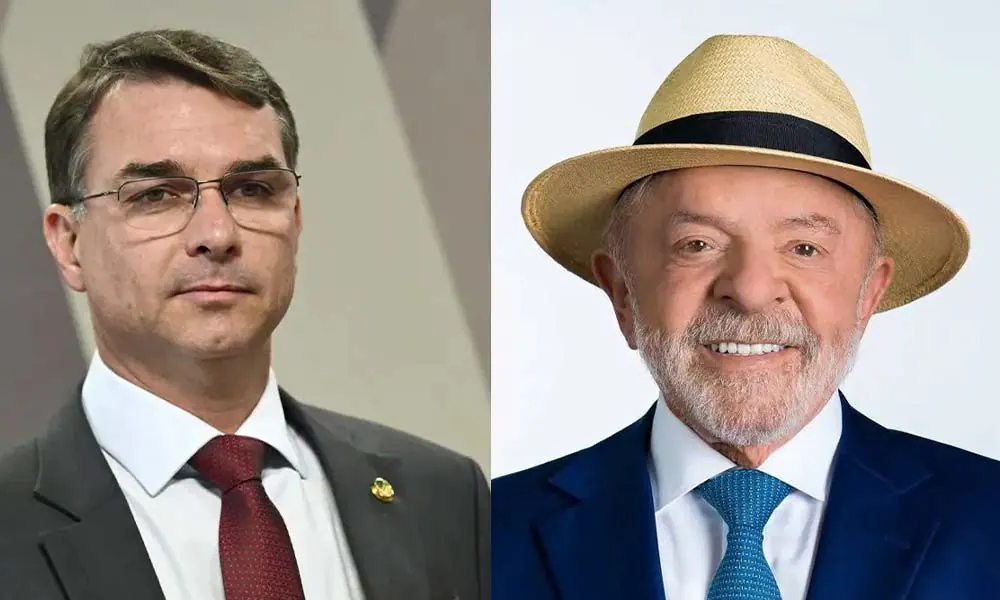
Flávio Bolsonaro, the eldest son of former Brazilian President Jair Bolsonaro, won the first round of the Brazilian presidential election held on October 4, 2026, with 47.03% of valid votes. He secured over 56 million votes, surpassing Lula da Silva, who garnered around 54 million votes, or 45.16% of the total. This sets up a second-round runoff between the two candidates, scheduled for October 25, 2026.
The election saw a significant turnout, with over 158 million Brazilians casting their ballots. However, data suggests that more than 20 million people abstained from voting, marking the highest abstention rate in 28 years. The election was highly contested, with polls indicating a tight race between Flávio Bolsonaro and Lula da Silva. The two candidates have distinct backgrounds, with Flávio Bolsonaro representing the Liberal Party and Lula da Silva seeking re-election as President.
Lula da Silva, 80 years old, is seeking a fourth term as President, while Flávio Bolsonaro aims to restore power to the Bolsonaro camp four years after his father's defeat to Lula. Jair Bolsonaro, Flávio's father, is currently under house arrest after being convicted of attempting a coup d'état. Flávio Bolsonaro's campaign was endorsed by his father, who remains a significant figure in Brazilian politics.
The pre-election polls had indicated a close contest, with some surveys showing an almost even split between the two main candidates. This led to concerns about potential unrest and violence during the election process. In response, several countries, including the United Kingdom, Canada, and Germany, issued warnings about possible manifestations and confrontations during the elections.
The United States and Australia took additional precautions, suspending diplomatic services at their Brazilian embassies on security grounds. Despite these concerns, the election process appears to have proceeded relatively smoothly, with Flávio Bolsonaro emerging as the clear winner in the first round. His victory marks a significant development in Brazilian politics, setting the stage for a closely contested second-round runoff.
The second round of the election, scheduled for October 25, 2026, will be crucial in determining the next President of Brazil. Flávio Bolsonaro and Lula da Silva will engage in a fierce campaign, attempting to sway undecided voters and secure the necessary votes to win. The outcome will have significant implications for Brazil's future, given the country's prominent role in regional and global affairs.
The Brazilian electoral commission will officially confirm the results of the first round and prepare for the second round, ensuring the integrity and transparency of the electoral process. International observers will be monitoring the process closely, given the global interest in the outcome. The confirmation of the second-round date and the continued engagement of voters will be essential in shaping Brazil's democratic future.
Key points
- Flávio Bolsonaro won the first round of the Brazilian presidential election with 47.03% of valid votes.
- Lula da Silva secured 45.16% of the votes, setting up a second-round runoff with Flávio Bolsonaro.
- The election saw a high abstention rate, with over 20 million Brazilians not casting their ballots.