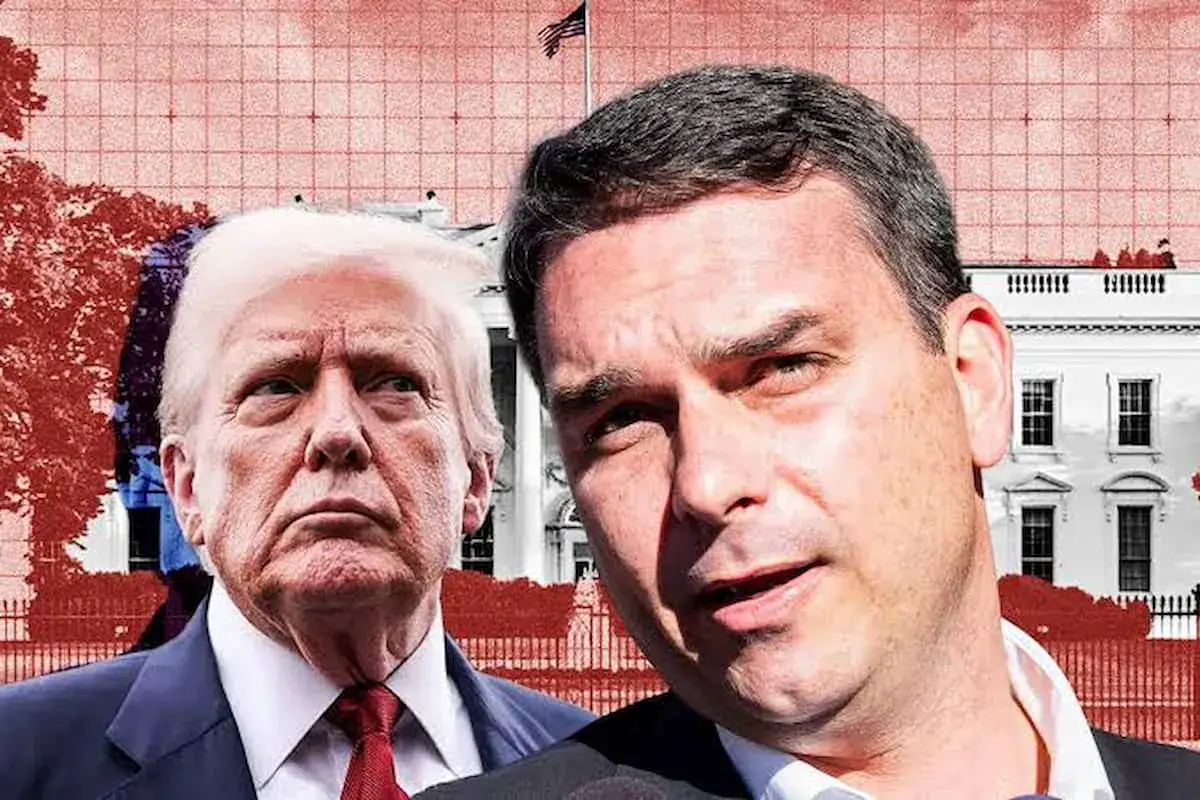
Flávio Bolsonaro, the defeated Brazilian presidential candidate, has fled to the United States, sparking concerns about the role of the Trump administration in his departure. On October 25, Luiz Inacio Lula da Silva won the presidential election with 52% of the vote, defeating Bolsonaro. Instead of accepting the outcome, Bolsonaro chose to flee, defying a Supreme Court order to surrender his passports within 24 hours.
Bolsonaro's escape has been described as a "cloak-and-dagger" operation, involving a private jet and multiple countries. He first traveled to Argentina, then crossed the border to Ecuador, and finally arrived in the US on October 28. The circumstances of his departure have raised questions about the involvement of the US administration, with some reports suggesting that US Secretary of State Marco Rubio may have played a role.
The US administration has confirmed that it provided Bolsonaro and his family with visas, but has denied any involvement in his departure. Donald Trump has stated that Bolsonaro's presence in the US does not pose a problem. However, Brazilian officials had reportedly urged Washington not to accept Bolsonaro, citing ongoing judicial proceedings against him.
Bolsonaro's asylum in the US has sparked concerns about diplomatic tensions between Washington and Brasilia. The Brazilian government may view the US decision to accept Bolsonaro as interference in its internal affairs and a challenge to its judicial authority. This could exacerbate existing tensions between Trump and Lula, who have significant political differences.
The Trump administration's decision to accept Bolsonaro has been seen as a strategic move, given the ideological similarities between the two leaders. Bolsonaro has publicly thanked Trump and his administration for their support, stating that he has come to the US for safety.
The implications of Bolsonaro's asylum in the US are far-reaching, with potential consequences for US-Brazil relations. If the Brazilian government determines that the US facilitated Bolsonaro's escape, it could lead to a significant diplomatic rift between the two nations.
The situation remains fluid, with many questions still unanswered. As the diplomatic fallout unfolds, it remains to be seen how the US and Brazilian governments will navigate this complex situation. One thing is certain, however: Flávio Bolsonaro's asylum in the US has opened a new front in the complex relationship between Washington and Brasilia.
Key points
- The US administration's decision to accept Flávio Bolsonaro has sparked diplomatic tensions between Washington and Brasilia.
- Bolsonaro's escape has raised questions about the involvement of the US administration in his departure.
- The situation has significant implications for US-Brazil relations, with potential consequences for the two nations' diplomatic relationship.