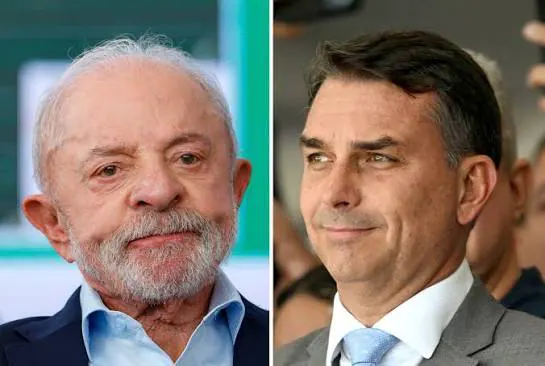
The first round of the Brazilian presidential election has concluded with Flávio Bolsonaro, son of former President Jair Bolsonaro, taking the lead with 47.4% of the votes. Lula da Silva, the incumbent president, secured 44.6% of the votes. The election results were closely contested, with Flávio Bolsonaro's campaign gaining significant support from evangelical churches and sects. His primary goal is to remove his father from prison after he was convicted of leading a failed coup attempt.
Lula da Silva, who has been fighting for social justice and equality throughout his career, had promised to continue his work in reducing poverty and promoting social equality. However, his campaign seemed to have less traction compared to Flávio Bolsonaro's, who ran on a platform of lowering taxes and freeing his father from prison. Despite this, Lula da Silva remains optimistic about his chances in the second round, citing his experience as a resistance leader during Brazil's military dictatorship.
Flávio Bolsonaro has expressed his satisfaction with the election results, stating that he is "very happy" and confident about his chances in the second round. He has promised to run a "clean campaign" and claimed that Lula da Silva only wants power. The second round of the election is scheduled for October 25, and it remains to be seen whether Flávio Bolsonaro can secure the 50% + 1 votes needed to win the presidency.
The election has also been marred by allegations of external interference, with Lula da Silva's party accusing the United States of attempting to influence the outcome. The US government has been accused of providing $1 million to groups opposing the Brazilian Supreme Court. The Brazilian Police Federal has launched an investigation into the allegations, which is currently ongoing.
The Brazilian Police Federal has confirmed that it is investigating possible interference by the US government in the country's elections. The investigation was initiated after a report by The Guardian revealed that the US government had provided funding to groups opposing the Brazilian Supreme Court. The Police Federal has stated that it has not found any concrete evidence of risk to the Brazilian Embassy in the US or other diplomatic representations.
The election results have also raised concerns about the future of Flávio Bolsonaro's party, which may face extinction if he fails to secure the presidency. Lula da Silva has vowed to continue his campaign, promising to give his all to defeat the "barbary" promoted by Flávio Bolsonaro and his allies. The second round of the election will be crucial in determining the future of Brazil's presidency.
The US government has been accused of providing $176.9 million in funding to groups opposing the Brazilian Supreme Court through the US Department of State's Human Rights and Democracy Fund. The funding has raised concerns about external interference in Brazil's democratic processes. The Brazilian government has suspended its consular services in the US due to security concerns.
Key points
- Flávio Bolsonaro leads in the first round of the Brazilian presidential election with 47.4% of the votes.
- Lula da Silva trails behind with 44.6% of the votes and remains optimistic about his chances in the second round.
- The election has been marred by allegations of external interference, with Lula da Silva's party accusing the US government of attempting to influence the outcome.