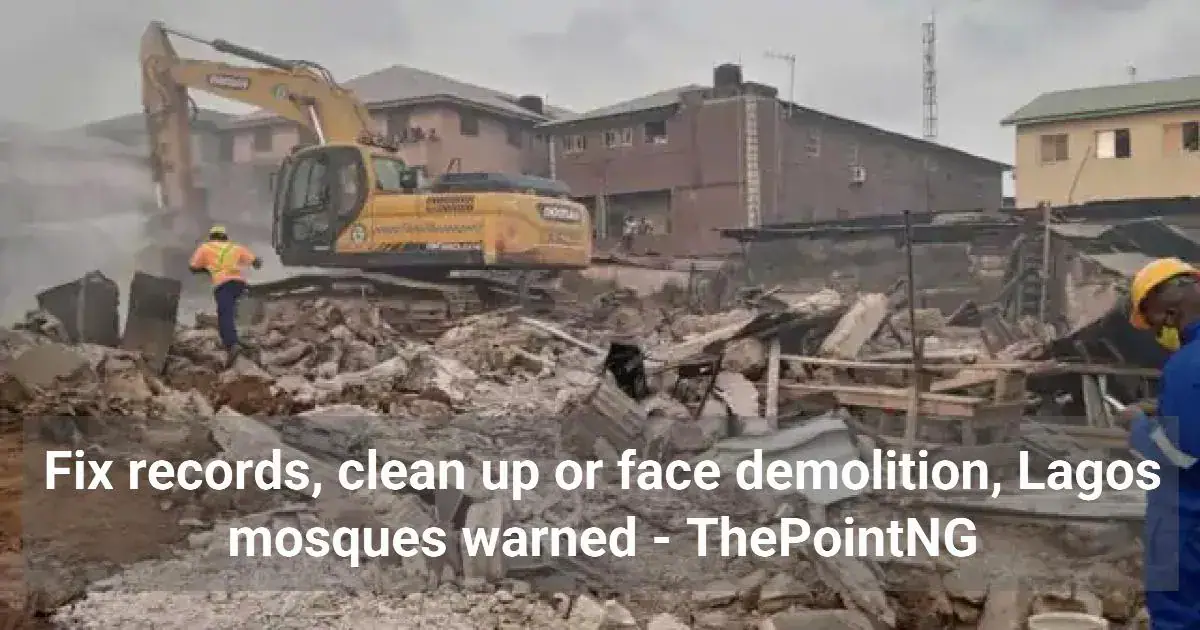
Islamic scholars and regulatory experts have warned that poor documentation, weak governance, and inadequate sanitation pose a severe threat to the sustainability and legal security of mosques across Lagos State. This warning was delivered at the annual programme of the Mosque Guidance and Development Lagos Initiative, held in Lagos. The theme of the programme was “Building Better Mosques: Documentation, Good Governance and Hygiene Environment.” Experts emphasized that religious centres must lead by example in maintaining proper documentation, good governance, and hygiene.
Saheed Timehin of the Department of Foreign Languages, Lagos State University, delivered the keynote address at the programme. He stressed that proper documentation, good governance, and hygiene are essential for sustainable mosque development. According to Timehin, mosques must reflect Islamic values through transparency, accountability, cleanliness, and responsible administration. He expressed concern that many institutions lack reliable records of their properties, finances, activities, and membership, exposing them to avoidable legal disputes and the possible loss of assets.
Timehin urged mosque leaders to preserve land titles, survey plans, waqf deeds, and registration certificates to protect properties dedicated to Allah. He also advocated for written constitutions, meeting minutes, and clear succession plans. Compounding these structural risks is the vulnerability of undocumented properties to state intervention. General Manager of the Lagos State Urban Renewal Agency, Oladimeji Animashaun, cautioned that regulatory compliance is non-negotiable for mosques.
Animashaun urged religious leaders to regularise properties built without required state approvals, emphasizing that mosques need title documents, survey plans, and planning approvals to avoid demolition. Musoddiq Adele-Sanni, Chairman of MGDLI, revealed that the initiative was born out of alarming trends observed during his tenure with the Muslim Lawyers Association of Nigeria. Inadequate documentation has exposed many Lagos mosques to demolition and unlawful sale.
Adele-Sanni noted that investigations revealed some mosque properties had been sold or demolished because donors failed to transfer legal ownership to the mosques. Surveyor Adegbenga Ojikutu warned against informal land agreements, advising that donors must execute transfer documents, obtain the governor’s consent, and register properties directly in the mosque’s name. Treating mosque land as family property exposes it to unlawful sales and commercial encroachment.
Beyond legal administration, the forum addressed critical deficiencies in sanitation. Timehin called for dedicated sanitation committees, cleaning schedules, and proper waste management. The Chief Imam of Satellite Town, Abdul-Raham Dauda, lamented the current state of hygiene in several worship centers, warning of the wider spiritual and physical implications. He emphasized that dirty environments discourage worshippers, spread diseases, and undermine Islamic teachings on cleanliness.
Dauda pressed mosque executives to immediately provide adequate cleaning materials, hire dedicated personnel, and strictly enforce sanitation rules to preserve the sanctity of the institutions. The experts at the programme emphasized that it is essential for mosques to prioritize proper documentation, good governance, and hygiene to ensure their sustainability and legal security. The event aimed to promote best practices in mosque management and administration.
Key points
- Mosques in Lagos State are at risk of demolition due to poor documentation and inadequate sanitation.
- Experts are urging mosque leaders to prioritize proper documentation, good governance, and hygiene.
- The Mosque Guidance and Development Lagos Initiative aims to promote best practices in mosque management and administration.