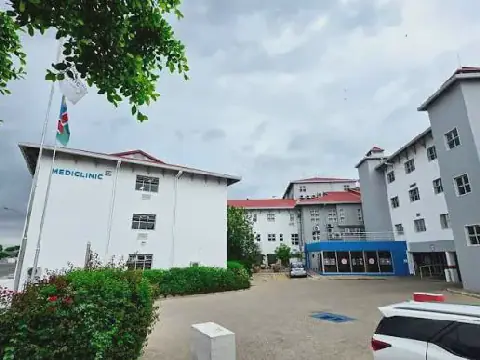
The Ministry of Agriculture, Fisheries, Water and Land Reform has handed over newly constructed sanitation facilities to five health facilities in Kavango West. The facilities, located at Kapako Clinic, Mburu-Uru Clinic, Nzinze Clinic, Sharukwe Clinic and Mupini Health Centre, were implemented through the Namibia Water Sector Support Programme. This programme aims to improve access to water and sanitation, sustainable water security and stronger institutional capacity within Namibia's water sector.
The Namibia Water Sector Support Programme carries a total value of N$3.3 billion, comprising a N$1.9 billion loan from the African Development Bank, a N$50.4 million grant from the Rural Water Supply and Sanitation Initiative Trust Fund and N$1.3 billion in government counterpart funding. The programme's rural water supply, sanitation and hygiene component supports the construction, upgrading and rehabilitation of water supply schemes, alongside sanitation infrastructure and the promotion of improved hygiene practices.
According to MAFWLR Executive Director Teofilus Nghitila, the handover represents more than the completion of construction, as sanitation remains directly linked to public health and human dignity. He emphasized that sanitation is fundamental to public health, human dignity and a healthy environment. The facilities will contribute to creating safer and more appropriate conditions for patients, health workers and communities using these health facilities.
Nghitila stressed that the success of such projects depends on stronger cooperation between the national ministry and regional structures. He warned that regional authorities should not only become involved when projects reach the implementation or handover stage. Their involvement is important from the earliest stages of planning and prioritisation, throughout implementation, and into the operation and maintenance of completed infrastructure.
The executive director acknowledged the Kavango West Regional Council and regional leadership, as well as the African Development Bank, NWSSP team, consultants, contractors, technical personnel and other stakeholders for their role in delivering the facilities. He also emphasized that the handover should not be treated as the end of the government's responsibility, as the long-term value of the investment would depend on whether the facilities are properly operated, maintained and protected.
Nghitila called on all relevant institutions and stakeholders to ensure that the facilities remain operational and are used for their intended purpose. The government remains committed to improving water and sanitation services across Namibia and ensuring that development spending translates into tangible benefits for communities. The five facilities are expected to improve sanitation conditions for patients and health workers and support hygiene as well as public health in the surrounding communities.
The government continues to invest billions of dollars in water and sanitation infrastructure across the country, with the effectiveness of such investments ultimately dependent on whether completed facilities remain functional. Nghitila said that today, they celebrate progress, but they also reaffirm their commitment to doing more. The newly constructed infrastructure is a significant step towards achieving this goal.
Key points
- The facilities were implemented through the Namibia Water Sector Support Programme, which is supported by the African Development Bank and the Namibian Government.
- The programme aims to improve access to water and sanitation, sustainable water security and stronger institutional capacity within Namibia's water sector.
- The handover of the facilities is not the end of the government's responsibility, as the long-term value of the investment depends on proper operation, maintenance and protection.