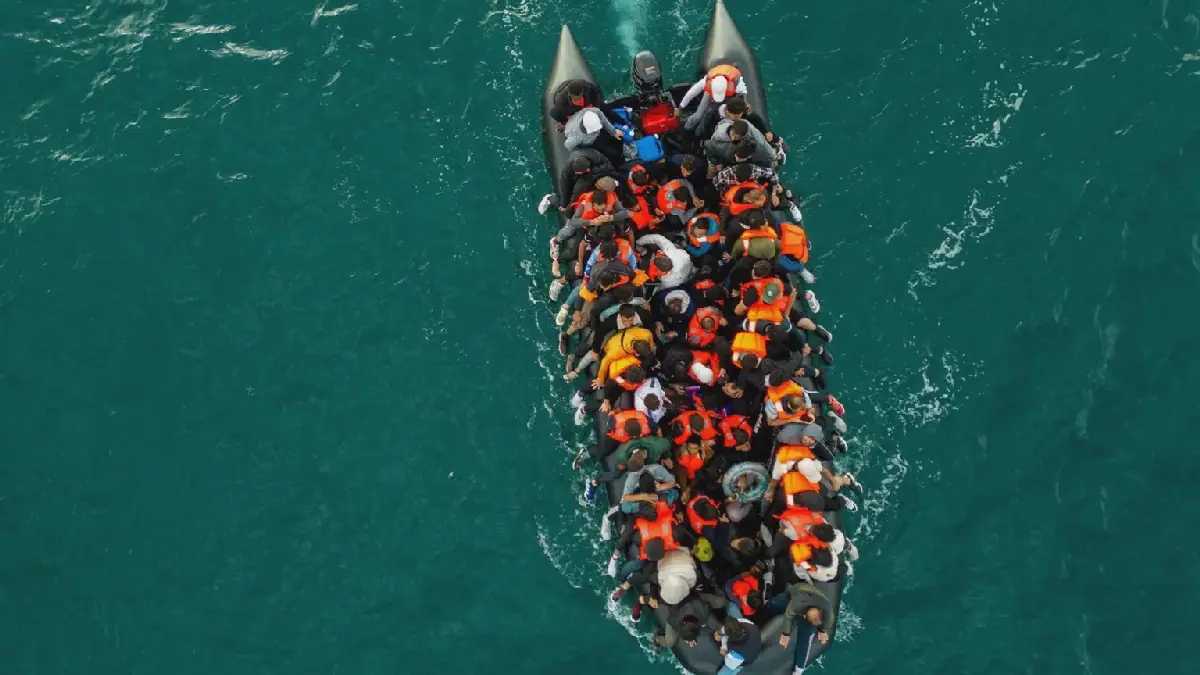
Five European countries, including Germany, Denmark, Austria, Greece, and the Netherlands, have announced plans to open a migrant deportation centre in Rwanda in 2027. The centre, known as a "return hub," will be used to deport migrants who are staying illegally in these countries and have exhausted their legal avenues to stay. The Dutch government stated that the centre will provide an alternative for deportees who cannot be returned to their country of origin.
The scheme will initially apply to single men from countries of origin in the same region as Rwanda. Once in Rwanda, people will have the right of residence, access to education, healthcare, the labour market, and the legal system. They will be able to integrate into Rwandan society or return to their home country. The Rwandan Interior Minister, Vincent Biruta, stated that the country is committed to working with European partners to provide a "safe, legal and dignified solution for migrants."
The plan has been met with criticism from human rights groups, who argue that it could violate migrant rights. Human Rights Watch's senior Africa researcher, Clementine de Montjoye, expressed concerns about Rwanda's record of repression of dissent, arbitrary detention, and ill-treatment in detention. The independent EU Agency for Fundamental Rights also stated that any third country hosting a return hub should respect fundamental rights, including that people should not be sent to a country where they face serious risk of persecution.
The European Border and Coast Guard Agency reported almost 110,000 irregular border crossings into the EU in the first 10 months of 2026, representing a 29% decrease compared to the previous year. The agency also reported a sharp rise in arrivals on the Western African route to the Canary Islands. With elections approaching in several EU nations, administrations have been under pressure to show they can control migration.
The five countries say the plan to send migrants abroad is in line with EU and international law, but human rights bodies disagree. Spanish Prime Minister Pedro Sánchez stated that the plan had no "future or humanity," saying it's not the solution to the migration issue. The Dutch government confirmed that unaccompanied children will not be sent to the return hub.
The United Nations' International Organisation for Migration (IOM) could play an ancillary role in the plan. An IOM spokesperson stated that the agency has a long history of providing assistance to migrants in situations of transit, including in complex contexts. Diplomatic sources indicated that the hub is expected to initially run as a pilot, hosting about 100 people, with each of the five nations possibly sending about 20 migrants.
The plan follows a recent EU reform that allowed for the creation of hubs outside of the bloc. Austrian Chancellor Christian Stocker stated that the five countries want to relieve European asylum systems and stop traffickers arranging deadly trips across the Mediterranean. The deal has sparked concerns about the human rights implications and the choice of Rwanda as a host country.
Key points
- The five European countries plan to open a migrant deportation centre in Rwanda in 2027 for those staying illegally who are subject to deportation.
- The centre will provide an alternative for deportees who cannot be returned to their country of origin, allowing them to integrate into Rwandan society or return to their home country.
- Human rights groups have expressed concerns about the plan, citing Rwanda's record of repression of dissent, arbitrary detention, and ill-treatment in detention.
Reporting sources
- Five EU countries announce migrant deportation centre in Rwanda · Kenya Broadcasting Corporation