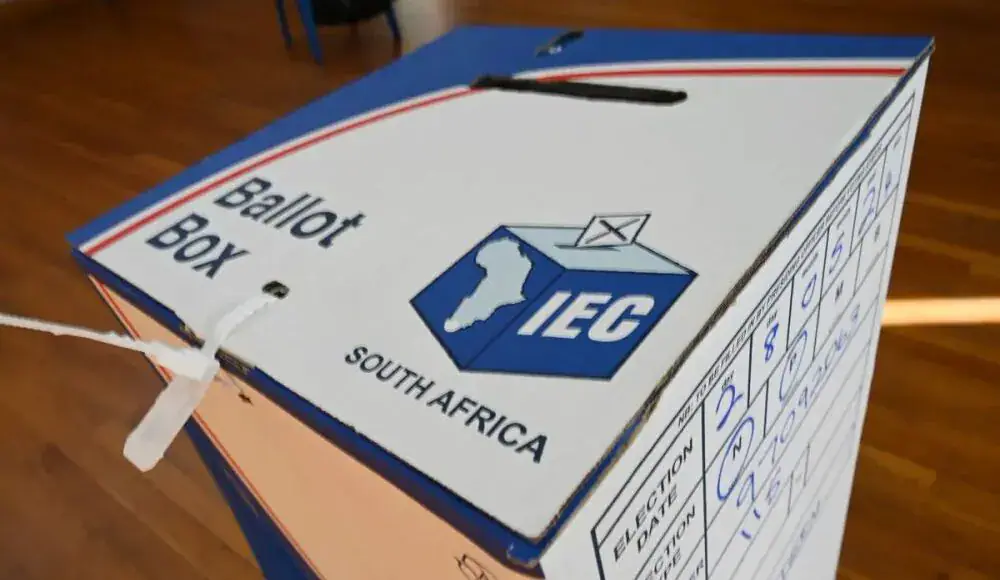
The Electoral Commission of South Africa (IEC) has announced that five ward by-elections will be held to finalise the 2026 Local Government Elections. Two by-elections result from political parties re-designating ward councillors who won more than one ward seat. One will take place in KwaZulu-Natal, Ward 12 in Mkhambathini Local Municipality, involving an uMkhonto weSizwe Party candidate. The other will be in the Free State, Ward 13 in Dihlabeng Municipality, involving an ANC candidate.
Three additional ward by-elections are necessary due to the deaths of three ward councillors-elect. These include Ward 16 in Raymond Mhlaba Municipality, Eastern Cape (ANC); Ward 12 in Merafong Municipality, Gauteng (ANC); and Ward 17 in uMlalazi Municipality, KZN (IFP). The IEC is tying up loose ends following the November 4 vote. The by-elections are part of the commission's efforts to ensure the smooth completion of the 2026 Local Government Elections.
The IEC has warned parties that submitted fewer Proportional Representative (PR) candidates than seats won. On November 9, the Commission wrote to affected parties and gave them until November 11 to submit names to make up the shortfall. This was not an opportunity for parties to change lists or replace candidates. Parties may only change the order of lists or replace candidates after the first sitting of councils, as prescribed in the Municipal Structures Act.
A party that fails to supplement its list risks forfeiting seats if the shortfall renders quorum impossible. The IEC also notified parties where candidates stood to be assigned to more than one seat. Parties had until November 11 to elect which seat a candidate must take. If they fail to choose, the candidate's name must be deleted from the ward list. According to a political analyst from the University of KZN School of Political Science, the IEC is carrying out its statutory duty by resolving these cases.
The analyst noted that voters have a right to question how parties managed their nominations. If a candidate appeared on multiple ward ballots due to an administrative error, it points to a lapse in checking nominations. Four ward contests ended in a dead heat and were decided by lot, as required by the Municipal Structures Act. These include Ward 7 in Mnquma Municipality, Eastern Cape (ANC); Ward 14 in Maluti-a-Phofung, Free State (African Content Movement); Ward 5 in Ba-Phalaborwa, Limpopo (ANC); and Ward 17 in Steve Tshwete, Mpumalanga (SACP).
The 2026 polls comprise a total of 10,526 seats - 8,825 local council seats and 1,701 district council seats. The published list of 9,532 declared councillors includes 8,825 local councillors and 707 directly elected district councillors. The remaining 994 district seats will be filled by local councils electing representatives among themselves. The IEC will manage this process. Councils must hold their inaugural sittings within 14 days of the November 8 declaration.
Women account for 33.6% of all declared councillors - 39.7% of PR councillors but only 26.8% of ward councillors. The EFF has the highest women representation at 46.2%, followed by PA at 43.0% and DA at 38.6%. IFP has the lowest representation at 18.7%. Councillors average 47.3 years, with only 3% under 30 and 10.8% under 35. The IEC received 1,708 purported objections, with 433 meeting the criteria for Section 65 objections.
Key points
- The IEC has warned parties that submitted fewer Proportional Representative (PR) candidates than seats won.
- A party that fails to supplement its list risks forfeiting seats if the shortfall renders quorum impossible.
- Women account for 33.6% of all declared councillors.
Reporting sources
- Five by-elections on the cards as IEC finalises 2026 polls · African News Agency