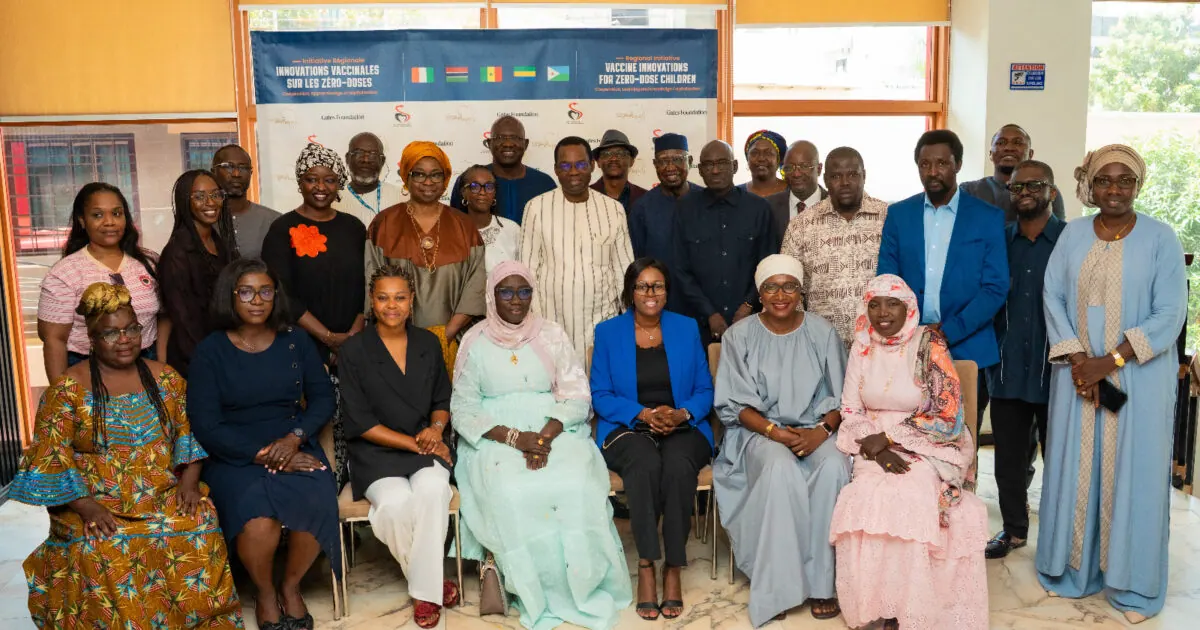
Five African countries, namely Senegal, Côte d’Ivoire, Gabon, Djibouti, and The Gambia, have come together to tackle the issue of zero-dose children through stronger immunisation systems. The countries participated in a four-day regional benchmarking mission in Dakar, Senegal, from September 29 to October 2, 2026. This initiative was organised by Galien Africa in collaboration with Senegal’s Ministry of Health and Public Hygiene. The mission aimed to use peer learning to accelerate immunisation and sustainably reduce the number of zero-dose children.
During the mission, delegations from the five countries shared their respective challenges, innovations, and good practices in immunisation and efforts to reach zero-dose children. They also visited Senegal’s Directorate of Prevention and Immunisation Division, as well as the Dakar Centre health district, to observe approaches to vaccine stock management, cold-chain monitoring, equipment management, and vaccine distribution. The visits highlighted the importance of human support in digital transformation.
The delegations received hands-on coaching on the Tracker system, which led to an increase in active users from 50 per cent to more than 90 per cent. They also observed mobile immunisation interventions conducted between 4:00 pm and 8:00 pm, demonstrating how vaccination services can be adapted to the realities and schedules of families. Community-based approaches, such as the “Young Girls’ Round”, which uses peer engagement and trust to strengthen acceptance of HPV vaccination, were also examined.
The final two days of the mission focused on how successful approaches could be adapted and scaled up within the different national contexts. Key issues discussed included domestic and local financing, innovative resource mobilisation, community participation, reaching mobile and cross-border populations, and the professionalisation, motivation, and financing of community health workers. Each country developed its own roadmap, identifying specific actions to strengthen its immunisation system.
Senegal, as host of the first regional mission, shared its experience in digitalisation, individual tracking of children, and optimisation of vaccine distribution. Its roadmap includes advancing platform interoperability, expanding the individual vaccination registry, and sustaining the OPTIVAC model through domestic financing. Côte d’Ivoire highlighted its experience of working with pharmacies and private clinics to provide immunisation services and plans to strengthen integrated individual tracking and develop differentiated services adapted to community realities.
Gabon, The Gambia, and Djibouti also shared their experiences and commitments. Gabon shared its experience in expanding community vaccination sites and its commitment to public financing. The Gambia brought experience in combining geographic and immunisation data to better identify and trace zero-dose children. Djibouti contributed approaches targeting nomadic, mobile, and cross-border populations, including the “vaccino-dromadaire”, or camel-based vaccine delivery.
The mission identified areas where the countries can learn from one another and developed a common regional matrix to document actions, responsible parties, and indicators. A three-month review will assess implementation, while a six-month review will examine the impact of the measures on identifying zero-dose children, improving access to immunisation services, and ensuring that children are vaccinated. The five delegations identified 21 priority actions, with digital individual tracking of children and stronger domestic financing emerging as priorities across all the national roadmaps.
Key points
- The five countries adopted national mini-roadmaps and identified common priorities for regional cooperation to reduce the number of zero-dose children.
- The initiative aims to transform regional benchmarking from a platform for simply sharing experiences into a practical mechanism for peer learning and adapting proven solutions to different national contexts.
- The countries will focus on digital individual tracking of children and stronger domestic financing to strengthen their immunisation systems.