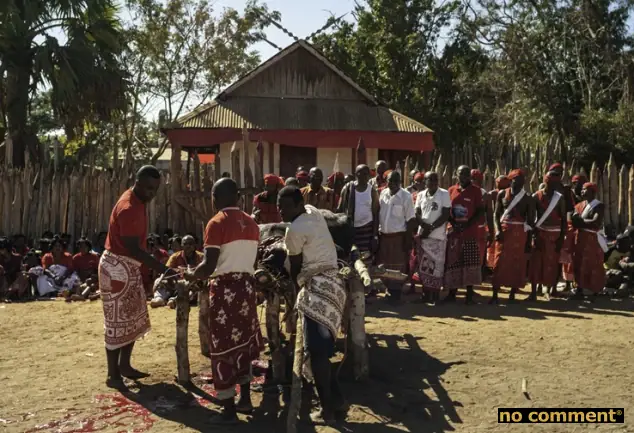
The Fitampoha ceremony took place from August 20 to 28 in the Belo-sur-Tsiribihina region of western Madagascar. The event brought together the Sakalava people, specifically those from the Menabe region, to commemorate their royal ancestors. This celebration is a significant moment of communion, transmission, and reunion, where the history and identity of the Sakalava people are revealed through gestures inherited from generation to generation.
The ceremony was led by Ampagnito, or king, Harea Tinahy Tsialia Georges Kamamy. This year's celebration was particularly notable due to the recent return of the Kabeso, or skull, of King Toera to Madagascar. The Kabeso is one of the royal relics, known as Dady, which are conserved and venerated by the descendants of the ancient sovereigns. The return of the Kabeso marked an important milestone in the memory of the Sakalava people and the recognition of their heritage.
The Dady are central to the Fitampoha ceremony, and their procession and purification in the waters of the Tsiribihina River are key moments of the celebration. The ceremony also features chants, dances, music, and gatherings, which bring together spirituality, collective memory, and community life. According to the Sakalava tradition, the Dady are not only relics but also considered receptacles of the soul of the ancient sovereigns.
Preparations for the ceremony included the Vonoagn'Omby, or ritual slaughter of a zebu, which is accompanied by prayers and invocations addressed to the Dady. The miaramila, or soldiers carrying spears, and the mpibaby, or porters of relics, played important roles in the procession. The participants also gathered at the Valamena, a sacred space, for a vigil around the fire, known as the Tsoky Motro.
The purification ceremony of the royal relics took place in the Tsiribihina River, where the relics were purified with the Fihositra, a natural soap made from the bark of a tree rich in saponin. After purification, the relics were dried on reeds and anointed with the oil of the zebu Mazava Loha before being placed in the Rivotra, a portable sanctuary. The ceremony concluded with a grand procession, led by the Ampagnito, which accompanied the relics back to the city of Belo-sur-Tsiribihina for conservation in the Zomba, a sacred wooden royal case.
The Fitampoha ceremony is a testament to the deep connection between the living and their ancestors. It highlights the importance of preserving collective memory and tradition. Through the rituals and invocations, the participants express their respect for the deceased sovereigns and seek their protection for the successful completion of the rites.
The successful celebration of the Fitampoha ceremony demonstrates the significance of this traditional event in preserving the cultural heritage of the Sakalava people. The ceremony serves as a platform for the community to come together and honor their ancestors, reinforcing their identity and connection to their history.
Key points
- The Fitampoha ceremony is an important part of Sakalava tradition, honoring the royal ancestors and preserving collective memory.
- The return of the Kabeso, or skull, of King Toera marked a significant milestone in the recognition of the Sakalava people's heritage.
- The ceremony featured various rituals, including the purification of royal relics in the Tsiribihina River and the Vonoagn'Omby, or ritual slaughter of a zebu.
Reporting sources
- Le Fitampoha, mémoire vivante des ancêtres · nocomment.mg