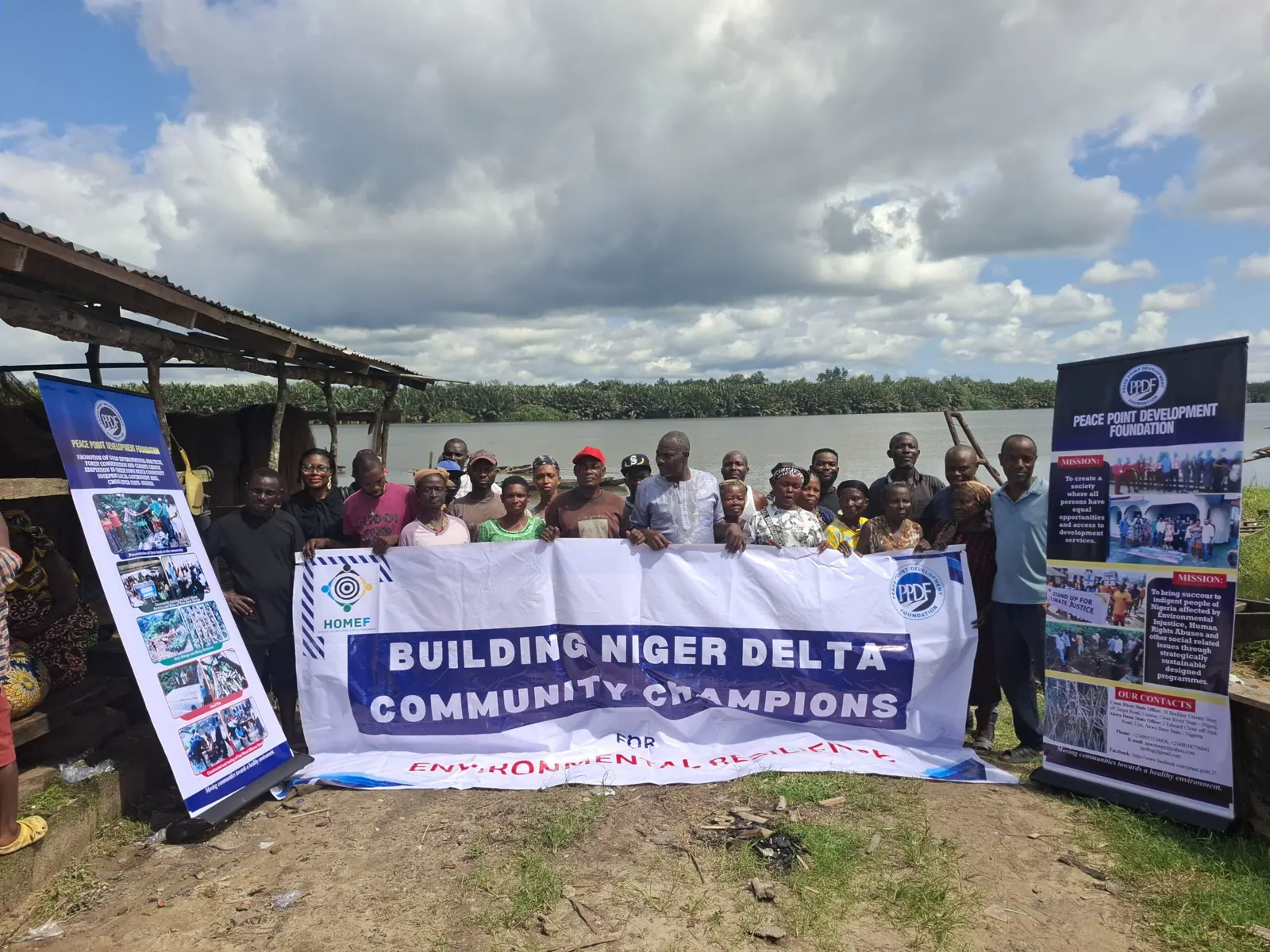
Fishers in Esuk Atu, a coastal community in Calabar, Cross River State, Nigeria, have expressed concerns over the decline in fish catches, increasing pollution, and disappearing mangroves. These changes are making fishing increasingly difficult and expensive, affecting their livelihoods. The fishers spoke out during a community rights defenders training organised by Peace Point Development Foundation (PPDF) in partnership with the Health of Mother Earth Foundation (HOMEF).
The training is part of PPDF's second phase of its "Building Community Rights Defenders in the Niger Delta" project. The project aims to equip fishers, youths, and community leaders with knowledge and tools for environmental monitoring, documentation, and advocacy. The first phase was implemented last year in Essierebom, Calabar South, and Opolom in Akwa Ibom State. The second phase is being extended to Esuk Atu in Calabar and Esuk Itu in Akwa Ibom State.
Fishers identified several changes affecting their livelihoods, including reduced fish catches, smaller fish, pollution from oil discharged by vessels and mining activities, plastic waste, destruction of mangroves, flooding, and erosion. They also complained about changing weather patterns, insecurity, and attacks by robbers, as well as damage to fishing equipment by vessels navigating smaller waterways.
Mmayen Archibong, a fish seller in the community, noted that the decline in fishing was not receiving sufficient attention. Consumers were more focused on rising fish prices than on what was causing the decline in supply. "People are not giving attention to the fact that fishing is declining because what the fishers bring out from the water is no longer much as before," she said.
Effiong Otu, a fisher, identified the destruction of mangroves for firewood and mining grounds as one of the major threats to fishing in the area. He said mangroves serve as breeding grounds for fish but were disappearing rapidly, with some areas being taken over by nipa palms. Otu also complained about the growing presence of plastics in the water and the impact of increasing mining activities on water quality.
Scientific studies have documented environmental pressures around Esuk Atu and the Great Kwa River. A study attributed low abundance and distribution of zooplankton partly to pollution and human activities, including domestic waste, wastewater, industrial effluents, sand mining, hydrocarbons, and other toxic substances. Another study identified the mangrove creek system as a spawning habitat for fish and other aquatic species.
The training introduced participants to community mapping, documenting pollution, and environmental incidents with mobile phones. Peace Point Development Foundation Coordinator, Umo Isuaikoh, explained that the Nigeria Socio-Ecological Alternatives Convergence (NSAC) and Niger Delta Alternatives Convergence (NDAC) frameworks promote development that does not destroy people, land, or water. The frameworks emphasize ecological justice, people's participation, sustainability, accountability, solidarity, and partnership.
Key points
- Fishers in Esuk Atu community raise concerns over declining fish catches, pollution, and disappearing mangroves.
- The decline in fishing is affecting the livelihoods of fishers and making fishing increasingly difficult and expensive.
- The training aims to equip fishers, youths, and community leaders with knowledge and tools for environmental monitoring, documentation, and advocacy.