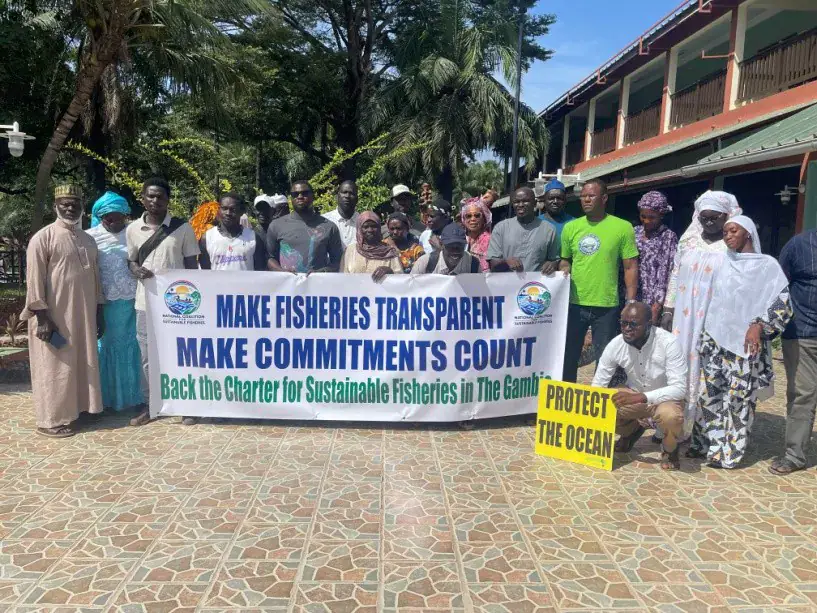
The National Coalition for Sustainable Fisheries in Gambia has called for a moratorium on new industrial fishing licences, citing concerns over the long-term sustainability of the country's marine resources. The coalition, comprising civil society organisations and fishing communities, warned that continued overfishing could threaten the livelihoods of local fishing communities and the country's food security. According to Dawda Foday Saine, Secretary General of the African Confederation of Artisanal Fisheries Professional Organisations, reducing fishing pressure and allowing fish stocks to regenerate are crucial to protecting Gambia's fisheries resources.
The coalition's proposal is part of a broader set of conservation measures aimed at giving fish stocks time to recover. Saine explained that closed fishing seasons and areas could provide a biological rest period for marine resources, allowing fish to reproduce and regenerate. He also raised concerns about the impact of illegal, unreported, and unregulated fishing, as well as fishmeal production and competition between industrial fishing vessels and small-scale fishermen. The coalition is particularly concerned about the overexploitation of small pelagic species, such as bonga and sardinella, which are important sources of affordable food for Gambians.
The coalition's demands are outlined in a Sustainable Fisheries Charter, which contains 13 commitments towards sustainable fisheries by 2030. Mamadou Kaly Ba, Ocean Campaigner at Greenpeace Africa, said the Charter would be presented to presidential candidates ahead of the December elections, urging them to endorse its proposals and commit to implementing them if elected. The initiative aims to protect the ocean, improve community livelihoods, and address challenges including food insecurity and unemployment.
The coalition plans to establish a committee to engage with candidates and monitor their responses. Saine acknowledged that signing the Charter would not automatically guarantee implementation, saying the coalition would continue to put pressure on political leaders through advocacy, media engagement, and international organisations. The coalition's demands also include public disclosure of authorised fishing vessels and fishing agreements, prioritising fish for human consumption, and strengthening the participation of women, young people, and fishing communities in fisheries decisions.
According to Saine, fisheries agreements should be guided by scientific evidence and the availability of surplus resources. However, he questioned the basis of these agreements, given the limited information available on Gambia's fish stocks, catches, and production. The coalition's concerns about the country's fisheries management are shared by other stakeholders, who argue that the sector needs urgent reform to ensure its long-term sustainability.
The Gambia's fisheries sector is a vital source of livelihood for many communities, but it faces significant challenges, including overfishing, habitat degradation, and climate change. The coalition's efforts to promote sustainable fisheries management are seen as crucial to addressing these challenges and ensuring the sector's long-term viability. By engaging with policymakers and stakeholders, the coalition aims to promote a more sustainable and equitable approach to fisheries management in Gambia.
The coalition's call for a freeze on new industrial fishing licences is part of a broader effort to promote sustainable fisheries management in Gambia. With the country's fisheries resources facing significant pressure, the coalition's proposals aim to provide a framework for sustainable management and conservation. The success of these efforts will depend on the government's willingness to implement the coalition's demands and engage with stakeholders to promote a more sustainable approach to fisheries management.
Key points
- The National Coalition for Sustainable Fisheries in Gambia has called for a moratorium on new industrial fishing licences to protect dwindling fish stocks and local livelihoods.
- The coalition's demands are outlined in a Sustainable Fisheries Charter, which contains 13 commitments towards sustainable fisheries by 2030.
- The coalition plans to establish a committee to engage with candidates and monitor their responses to its demands.