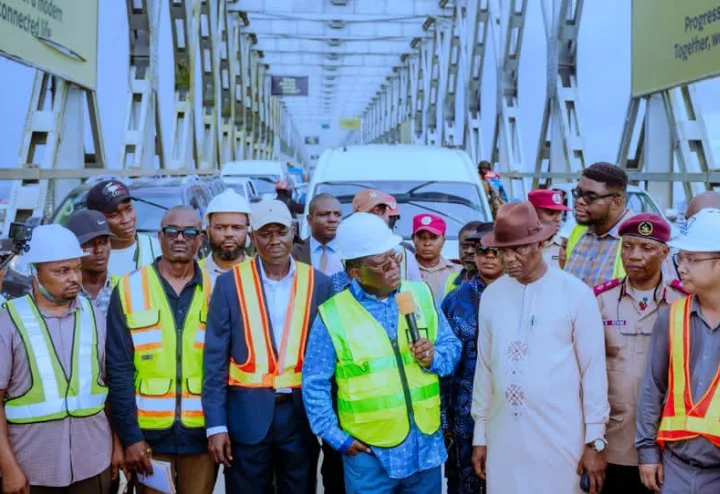
The Minister of Works, Sen. David Umahi, has stated that the First Niger Bridge will not reopen to traffic until major structural rehabilitation works are completed. He made this statement during an inspection of the ongoing rehabilitation works on the bridge, which connects Anambra and Delta states. The bridge was closed for emergency repairs after vandalized structural components were discovered.
According to Umahi, the Federal Government will not rush to reopen the bridge until critical structural components identified for rehabilitation have been properly repaired. The rehabilitation work, being carried out by contractor SKECC, has made significant progress, with vandalized bolts replaced and secured. A specialized expansion joint stolen from the bridge has also been manufactured and flown into the country for installation.
The closure of the bridge, initially scheduled to end on September 21, has been extended by one week due to persistent rainfall affecting the rehabilitation work. Despite the delay, Umahi commended the contractor for the progress recorded within about 10 days. He emphasized that the bridge's safety will not be compromised, and additional rehabilitation works have been incorporated, including repainting the bridge's structural elements and internal carriageway areas.
Umahi has directed the contractor to remove illegal advertisements mounted on the bridge and install additional solar-powered streetlights. He also ordered the completion of CCTV cameras on the bridge, which will be linked to the Second Niger Bridge. Furthermore, an empirical assessment of the bridge's structural elements below and above water level has been directed to determine their condition.
The assessment report is expected to be submitted to Umahi before the completion of the current phase of rehabilitation. On the bridge approaches, Umahi has directed a review of the proposed use of asphalt, recommending the use of concrete on sections that would later undergo reconstruction. This measure aims to prevent the government from spending money on asphalt that would later be destroyed during reconstruction.
Delta Commissioner for Works, Mr. Charles Aniagwu, speaking on behalf of the governors of Delta and Anambra, commended the Federal Government for the intervention. He expressed satisfaction with the speed of work and appreciated the public's patience, which has allowed for the necessary repairs to ensure the bridge's safety.
The rehabilitation work has significantly improved the condition of the bridge, and Aniagwu expressed confidence that the work will stand the test of time. The Federal Government's efforts to repair and maintain the bridge are crucial for the safety and convenience of road users.
Key points
- The First Niger Bridge will remain closed until major structural rehabilitation works are completed.
- The rehabilitation work includes replacing vandalized structural components, repainting the bridge, and installing additional solar-powered streetlights.
- The bridge's safety will not be compromised, and the government will not rush to reopen it until all necessary repairs have been completed.