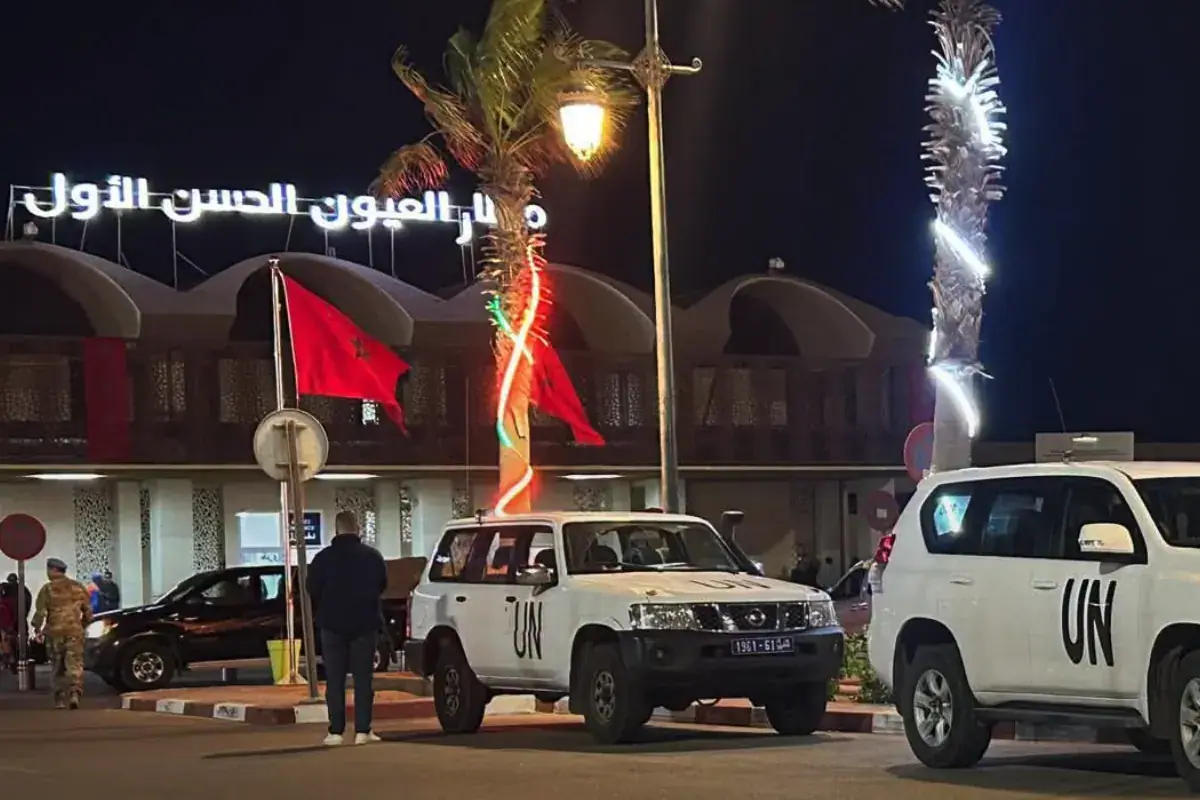
The United Nations Mission for the Referendum in Western Sahara (MINURSO) began its withdrawal from Western Sahara on November 16, as the first group of military personnel departed from Laayoune's Hassan I Airport. This marked the start of the implementation of the UN's decision to end its presence in the region. The departing group consisted of five military personnel, who were part of the MINURSO's military component. This initial departure is part of a larger process that will see the withdrawal of all MINURSO personnel and equipment.
The withdrawal of MINURSO follows the failure of the UN Security Council to renew the mission's mandate on October 30. The Russian veto on a US-drafted resolution, and the lack of sufficient votes for a Russian alternative, led to the expiration of MINURSO's mandate on October 31. As a result, the UN began the process of closing down its operations in Western Sahara on November 1. The Moroccan government has been closely monitoring the situation, with King Mohammed VI chairing a working session on November 4 to discuss the implications of the MINURSO withdrawal.
The UN has announced that the withdrawal process will involve the repatriation of approximately 160 military observers to their home countries, as well as the reduction of civilian personnel. The mission's equipment and properties will either be transferred, sold, or disposed of. The UN has also stated that it will close and transfer 13 sites and facilities previously used by MINURSO. The withdrawal process is being overseen by a limited team from the UN's Department of Operational Support.
The Moroccan government has been working closely with the UN to ensure a smooth transition. The King has instructed the government to take all necessary measures to address the implications of the MINURSO withdrawal. The Moroccan authorities have also been working to ensure the continued stability and security of the region.
The withdrawal of MINURSO has raised questions about the future of the Western Sahara conflict. The UN has stated that the end of MINURSO's operations does not mean an end to its engagement on the issue. The UN Secretary-General, António Guterres, has emphasized that the organization remains committed to finding a political solution to the conflict, and that his personal envoy, Staffan de Mistura, will continue to work with the parties involved.
The first group of departing MINURSO personnel was seen as a significant step in the withdrawal process. The UN has stated that the process will continue in the coming days, with the aim of completing the withdrawal of all MINURSO personnel and equipment. The Moroccan government has welcomed the start of the withdrawal process, and has expressed its commitment to working with the UN to find a lasting solution to the Western Sahara conflict.
As the MINURSO withdrawal continues, the international community is watching closely to see how the situation in Western Sahara will develop. The UN's commitment to finding a political solution to the conflict remains, and the organization is working closely with the parties involved to achieve a peaceful and lasting resolution. The withdrawal of MINURSO marks a new chapter in the Western Sahara conflict, and the international community will be closely monitoring the situation in the coming weeks and months.
Key points
- The withdrawal of MINURSO marks the beginning of a new phase in the Western Sahara conflict.
Reporting sources
- بعد انتهاء ولايتها الأممية.. أول فوج من المينورسو يغادر العيون · Al Ahdath Al Maghribia