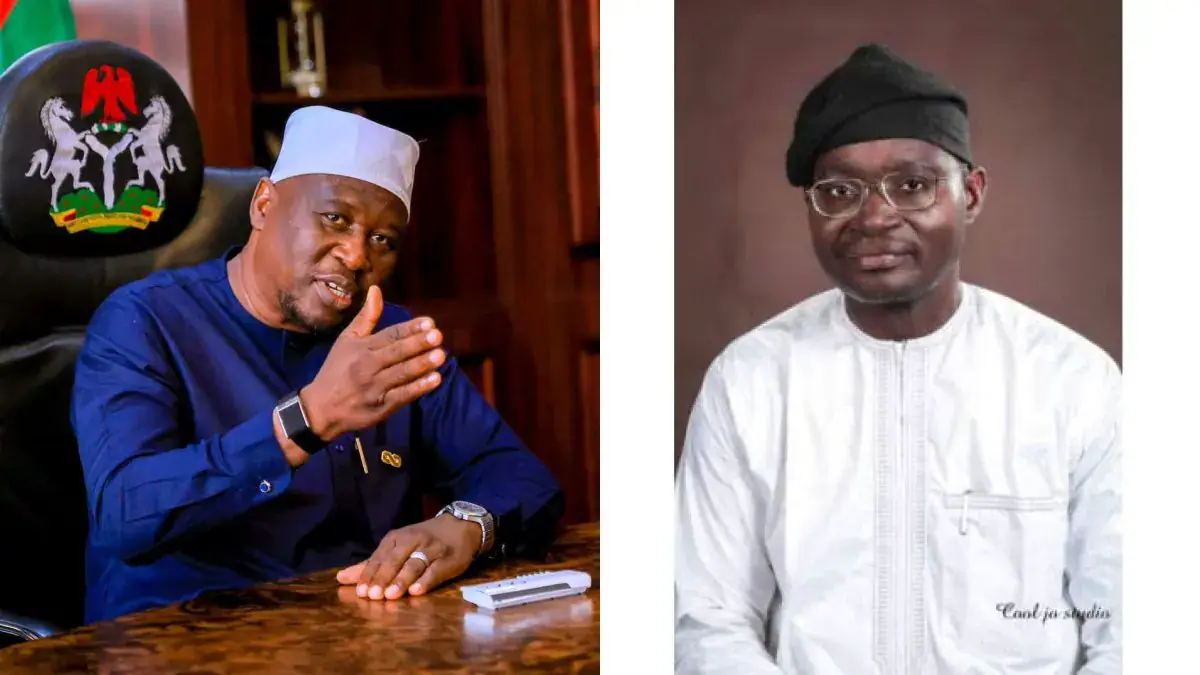
A recent statement by Governor Ahmadu Umaru Fintiri has sparked controversy, highlighting the role of religious sentiment in political criticism. Fintiri described Senator Binos Yaroe as a "useless pastor" during a campaign event. This remark raises questions about the boundaries of political discourse and public accountability. The incident occurred in Toungo, where Fintiri's comments were met with mixed reactions. Critics argue that such statements can divert attention from legitimate governance issues.
Governor Fintiri's reported remarks were directed at Yaroe's performance as an elected representative. The governor asked the audience if they had felt the impact of Yaroe's representation in the Senate, and upon receiving a negative response, described him as a "useless pastor". Fintiri's choice of words has been considered harsh by some. However, the context of the statement is crucial in determining its meaning. Fintiri did not condemn Christianity as a religion or say all pastors are useless.
A religious title does not grant immunity from political criticism. As a senator, Yaroe assumed constitutional and political responsibilities to his constituents. The same principle applies to individuals occupying public office, regardless of their religious identity. Those disagreeing with Fintiri's assessment have the right to challenge it. A constructive response would be to present documented evidence of Yaroe's legislative achievements and constituency projects.
Yaroe's mobile healthcare initiative deserves recognition. However, constituents are entitled to examine his broader representation scope, including legislative performance and economic empowerment. Comparisons with previous representatives, such as Senator Grace Bent, should be grounded in verifiable achievements rather than political loyalties or religious affiliations. This approach ensures a fair evaluation of a representative's performance.
Adamawa is a religiously diverse state, and its peace and stability depend on mutual respect and responsible public discourse. Political disagreements should not become religious controversies. Leaders have a responsibility to exercise restraint in their language, particularly when addressing matters that could be interpreted along religious lines.
The central issue remains the quality of representation available to the people of Adamawa South. Public office is about service, performance, and accountability, irrespective of the religious identity of its occupant. A distinction must be made between criticism of a politician and condemnation of their faith.
The debate highlights the need for an evidence-based discussion about elected representatives' performance. Neither religious sentiment nor personal invective should replace this debate. The focus should be on verifiable achievements and the impact of a representative's work on their constituents.
Key points
- Governor Fintiri's remarks have sparked a debate on the role of religion in politics.
- The incident highlights the need for restraint in language used by political leaders.
- The focus should be on evidence-based discussions about elected representatives' performance.