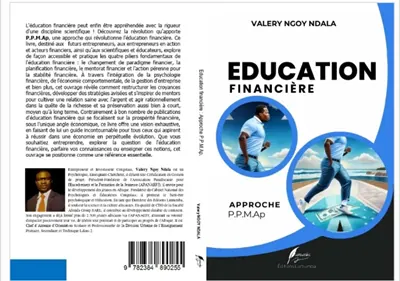
In a significant cultural event, the book "éducation financière" (Financial Education) by entrepreneur Valery Ngoy was launched on September 23, 2026, in Lubumbashi, a major city in the Haut-Katanga province of the Democratic Republic of the Congo. The book, published by Éditions Lumumba, explores the four fundamental pillars of financial education. Ngoy explained the essence of his work to the Congolese Press Agency (ACP), highlighting its potential to empower future entrepreneurs, financial actors, scientists, and educators.
The book delves into critical aspects of financial education, including paradigm shift, planning, mentorship, and sustainable action for stability. By integrating insights from financial psychology, behavioral economics, and business management, Ngoy's work offers a comprehensive guide on restructuring one's beliefs about money, developing astute strategies, and learning from mentors to make rational decisions in wealth acquisition and preservation. This approach distinguishes the book from others that focus solely on economic aspects.
Valery Ngoy, a psychologist, university teacher, and Congolese entrepreneur, is committed to supporting African science and culture as the director of Éditions Lumumba. He holds a certification in project management and is the founding president of the Pan-African Association for the Encouragement and Training of Youth. Through his various roles, Ngoy aims to contribute to the development of young people in Africa, making his book a significant addition to the discourse on financial literacy.
The publication of "éducation financière" is seen as a vital resource for individuals seeking to navigate the complexities of financial management in an evolving economy. Ngoy emphasized that his book provides an exhaustive vision, making it an indispensable guide for those looking to understand and apply sound financial principles. This perspective is particularly relevant in the context of the Democratic Republic of the Congo, where financial education can play a crucial role in economic development.
The launch of the book has been well-received by the Congolese community, with many recognizing the need for accessible literature on financial education. As the country continues to grapple with economic challenges, initiatives like Ngoy's are considered essential in empowering citizens with the knowledge and skills necessary for financial stability and success. The book is expected to contribute positively to the ongoing discourse on economic development in the region.
Ngoy's work is also notable for its interdisciplinary approach, combining elements of psychology, economics, and business management to provide a holistic understanding of financial education. This methodology reflects the author's background and expertise, offering readers a unique perspective on managing finances effectively. By addressing the psychological and behavioral aspects of financial decision-making, the book aims to equip readers with practical tools for achieving financial resilience.
The publication of "éducation financière" by Éditions Lumumba underscores the importance of local publishing initiatives in promoting knowledge and skills relevant to the African context. As the book gains recognition, it is likely to inspire further discussions on financial education and economic empowerment across the continent. With its focus on accessible and comprehensive guidance, Ngoy's work has the potential to make a lasting impact on financial literacy in the Democratic Republic of the Congo and beyond.
Key points
- The book "éducation financière" by Valery Ngoy offers a comprehensive guide to financial education, covering topics such as paradigm shift, planning, mentorship, and sustainable action for stability.