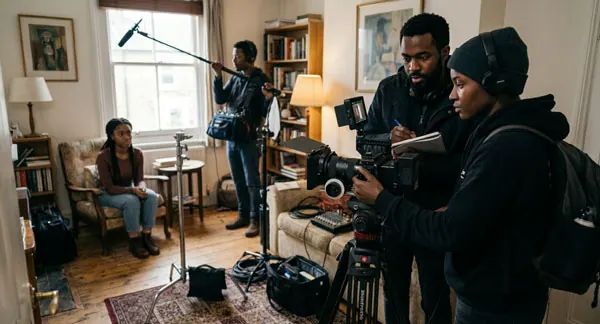
For independent filmmakers, a limited budget does not have to mean a limited story. With the right creative and practical decisions, filmmakers can turn resource constraints into opportunities to produce compelling films that reach audiences beyond their home markets. The MultiChoice Talent Factory (MTF) has trained 512 filmmakers across Africa over the past decade. Its graduates have produced 162 films, with many establishing and leading their own production companies.
One of the biggest mistakes filmmakers make is trying to create a production that exceeds their budget. Instead, they should focus on what the story truly needs. A compelling story with strong characters, clear conflict, and meaningful stakes can engage audiences without expensive sets or elaborate production design. Filmmakers should ask: What does this story absolutely need, and what can I do without?
Budget constraints can become creative opportunities. A story that spans ten locations can often be reimagined across two or three. A restaurant, office, or home can serve multiple scenes, with lighting, wardrobe, and production design creating distinct atmospheres. Rather than relying on costly visual effects or large-scale sequences, filmmakers can build impact through performance, dialogue, sound, and thoughtful camera work.
MTF alumni Nikita Neo Mokgware and Serena Serene Mmifinyana from Botswana demonstrate this approach. After founding N&M Productions, their first feature film, The Painting, screened in Lusaka and aired on Zambezi Magic. They later collaborated with Angolan filmmaker Levis Albano on Muti Mbi Ma Pessoa, which screened in Angola, Brazil, Portugal, and France.
Spending strategically is crucial for filmmakers with limited resources. Investments in sound, lighting, performances, and post-production often have a greater impact on the audience experience than the most expensive camera package. Before approving a cost, filmmakers should ask whether the audience will notice the difference. Agola Simon, a 2024 MTF graduate, won the Best Sound Design award at the Uganda Film Festival for the film The Unforgivable.
Planning and budgeting are essential skills for emerging filmmakers. Detailed shooting schedules, shot lists, and call sheets reduce delays and help teams maximise every production day. Grouping scenes by location can cut travel and setup costs, while allowing time for unforeseen challenges can prevent disruptions. Filmmakers should also budget for post-production, including editing, sound mixing, and colour grading.
Even the best plans can be disrupted, and a contingency budget should be included from the outset. The goal for filmmakers with limited resources is not simply to finish a film, but to finish one that is strong enough to find an audience. By making deliberate choices and understanding what a story needs, filmmakers can produce compelling films that reach audiences beyond their home markets.
Key points
- Filmmakers can turn resource constraints into opportunities by making smart creative and practical choices.
- Investing in sound, lighting, performances, and post-production can have a greater impact on the audience experience than expensive equipment.
- Careful planning and budgeting are essential skills for emerging filmmakers to produce compelling films within available resources.