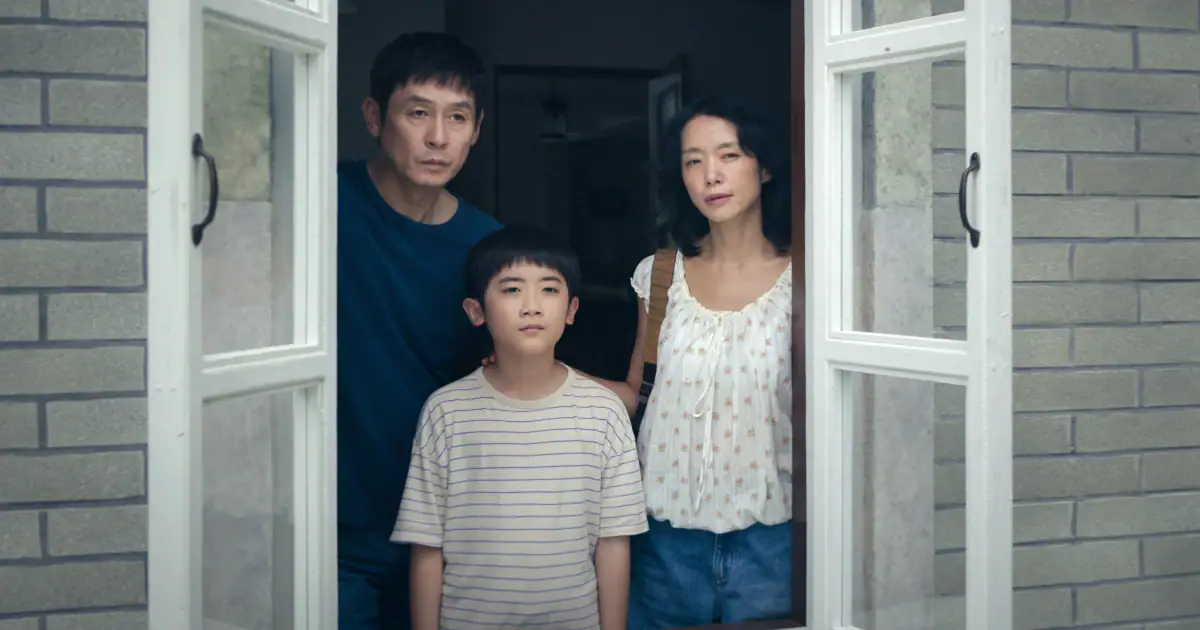
The film 'Possible Love', directed by Lee Chang-dong, offers a unique perspective on the struggles of the working class in the face of capitalism. The story begins at a funeral for a man who was laid off from a Korean automaking plant, where his colleague, Ho-seok, is struggling to cope with the loss and the company's restructuring. Ho-seok's relationship with his wife, Mi-ok, is strained, and their situation is further complicated by the presence of Ye-ji, a documentarian making a film about the 'vanishing laborer'.
Ye-ji, played by Cho Yeo-jeong, is a complex character who embodies both the privileges of her wealth and her desire to give voice to the working class. Her husband, Sang-woo, is a wealthy international businessman, and their interactions with Ho-seok and Mi-ok highlight the stark contrast between their lives. Through Ye-ji's character, the film explores the power imbalance between filmmaker and subject, as well as the tension between her personal, moral, and artistic aims.
The film also delves into the themes of work and self-worth, as Ho-seok and his ex-colleagues struggle to come to terms with the loss of their jobs and their sense of purpose. Mi-ok, played by Jeon Do-yeon, is a nuanced character who represents the cultural shifts that have led people to maintain a 'public presence' and view themselves as the stars of their own lives. Her eagerness to participate in the documentary and share her story is a reflection of this cultural phenomenon.
One of the most striking aspects of the film is the way it explores the issue of narrative control. Mi-ok's blunt question to Ye-ji about the value of her shirt is a moment of reckoning, where the subject turns the attention to the creator and exerts her own agency. This moment highlights the tension between Ye-ji's desire to tell a story and the subjects' desire to control their own narrative.
The film's portrayal of class struggle and storytelling is both intense and thought-provoking. The contrast between Ye-ji's wealthy lifestyle and the struggles of Ho-seok and Mi-ok is stark, and the film does not shy away from exploring the complexities of this dynamic. Through its nuanced characters and subtle tension, 'Possible Love' offers a powerful commentary on the human experience.
The film's third act, which features a tense dinner scene at Ye-ji's palatial beachside estate, is both surprising and mundane. The resolution of the tension is satisfying, and the film's exploration of emotional truth is both intense and thought-provoking. The performances of the cast, particularly Cho Yeo-jeong and Jeon Do-yeon, are noteworthy and add depth to the film's themes.
Overall, 'Possible Love' is a film that offers a unique perspective on the struggles of the working class and the power dynamics of storytelling. Through its nuanced characters and subtle tension, the film provides a thought-provoking commentary on the human experience. The film's exploration of class struggle, work, and self-worth is both intense and timely, making it a must-see for audiences interested in character-driven drama.
Key points
- The film 'Possible Love' explores the themes of class struggle, work, and self-worth in the face of capitalism.