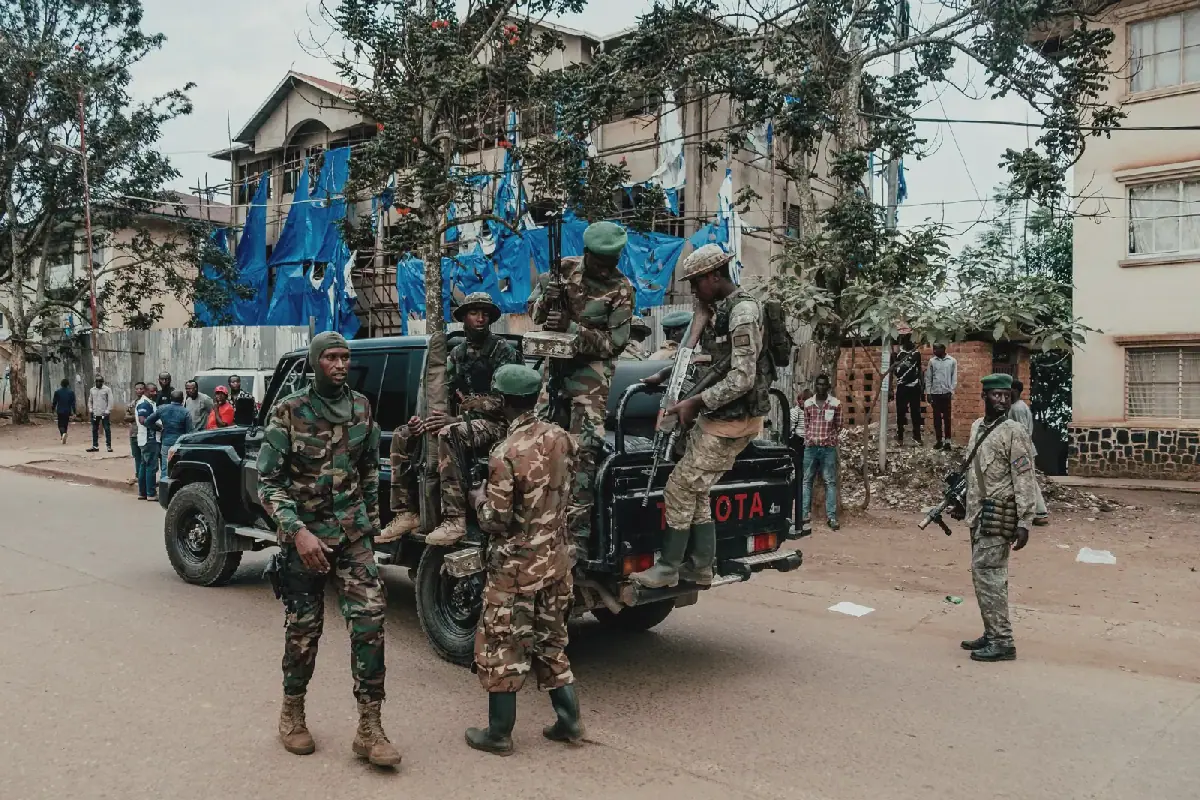
Clashes between the Wazalendo fighters and the Forces démocratiques de libération du Rwanda (FRN) rebel group have intensified in the Lubero territory of North Kivu, Democratic Republic of Congo. The fighting began on November 23, 2026, and has since spread to several areas, including Kandole-Byanze, Taliha, and Kanzanza, located on the western shores of Lake Edward. These areas are approximately 60 kilometers from the town of Lubero-centre and lie on the route to Kipese, Lunyasenge, and Kyavinyonge.
The Lubero territory administrator, Colonel Alain Kiwewa, confirmed the clashes, stating that FRN rebels launched new attacks on Wazalendo strongholds on November 24, 2026, in Taliha, Kandole-Byanze, and Kanzanza. The ongoing fighting has raised concerns among local residents, who fear that the escalating violence could lead to further displacement and insecurity. President of the civil society organization in Lubero, Muhindo Tafuteni, reported that the Taliha area has been taken over by FRN rebels.
The conflict between the Wazalendo and FRN has also affected the Musuku area, causing concern among residents. Local civil society groups have reported that the FRN rebel group is mobilizing more fighters and ammunition along the Kaseghe-Kitsombiro road. This has sparked fears of renewed clashes, prompting many residents to flee their homes in search of safer areas.
The escalation of fighting in various parts of the Lubero territory has heightened concerns about the security of residents. The ongoing clashes have made it challenging to establish a lasting ceasefire, and the situation remains volatile. The FRN rebel group's advances have also raised concerns about the potential for further humanitarian crises.
According to local sources, the FRN rebel group has made significant gains in the region, capturing several strategic locations. The Wazalendo fighters have been active in the area, but their efforts to counter the FRN advances have been met with limited success. The situation on the ground remains fluid, with both sides suffering casualties.
The humanitarian situation in the Lubero territory is deteriorating, with many residents displaced or affected by the fighting. Local organizations have called for urgent humanitarian assistance to support those affected by the conflict. The international community has also been urged to intervene and help broker a lasting peace agreement between the warring parties.
The conflict in the Lubero territory has significant implications for regional stability, and efforts are needed to address the root causes of the violence. The situation requires a comprehensive approach, including dialogue, humanitarian assistance, and support for sustainable peacebuilding initiatives.
Key points
- The FRN rebel group's advances in the Lubero territory have raised concerns about the security of residents and the potential for further humanitarian crises.