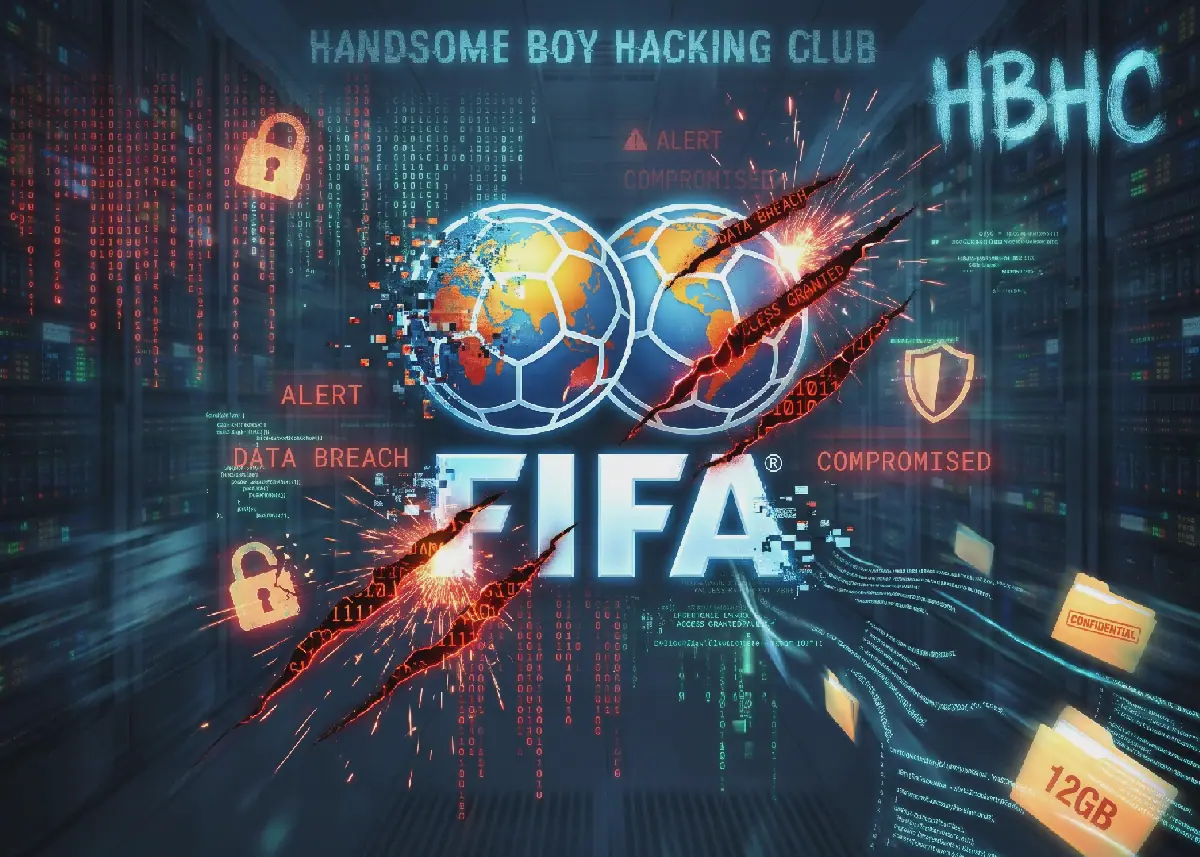
FIFA has confirmed a cyberattack that resulted in unauthorized access to personal and business information. The attack was reported by a hacking group, Handsome Boy Hacking Club (HBHC), which claimed to have stolen over 12GB of sensitive internal data. This data includes identity documents, financial records, legal files, internal correspondence, and governance documents.
According to FIFA, the cyberattack led to access to a limited set of personal and business information. The organization acknowledged the incident on November 25 and is working with relevant authorities, including law enforcement, to investigate the breach. FIFA condemned the acquisition and publication of the information, particularly personal data, warning of potential consequences for affected individuals.
The attack appears to have relied on social engineering, with hackers allegedly impersonating FIFA employees to gain access to its systems. Sources familiar with the incident believe the attackers used impersonation, possibly through email, to obtain legitimate access. This method exploits employee trust and gaps in internal access controls rather than a flaw in the software itself.
HBHC claims the stolen archive exceeds 12GB and contains several categories of sensitive information. This includes identity and immigration documents, financial statements, legal records, executive information, and internal governance files. Identity documents are a significant concern as they can be used for identity fraud, targeted phishing campaigns, and further impersonation attempts.
FIFA has not independently verified the hackers' claims about the volume or contents of the stolen information. The organization has also not disclosed how many individuals may have been affected or how long the attackers had access to its systems. The investigation is ongoing, and the full extent of the breach is yet to be established.
This incident adds to a series of cyberattacks targeting major football organizations. Recently, Spain's LaLiga confirmed that attackers had accessed its fan services platform and stolen personal information belonging to registered users. Other football organizations, including Ajax Amsterdam and the French Football Federation, have also faced cybersecurity incidents.
For FIFA, this episode puts employee access controls, identity verification, and the protection of sensitive records under scrutiny. Even if 12GB is a small fraction of what the organization holds, the sensitivity of the material could still make the incident consequential. FIFA's response and future actions will be crucial in mitigating the impact of this breach.
Key points
- FIFA confirms cyberattack with 12GB of stolen data, including personal and business information.
- The attack used social engineering, with hackers impersonating FIFA employees.
- This incident adds to a series of cyberattacks targeting major football organizations.
Reporting sources
- techweez.com · techweez.com