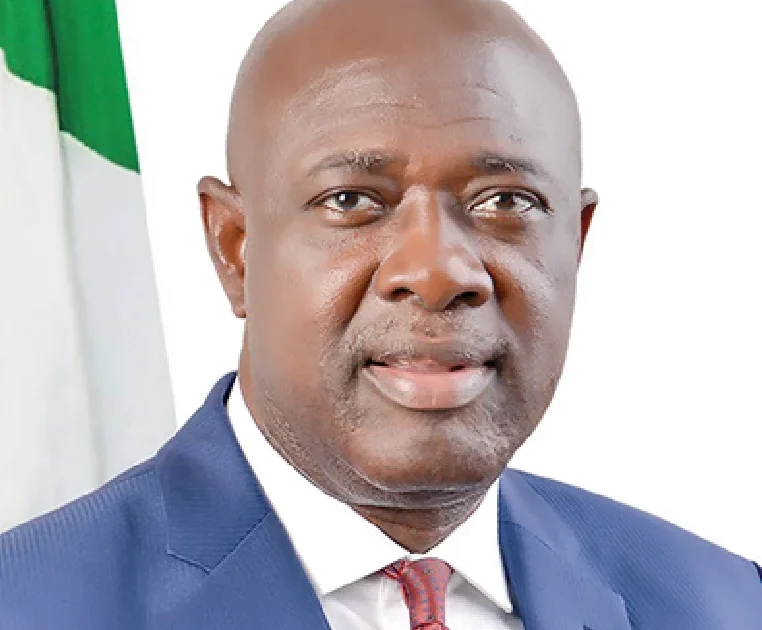
The Federal Government of Nigeria, through the Petroleum Technology Development Fund, has urged private investors to fund oil refining and gas projects in the country. The Minister of State for Petroleum Resources (Oil), Heineken Lokpobiri, made the call at the inaugural 2026 Petroleum Technology Development Fund Journal Summit in Abuja. Lokpobiri emphasized the need for increased private sector participation in Nigeria's midstream and downstream petroleum sectors. He noted that the ongoing reforms in the petroleum industry were designed to restore investor confidence and create a more predictable environment for private capital.
According to Lokpobiri, Nigeria's crude production has risen from about one million barrels per day in 2023 to more than 1.7 million barrels per day. Active drilling rigs have also increased from about 14 to over 60. He stated that the growth in upstream production would have limited impact if the country failed to develop the infrastructure required to transport, store, refine and distribute petroleum products efficiently. The emergence of the Dangote Petroleum Refinery and the expansion of modular refineries demonstrate the potential of private investment to reshape the downstream sector.
The Minister of State for Petroleum Resources (Oil) noted that increased production must be matched by adequate infrastructure, efficient transportation and storage systems, expanded refining capacity, and a competitive market that delivers value to consumers and investors. The government is working to improve domestic gas pricing, develop rules against anti-competitive practices and promote fair access to pipelines, depots and terminals. However, Lokpobiri warned that infrastructure deficits, logistics costs, regulatory uncertainty, market volatility and financing challenges remained major obstacles to investment.
The Minister of State for Petroleum Resources (Gas), Ekperikpe Ekpo, also emphasized the critical role of private capital in unlocking Nigeria's gas resources. He noted that the Petroleum Industry Act had provided a framework for improving regulatory certainty, while the Federal Government's Decade of Gas Initiative aimed to use gas to drive industrialisation, job creation, energy security and economic diversification. Ekpo identified infrastructure gaps, high financing costs, project development risks, regulatory bottlenecks and inadequate access to reliable energy infrastructure as some of the challenges confronting investors.
Ekpo urged the Petroleum Technology Development Fund to strengthen collaboration with universities, research institutions and industry operators so that research could produce practical and commercial solutions. The Executive Secretary of PTDF, Prof. Shuaibu Aliyu, said the inaugural summit was designed to take discussions in the Petroleum Technology Development Journal beyond its pages and create a platform for practical industry solutions. The Journal serves as a bridge between researchers, academics, industry professionals and policymakers by disseminating research findings, technical innovations and industry knowledge.
According to Aliyu, PTDF would continue to focus on ensuring that research outputs move beyond publication into application, intellectual property development and commercialisation. The growing involvement of private investors in refining, gas processing, logistics, storage, and the distribution of petroleum products presents substantial opportunities for economic growth, job creation, technology development, and building local capacity. However, Aliyu noted that challenges related to financing, infrastructure, regulatory certainty, access to technology, market efficiency, and technical capacity require open and constructive discussion.
The Managing Director of Waltersmith Petroman Oil Limited, Oladapo Filani, said Nigeria's challenge had moved beyond producing skilled manpower to retaining expertise and converting knowledge into technology, businesses and economic value. Filani noted that PTDF had sponsored more than 15,639 scholars and supported over 50,000 research projects, but argued that the changing structure of the petroleum industry required a new approach to human capital development. The summit aimed to address these challenges and create a more predictable environment for private capital.
Key points
- The Federal Government of Nigeria is seeking stronger private sector participation in the country's midstream and downstream petroleum sectors.
- Nigeria's crude production has increased from one million barrels per day in 2023 to over 1.7 million barrels per day.
- The government is working to improve domestic gas pricing, develop rules against anti-competitive practices and promote fair access to pipelines, depots and terminals.