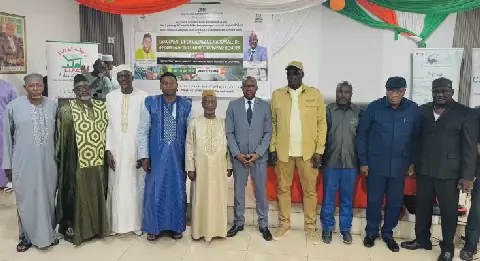
The Federal Government has urged stakeholders in the agricultural sector to adopt a demand-driven approach to extension services, providing farmers with verified information tailored to their specific needs and market requirements. This call was made by the Minister of Agriculture and Food Security, Abubakar Kyari, at the Africa Agribusiness Extension Summit. The summit brought together stakeholders to discuss the development of sustainable agricultural advisory infrastructure across Africa.
According to Minister Kyari, the development of extension infrastructure must begin with an understanding of farmers, their needs, and the markets for their produce. He emphasized that it is crucial to identify who the farmers are, what they do, and the markets for their products. This, he said, would enable the provision of relevant information and support, rather than simply supplying generic information that may not be useful to the farmers.
Minister Kyari noted that the current supply-driven approach to extension services has led to information overload, with many farmers receiving inaccurate or irrelevant information. He attributed this to the lack of a demand-driven approach, where farmers are not involved in determining their information needs. To address this, he suggested that farmers seeking information should be connected with verified and certified extension agents who can provide them with accurate and relevant information.
The Minister stressed that a functional market for agricultural produce is essential for effective extension services. He noted that if the market is not available, accessible, or developed, it would be challenging to create a demand pool for extension services. Kyari cited examples of commodities such as sesame seeds and hibiscus, which are in high demand in the export market, but require specific knowledge and information to produce.
Minister Kyari emphasized that farmers need to understand market requirements before going into production, particularly for export commodities. He noted that many farmers have had negative experiences due to lack of knowledge about market requirements. To avoid this, he suggested that extension services should begin from the point where farmers select their farm locations and continue through land preparation, application of inputs, weeding, and other production processes.
The Minister also highlighted the importance of traceability in accessing agricultural markets. He noted that markets are demanding more information about the origin and production processes of agricultural products. To meet this requirement, he suggested that extension services should provide farmers with information on good agricultural practices, including land preparation, pre-emergence applications, and post-emergence.
Minister Kyari noted that Nigeria's agricultural advisory infrastructure must take into account the country's diverse agroecological zones and large arable land. He emphasized that the country's 83 million hectares of arable land, across different agroecologies, present significant opportunities for agricultural production, but require tailored information for farmers. He added that food security is a national priority, and the government is committed to providing support to farmers to ensure they can produce food sustainably.
Key points
- The Federal Government is advocating for a demand-driven approach to extension services to provide farmers with verified information tailored to their specific needs and market requirements.
- A functional market for agricultural produce is essential for effective extension services.
- Traceability is a critical requirement for accessing agricultural markets.