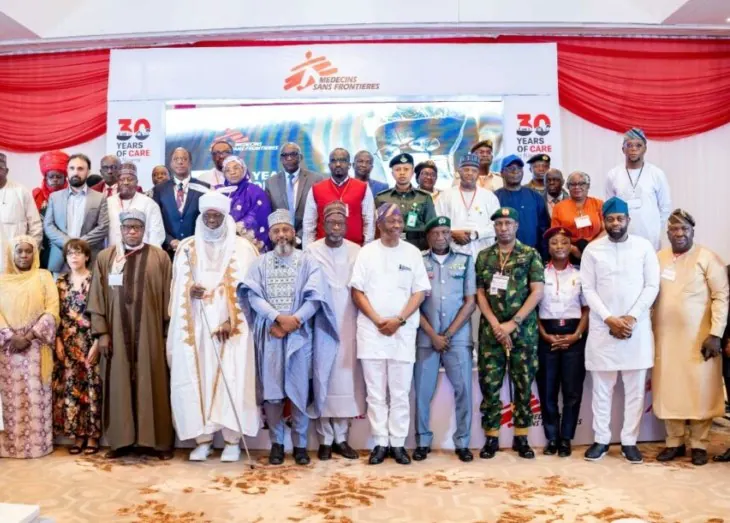
The Federal Government, the United Nations, and Médecins Sans Frontières (MSF) have expressed concern over the high rate of acute malnutrition among Nigerian children. According to the latest data, nearly 6.4 million children aged 0–59 months are currently affected, with about two million suffering from severe acute malnutrition. This highlights the scale of the country’s nutrition and healthcare concerns.
The disclosure was made in Abuja, where stakeholders called for stronger investment in the health system and closer coordination to address the needs of vulnerable communities. The event marked the 30th anniversary of MSF’s operations in Nigeria. Stakeholders stressed that humanitarian interventions must be linked to sustainable health systems capable of continuing care after international organisations withdraw.
MSF treated more than 444,000 malnourished children in 2025, with over 353,000 receiving treatment through outpatient feeding programmes, while more than 90,000 were treated in stabilisation centres. The organisation also treated over 341,000 malaria patients, assisted over 35,590 deliveries, and performed 224 fistula surgeries during the year.
MSF operated in 10 states in 2025, including Bauchi, Borno, Cross River, Ebonyi, Jigawa, Kano, Katsina, Kebbi, Sokoto, and Zamfara, while expanding its operations to Anambra and Niger. The Minister of Budget and Economic Planning, Senator Abubakar Atiku Bagudu, noted that the scale of the humanitarian response underscored the need for government interventions to strengthen Nigeria’s health institutions.
The Minister, represented by the Director of Internal Cooperation, Dr Sampson Ebimaro, cited the continuing pressure on health facilities, noting a 330 per cent increase in measles cases in Zamfara in 2025 compared with the previous year. In Sokoto, treatment centres recorded peak bed occupancy of 183 per cent, while the mortality rate among admitted children stood at 8.1 per cent.
The UN Resident and Humanitarian Coordinator, Ms Elsie Attafuah, said the impact of MSF’s work should be measured by the lives saved and the capacity built in communities. She called for stronger links between humanitarian assistance and long-term recovery, noting that returning displaced families to their communities would not be enough without functioning essential services.
MSF Country Representative Dr Aldikhari Ahmed said the organisation’s operations in Nigeria began in 1996 in response to a meningitis epidemic in Kano, Bauchi, and Katsina. He stressed that malnutrition, disease, and displacement were interconnected and that MSF and other humanitarian organisations could not address Nigeria’s health challenges alone.
Key points
- Nearly 6.4 million Nigerian children aged 0–59 months are currently affected by acute malnutrition.
- MSF treated more than 444,000 malnourished children in 2025.
- Stakeholders call for stronger investment in Nigeria's health system and closer coordination to address the needs of vulnerable communities.