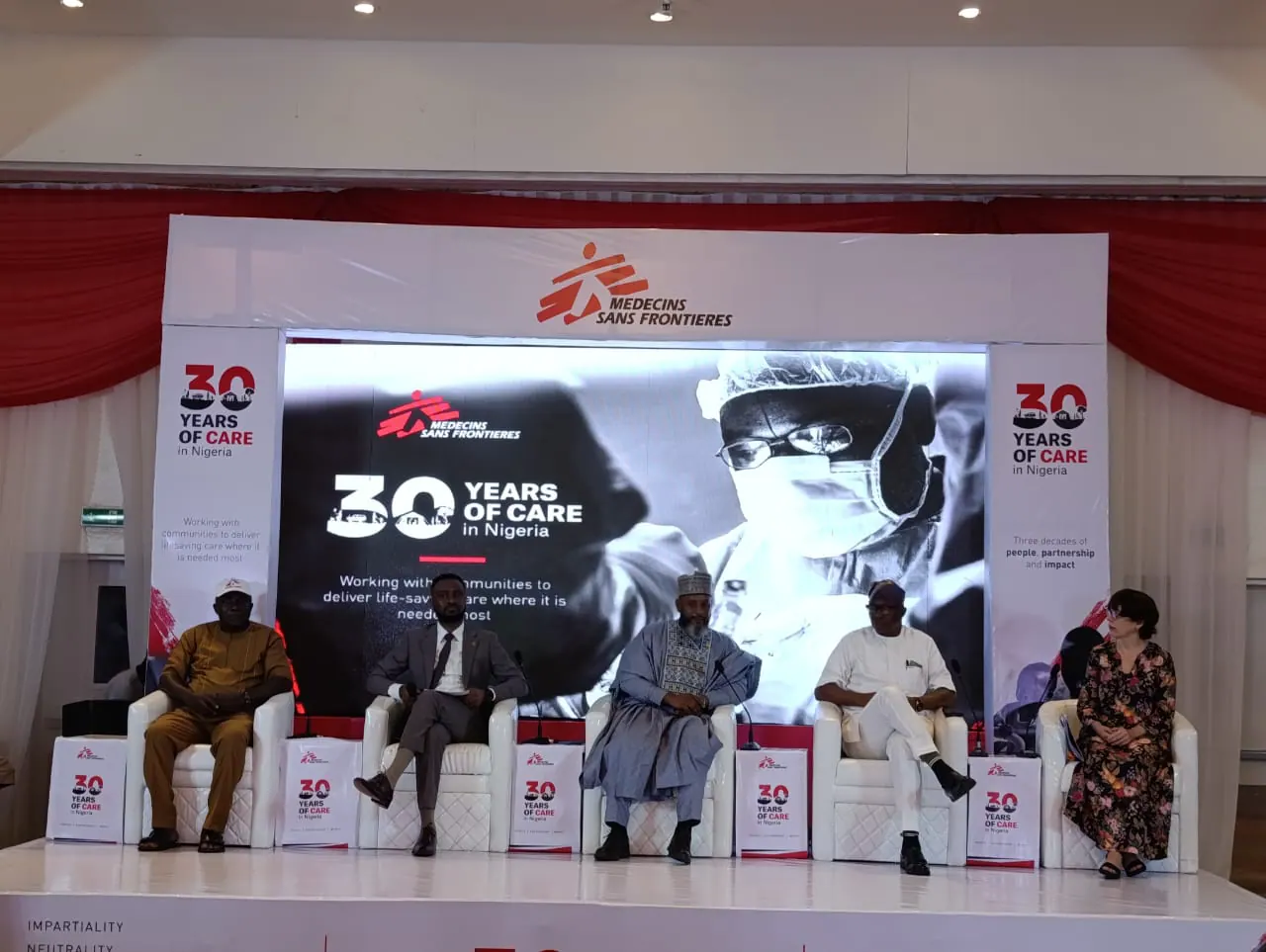
The Federal Government, United Nations, and Médecins Sans Frontières (MSF) have urged for stronger investment in Nigeria's health system and greater collaboration to address humanitarian and health challenges. This call was made in Abuja on September 30, 2026, during the 30th anniversary of MSF's operations in Nigeria. The Federal Government disclosed that nearly 6.4 million children aged 0–59 months are suffering from acute malnutrition, including about two million cases of severe acute malnutrition.
MSF has played a significant role in communities affected by conflict, displacement, disease outbreaks, malnutrition, and other humanitarian emergencies. The organization's experience in emergency response, maternal and child healthcare, nutrition, and disease control offers valuable lessons for strengthening Nigeria's health system. According to Dr. Aishetu Gogo Ndayako Mohammed, MSF's efforts have been crucial in providing compassionate and humanitarian services to people in need.
In 2025, MSF treated more than 444,000 children for malnutrition, including over 353,000 through outpatient feeding programs and more than 90,000 in stabilization centers. The organization also treated over 341,000 malaria patients, assisted with over 35,590 deliveries, and conducted 224 fistula surgeries. Additionally, MSF responded to outbreaks of cholera, measles, diphtheria, and Lassa fever.
MSF operated in 10 states in 2025, including Bauchi, Borno, Cross River, Ebonyi, Jigawa, Kano, Katsina, Kebbi, Sokoto, and Zamfara, while expanding its presence to Anambra and Niger. The organization's efforts have been complemented by the government's responsibility to ensure that humanitarian interventions align with national priorities and strengthen local capacity.
The UN Resident and Humanitarian Coordinator (a.i.), Ms. Elsie Attafuah, emphasized that MSF's 30 years in Nigeria should be measured by the lives saved. She noted that humanitarian intervention must be linked with longer-term recovery, stressing the importance of sustainable local capacity and coordination. Attafuah also urged that MSF's independent, impartial, and neutral medical action be protected.
MSF Country Representative, Dr. Aldikhari Ahmed, highlighted that the organization's 30-year journey in Nigeria began in 1996 with its response to a meningitis epidemic in Kano, Bauchi, and Katsina. Ahmed emphasized that MSF cannot address Nigeria's health challenges alone and stressed the need for collective action to prevent malnutrition, disease, and displacement.
The speakers agreed that while humanitarian organizations are critical to saving lives, stronger domestic health investment, effective coordination, and sustainable local capacity are essential to ensuring that vulnerable Nigerians receive quality care. Noma survivor Useni Usman shared his testimony, thanking MSF for changing his life through free treatment and surgery at the Noma Children's Hospital.
Key points
- Nearly 6.4 million children aged 0–59 months are suffering from acute malnutrition in Nigeria.
- MSF treated over 444,000 children for malnutrition in 2025.
- Stronger domestic health investment and effective coordination are essential to ensuring quality care for vulnerable Nigerians.