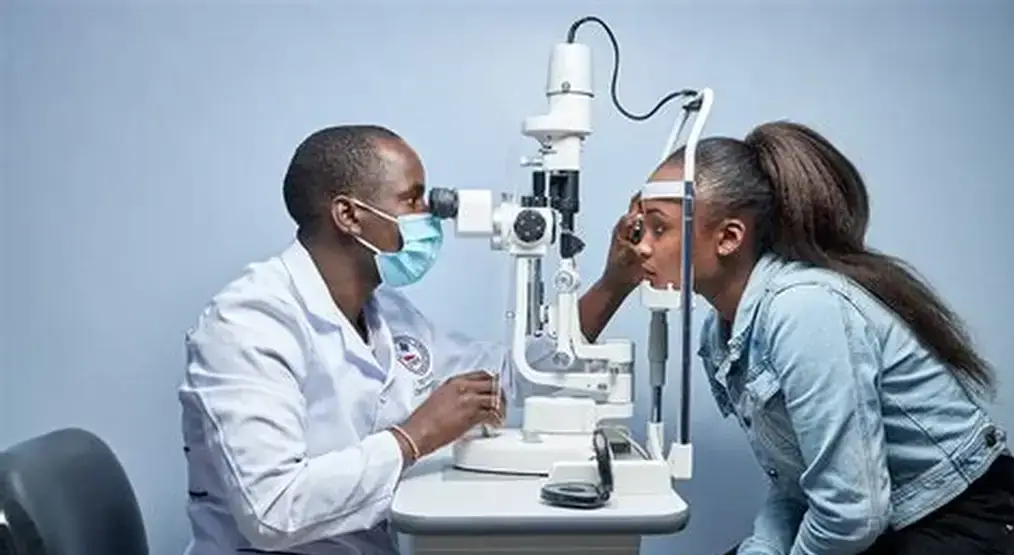
The federal government of Nigeria has set a target to increase the country's active eye care workforce by 20% and effective cataract surgical coverage by 30 percentage points by 2030. This goal was announced by the Minister of State for Health and Social Welfare, Iziaq Salako, at the Global Summit for Eye Health held in St. John's, Antigua and Barbuda. The minister emphasized the importance of achieving measurable progress in eye health.
To achieve these targets, Nigeria plans to mobilize domestic resources and strengthen collaboration with Commonwealth and international partners. The government will integrate primary eye care into the Basic Health Care Provision Fund, train 15,000 primary health care workers, and provide five million pairs of ready-made reading spectacles. These efforts aim to improve access to quality eye care, particularly among vulnerable populations nationwide.
The government also plans to deliver 25,000 fully subsidized cataract surgeries by 2027 as part of efforts to reduce avoidable blindness. Nigeria is among the beneficiaries of the World Health Organisation (WHO) Global Cataract Surgery Initiative, known as SEE 2045, which seeks to eliminate cataract-related blindness. This project establishes cataract elimination as only the second global elimination target for a Non-Communicable Disease in WHO history.
The minister congratulated participating countries, including Antigua and Barbuda, Bangladesh, Tanzania, and China, and urged them to show that equitable access to quality cataract surgery was achievable at scale. He emphasized the importance of partnerships in addressing avoidable vision loss, noting that government alone could not shoulder the responsibility of improving eye health.
Philanthropic partners have pledged $60 million to support assistive technology, while 15 private sector commitments represent investments exceeding $468 million to accelerate eye care implementation. Organizations outside government have made about 143 other commitments, reflecting growing support for global eye health initiatives. The minister stressed that eye health cannot be the responsibility of government or of one sector alone.
Vision loss has far-reaching consequences beyond individual health, affecting education, household welfare, personal and road safety, and national productivity. The minister recalled that about 25 years ago, he participated as a young medical officer in the JigiBola initiative introduced in Lagos State to provide free eye screening, eyeglasses, and cataract surgery. This initiative is now being modeled nationally through the Effective Spectacle Coverage Initiative Nigeria, also known as JigiBola 2.0.
The Global Summit for Eye Health brought together government leaders, international organizations, and partners to advance global efforts to eliminate avoidable vision loss. The minister urged participating countries to sustain their commitments and called on delegates to return to their respective countries as eye health advocates, ensuring people in need can access spectacles, timely referrals, and cataract surgery.
Key points
- Nigeria aims to increase its eye care workforce by 20% by 2030.
- The government plans to deliver 25,000 fully subsidized cataract surgeries by 2027.
- Philanthropic partners have pledged $60 million to support assistive technology.