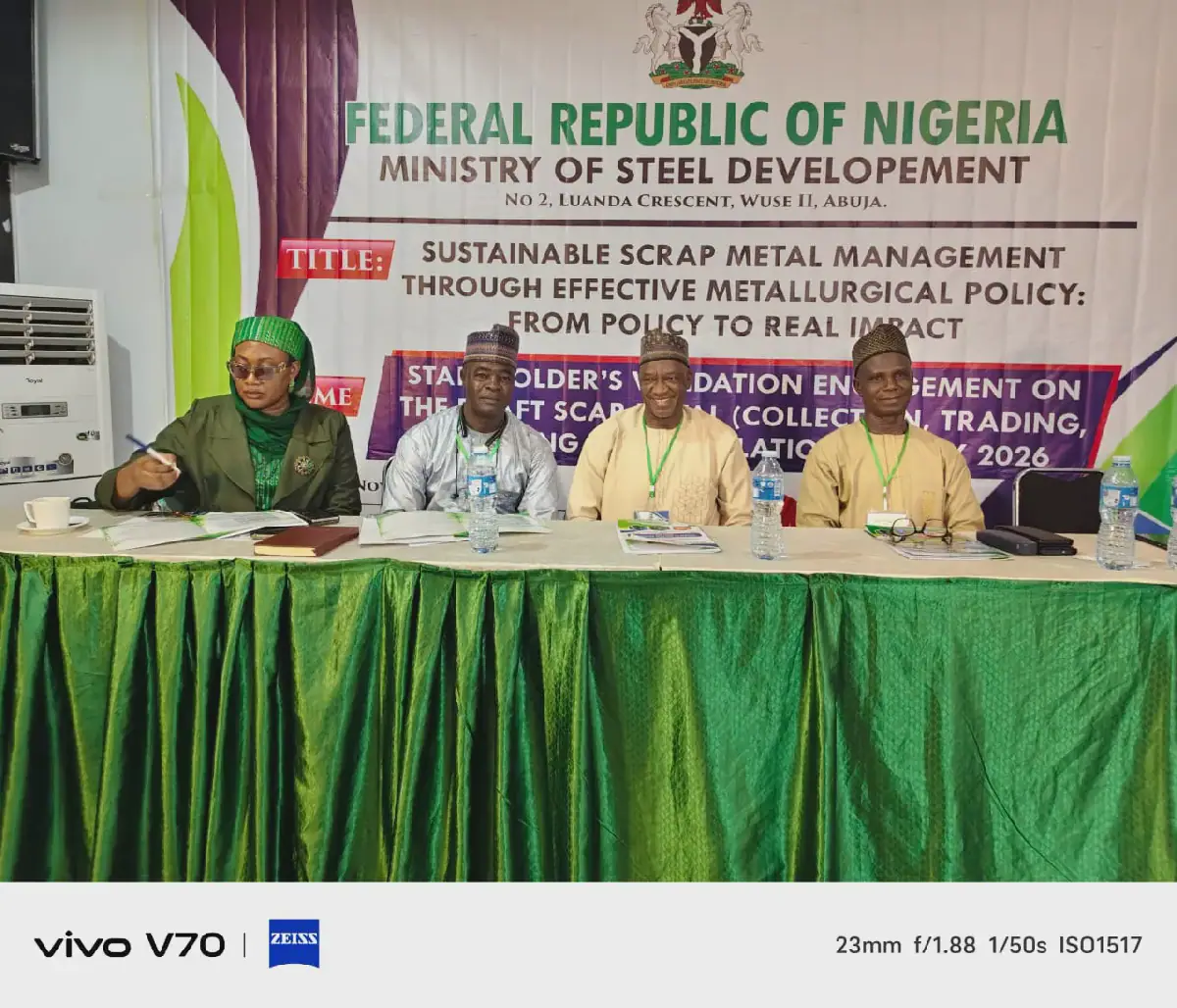
The Federal Government of Nigeria has intensified efforts to regulate the country's scrap metal industry in a bid to curb infrastructure vandalism, promote responsible recycling, and strengthen the steel manufacturing sector. This move is aimed at establishing a more organised and transparent scrap metal industry, according to the Minister of Steel Development, Prince Shuaibu Abubakar Audu. The proposed regulations would ensure that scrap metal materials are legally sourced, safely handled, documented, and supplied to legitimate industries.
The Minister, represented by the Director of Steel and Non-ferrous Metals Department, Alhaji Umar Tsoho, made this known during the second-phase stakeholders' engagement on the Draft Scrap Metal, Collection, Trading, Recycling and Regulation, Regulations Policy 2026, in Kano. The engagement, which had the theme "Sustainable Scrap Metal Management through Effective Metallurgical Regulation: From Policy to Real Impact," drew participants from various sectors. Audu described scrap metal as a crucial resource for steel production, industrial growth, job creation, and the development of a circular economy.
According to Audu, poor regulation of the scrap metal industry could lead to infrastructure theft, unsafe dismantling, environmental pollution, and economic losses. The proposed framework aims to strengthen licensing, monitoring, traceability, and enforcement in the industry. He assured that the policy was not intended to frustrate legitimate businesses or deprive scrap metal collectors and traders of their livelihoods but to create an orderly environment where lawful operators could thrive.
The Minister also called for regulations that would accommodate small-scale operators through practical registration requirements, while ensuring that large collection, processing, and recycling facilities meet appropriate safety and environmental standards. He expressed concern over the theft of electrical cables, railway components, manhole covers, and other metallic installations, noting that such activities disrupt public services, threaten safety, and increase government maintenance costs.
The first phase of the stakeholders' engagement was held in Lagos from November 9 to 10, 2026, where participants made recommendations on licensing, classification of operators, traceability, environmental protection, occupational safety, and enforcement. The Kano engagement was designed to widen consultations and incorporate the experiences of stakeholders in the Northern region. Audu assured participants that contributions from both engagements would be reviewed and harmonised to improve the proposed regulations.
The Permanent Secretary of the Ministry, Ambassador Nura Abba Rimi, represented by the Director of Metallurgical Inspectorate and Environmental Protection Department, Mr Christopher Wanje, emphasised the importance of the consultations in developing a practical and legally sound regulatory framework. He urged stakeholders to make useful recommendations on licensing, operational standards, security, environmental protection, and collaboration among relevant agencies.
The Acting Executive Secretary of the National Steel Council, Mr Aminu Shehu, represented by Dr Nana Firdausi Muhammad, reaffirmed the Council's support for the proposed policy, describing it as an important step towards industrial growth, economic development, and employment generation. The Kano State Commandant of the Nigeria Security and Civil Defence Corps, Mohammed Hassan Agalama, pledged the Corps' support for the initiative, stressing that effective regulation would help protect critical national assets.
Key points
- The proposed regulations aim to establish a more organised and transparent scrap metal industry in Nigeria.
- The policy seeks to curb infrastructure vandalism, promote responsible recycling, and strengthen the steel manufacturing sector.
- The regulations will accommodate small-scale operators while ensuring large facilities meet safety and environmental standards.